
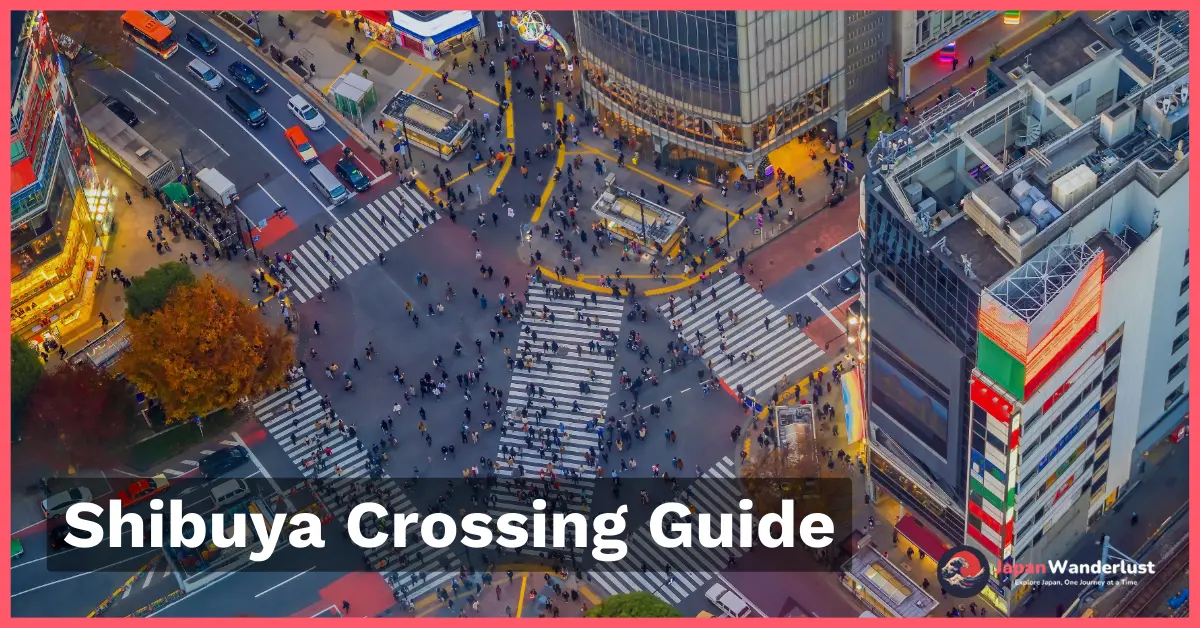
Shibuya Scramble Crossing sits at the heart of one of Tokyo’s busiest districts. The intersection is famous for its five-direction pedestrian surge that moves in perfect harmony every time the lights change. It is a symbol of Tokyo’s modern energy, drawing travelers who want to feel the city’s rhythm up close. You can visit any time of day, and it pairs well with exploring nearby attractions in Shibuya, Harajuku, or central Tokyo. If you want a fuller view of this area, you can browse the Tokyo attractions hub on Japan Wanderlust.
What is the history of Shibuya Scramble Crossing?
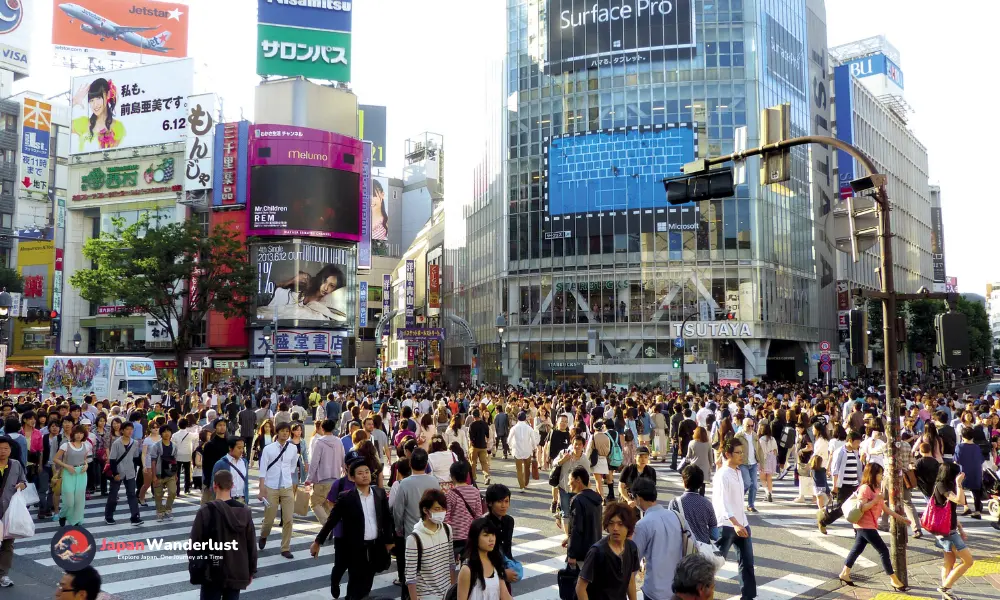
The history of Shibuya Scramble Crossing is tied closely to the expansion of Shibuya Station, one of Tokyo’s major railway hubs on the JR Yamanote Line. The station first opened in 1885, laying the foundation for Shibuya’s growth as a commercial district. The current all-way pedestrian system, known globally as a scramble crossing, was introduced in 1973 to handle rising foot traffic created by new rail connections and expanding retail zones around the station.
The evolution of the crossing reflects the rise of Shibuya as a center of youth culture, fashion, and entertainment. The opening of Tokyu’s Toyoko Line in 1932 increased commuter flow through the district, while the launch of the fashion landmark Shibuya 109 in 1979 strengthened the neighborhood’s identity as a style hub. Recent redevelopment projects such as Shibuya Scramble Square (opened in 2019) added modern infrastructure, including the elevated Shibuya Sky observation deck overlooking the intersection. Together, these entities form an interconnected.
Timeline
| Year | Milestone |
| 1885 | Shibuya Station opens |
| 1932 | Tokyu Toyoko Line begins operation |
| 1973 | Scramble crossing introduced |
| 1979 | Shibuya 109 opens |
| 2019 | Shibuya Scramble Square opens |
The area surrounding Shibuya Scramble Crossing contains several well-known entities that define Shibuya’s identity as a cultural, commercial, and entertainment hub. Within a few minutes on foot, you can reach major landmarks such as the Hachiko Statue, fashion centers like Shibuya 109, dining and nightlife zones such as Center Gai, and multi-level retail complexes including Shibuya PARCO. These places form an interconnected cluster of attractions that make the crossing one of Tokyo’s most compact and activity-rich areas.
The district also includes elevated viewpoints like Shibuya Sky, located inside Shibuya Scramble Square, which provides a direct panoramic look over the intersection. Each of these entities contributes to Shibuya’s role in the broader Tokyo tourism ecosystem, linking transportation nodes, shopping districts, cultural icons, and modern architecture into a tightly packed urban experience.
Highlights
- Shibuya Scramble Crossing, the world-famous multi-direction pedestrian intersection.
- Hachiko Statue, a major meeting point beside Shibuya Station and one of Tokyo’s most recognized cultural icons.
- Shibuya 109, a landmark fashion mall associated with youth style trends.
- Center Gai, a dense shopping and dining street known for nightlife and entertainment.
- Shibuya PARCO, a retail complex blending fashion, food, gaming, and art culture.
- Shibuya Sky, the rooftop observation deck atop Shibuya Scramble Square, offering aerial views of the crossing.
How do you access Shibuya Scramble Crossing?
Shibuya Scramble Crossing is located directly outside Shibuya Station. The Hachiko Exit brings you out beside the crossing within one minute. This is one of the easiest major landmarks to reach in Tokyo.
Travelers planning a structured day around this area can also consider a custom Tokyo itinerary created together with a local guide, which fits well when exploring Shibuya, Harajuku, and Shinjuku in one day.
Transport Options
| Mode | Station/Stop | Walk Time | Cost | Notes |
| Train/Subway | Shibuya Station (Hachiko Exit) | 1 min | ¥170–¥300 | JR Yamanote, Ginza Line, Tokyu Toyoko |
| Bus | Shibuya Station Bus Terminal | 3 min | ¥210–¥230 | Multiple routes |
| Taxi | Near the station | 1 min | ¥1,000–¥2,000 | Taxi stands nearby |
| Parking | N/A | N/A | N/A | No on-site parking |
What are the opening hours and admission fees at Shibuya Scramble Crossing?
The crossing is open 24 hours a day and has no admission fee. It is accessible at any time, whether you want a quiet late-night walk or a classic evening experience with neon lights.
Hours and Fees
| Hours | Fees | Notes |
| 24 hours | Free | Public street |
When is the best time to visit Shibuya Scramble Crossing?
The best time to visit Shibuya Scramble Crossing depends on seasonal conditions and the atmosphere you want to experience. Spring and autumn align with major seasonal events in Tokyo, making the surrounding district more visually appealing and comfortable for walking. Dusk creates the most iconic view of the intersection, with digital billboards, neon signage, and commuter flows shaping the classic Shibuya scene.
These seasonal patterns shape how people plan their days in this part of Tokyo. Spring coincides with cherry blossom viewing near Yoyogi Park and the Meguro River, while autumn reflects citywide foliage changes. If you want to explore beyond the crossing itself, this timing also pairs well with many popular things to do in Shibuya, all within easy walking distance.
Best Times
- Spring (Mar–Apr): Aligns with Tokyo’s cherry blossom season, adding visual appeal around nearby parks and pedestrian areas.
- Autumn (Nov): Offers cooler temperatures and citywide foliage that makes walking through Shibuya more comfortable.
- Dusk (6–7 PM): Shows the crossing at peak vibrancy with illuminated billboards and heavy commuter traffic.
- Weekday mornings: Provide the lightest crowds for easier photography and smoother movement around the station.
What etiquette or tips should you know at Shibuya Scramble Crossing?
Navigating Shibuya Scramble Crossing smoothly depends on following basic Japanese pedestrian etiquette and understanding how people move through the area. The intersection handles thousands of pedestrians each light cycle, especially during evenings and weekends, so maintaining steady movement helps preserve the crossing’s signature flow. Local norms emphasize awareness, courtesy, and keeping pace with the crowd, which ensures the experience remains safe for both visitors and commuters.
Many photography spots around the crossing, such as Shibuya Sky inside Shibuya Scramble Square or cafés overlooking the intersection, are designed to keep foot traffic away from the street itself. During busy seasons or special events, police and station staff often guide movement to prevent congestion. Staying alert, keeping valuables secure, and using proper viewing spaces lets you enjoy one of Tokyo’s busiest landmarks without disrupting its rhythm.
Tips
- Cross only when the pedestrian signal turns green, matching the flow of commuters and visitors.
- Keep moving and avoid stopping mid-crossing to prevent obstruction during peak foot traffic.
- Use observation decks or window-view cafés for safe and elevated photography.
- Secure wallets, phones, and bags when the area becomes crowded.
- Follow police or staff guidance during holidays, events, or exceptionally busy weekends.
What are nearby spots to visit after Shibuya Scramble Crossing?
The area around the crossing is compact and easy to explore on foot. These spots offer a mix of culture, shopping, and nightlife.
Nearby Spots
- Hachiko Statue.
- Shibuya 109.
- Center Gai.
- Shibuya PARCO.
- Shibuya Sky. and is featured in our Shibuya Sky observation deck guide for viewpoints and tips.
- Nonbei Yokocho.
What are the best viewpoints to photograph Shibuya Scramble Crossing?
The safest and most effective viewpoints for photographing Shibuya Scramble Crossing are elevated spaces designed for observation rather than street-level movement. High-floor cafés, indoor viewing decks, and rooftop platforms give you an unobstructed angle of the multi-direction pedestrian flow while keeping foot traffic on the ground uninterrupted.
Key vantage points include Shibuya Sky at the top of Shibuya Scramble Square, indoor observation windows within the same complex, and several cafés overlooking the intersection. These locations are ideal for long-exposure shots, night photography, or simply capturing the scale of one of Tokyo’s busiest crossings.
How do you get from Shinjuku Station to Shibuya Crossing by train?
Traveling from Shinjuku Station to Shibuya Scramble Crossing is direct thanks to the JR Yamanote Line. The ride takes around seven minutes, and trains run frequently throughout the day.
Follow these steps:
- Enter Shinjuku Station and board the JR Yamanote Line (inner loop toward Shibuya, Meguro, and Shinagawa).
- Ride for approximately 7 minutes until the train arrives at Shibuya Station.
- Exit through the Hachiko Exit, which leads directly to the crossing within one minute.
- Once outside, you are steps away from the intersection and can continue toward nearby landmarks like Hachiko Statue or Center Gai.
What safety tips should you follow during Halloween events at Shibuya Crossing?
Halloween in Shibuya attracts dense crowds, and the municipality often introduces traffic controls or pedestrian restrictions to maintain safety. Police officers and station staff frequently guide people through designated walking routes to prevent bottlenecks and keep pathways clear.
Tips:
- Move with the general flow of the crowd to avoid sudden stops.
- Avoid congested or blocked-off zones during peak activity hours.
- Keep valuables secured in zipped bags to prevent loss in tight spaces.
- Choose a designated meeting point, such as Hachiko Statue, if visiting with friends.
- Follow instructions from police and station staff during crowd-control periods.
FAQ
Is Shibuya Scramble Crossing worth visiting?
Yes. It captures the city’s energy and offers a unique pedestrian experience.
Do you need a reservation to visit?
No. It is a public street with no entry requirements.
Can you take photos in the middle of the crossing?
It is discouraged. Use safe observation points instead.
Is the crossing accessible for wheelchair users?
Yes. Ramps and elevators are available at major exits.
When is it least crowded?
Weekday mornings and late nights offer lighter crowds.
Are there restrooms nearby?
Yes. Shopping centers such as Shibuya Scramble Square have public facilities.
