
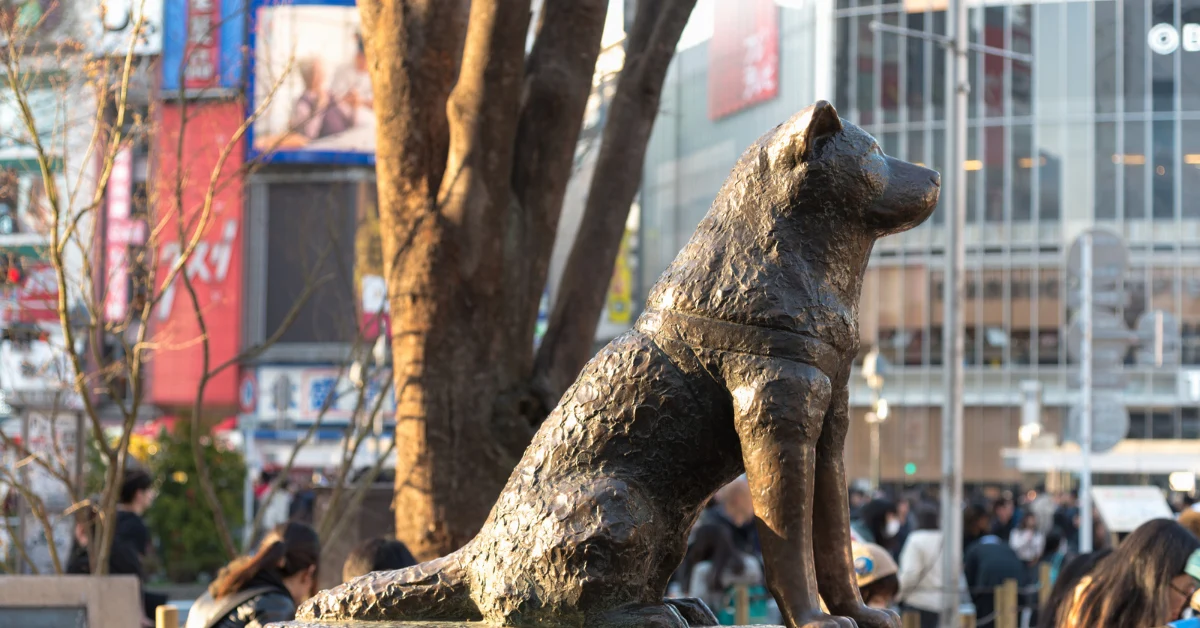
Quick Facts About Hachiko Statue
| Item | Detail |
|---|---|
| English Name | Hachiko Statue (Hachiko Memorial Statue) |
| Japanese Name | 忠犬ハチ公像(ちゅうけんハチこうぞう) |
| Exact Address | 2-1 Dogenzaka, Shibuya-ku, Tokyo 150-0043, Japan |
| Official Website | Shibuya City page (Japanese): https://www.city.shibuya.tokyo.jp/ |
| Google Maps | https://maps.app.goo.gl/NuRzK4bsTMWJ2pLF7 |
| Suggested Duration | 15–30 minutes |
| Admission | Free |
| Payment Methods | N/A. Outdoor public monument |
Hachiko Statue is a small outdoor bronze monument located directly outside Shibuya Station in central Tokyo. It commemorates Hachiko, an Akita dog who waited for his owner at the station for nearly 10 years after his owner’s death. Today, the statue stands as one of Japan’s most widely recognized symbols of loyalty and devotion.
The statue also functions as one of Tokyo’s most famous meeting points, positioned beside the Shibuya Scramble Crossing. For you as a traveler, it works as a meaningful cultural stop, a quick photo location, and a practical reference point before exploring the Shibuya area. Many visitors combine this stop with a private guided tour of Tokyo to understand better how Shibuya fits into the city’s wider culture and history.
What is the history of the Hachiko Statue with owner?
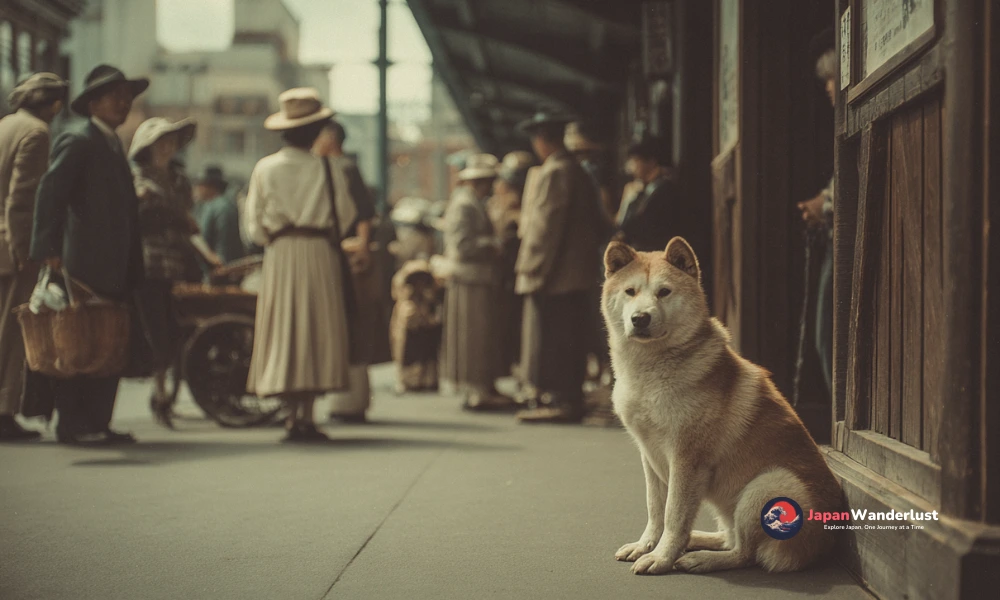
The history of the Hachiko Statue with owner tells the true story of Hachiko, an Akita dog born in 1923 who waited daily at Shibuya Station for Professor Hidesaburo Ueno after his death in 1925. The first statue was built in 1934 and the current version in 1948. This story appeals most to travelers interested in real Japanese history.
Hachiko’s daily routine gradually drew attention from commuters, and a newspaper article later turned him into a national symbol of loyalty. The original statue was lost during World War II, but the restored monument after the war ensured that Hachiko’s story remained part of Shibuya’s identity.
| Year | Milestone |
|---|---|
| 1923 | Hachiko is born in Akita Prefecture |
| 1925 | Professor Ueno dies. Hachiko begins waiting daily at Shibuya Station |
| 1932 | National newspaper coverage makes Hachiko famous |
| 1934 | First bronze statue unveiled with Hachiko present |
| 1944–1945 | Original statue removed for wartime metal |
| 1948 | Current bronze statue installed |
What are the highlights and attractions of the Hachiko Statue?
The highlights and attractions of the Hachiko Statue include the life-size bronze figure, the surrounding Hachiko Square, nearby story plaques, and direct access to Shibuya Scramble Crossing. Together, these features make it both a memorial site and a functional urban landmark. This stop works well for first-time visitors with limited time.
Key Highlights
- Bronze Hachiko Statue: Life-size seated sculpture of Hachiko facing Shibuya Station.
- Hachiko Square: Compact plaza used as a daily meeting point.
- Historical Signage: Plaques that explain Hachiko’s story and cultural impact.
- Shibuya Scramble Crossing Access: Immediate connection to the iconic crossing.
- Free Photo Spot: Popular location for traveler photos and group meet-ups.
- Seasonal Display Touches: Occasional scarves or decorations during events.
How do you access the Hachiko Statue?
You access the Hachiko Statue from the Hachiko Exit of Shibuya Station, which is served by JR, Tokyo Metro, Keio, and Tokyu lines. The statue stands just outside the ticket gates. This makes it especially convenient for travelers using public transport anywhere within Tokyo.
Transport Access
| Transport Mode | From | Walking Time | Cost | Notes |
|---|---|---|---|---|
| JR Yamanote Line | Shibuya Station | 1–2 minutes | ¥150–¥210 | Exit via Hachiko Exit |
| Tokyo Metro | Shibuya Station | 3–5 minutes | ¥170–¥210 | Follow signs toward JR exits |
| Keio Inokashira Line | Shibuya Station | 3–5 minutes | ¥140–¥200 | Indoor station transfer |
| City Bus | Shibuya Station area | 3–5 minutes | Route dependent | Multiple routes stop nearby |
| Taxi | Central Shibuya | 1–3 minutes | Distance-based | Drop-off near station only |
| Car | Nearby coin parking | 5–10 minutes | Varies by lot | No dedicated parking |
What are the opening hours and admission fees at Hachiko Statue?
The opening hours and admission fees at Hachiko Statue are simple because it is an outdoor public monument. The statue is accessible 24 hours a day, every day of the year. There is no admission fee for any visitor, making it easy to include at any time of your Tokyo itinerary.
Hours and Fees
| Category | Detail |
|---|---|
| Opening Hours | 24 hours |
| Last Entry | N/A |
| Regular Holidays | None |
| Adult Admission | Free |
| Child Admission | Free |
| Senior Admission | Free |
When is the best time to visit Hachiko Statue?
The best time to visit Hachiko Statue is based on crowd levels rather than seasonal scenery. It is open year-round, but early morning and late evening are the quietest times. Daytime and commuter hours bring the heaviest crowds, which affects photo access and movement.
Seasonal and Daily Timing
- Spring and Autumn: Peak domestic and international tourism.
- Summer Holidays: Higher congestion around the station.
- Early Morning: Calmest time for photography.
- Evening Rush Hours: Densest foot traffic in Shibuya.
What etiquette or tips should you know at Hachiko Statue?
Proper etiquette at Hachiko Statue focuses on crowd awareness, quick photography, and personal safety in a busy station environment. Since the statue is both a memorial and a meeting point, visitors should avoid blocking pathways or lingering directly in front of the monument for long periods.
Visitor Tips
- Take photos quickly and step aside for others.
- Keep bags secured in crowded conditions.
- Follow informal photo queues during peak times.
- Dispose of trash only in designated station bins.
- Agree on a clear meeting spot reference nearby.
- Avoid placing belongings directly at the statue base.
What are nearby spots to visit after the Hachiko Statue?
Nearby spots to visit after the Hachiko Statue include several major Shibuya attractions within walking distance. Because the statue sits at the heart of the district, it works well as a starting point for shopping, observation decks, or cultural sites within a short travel radius.
Nearby Attractions
- Shibuya Scramble Crossing (1–2 minutes): Multi-direction pedestrian crossing.
- Shibuya Sky (5–10 minutes): Rooftop observation deck at Shibuya Scramble Square.
- Shibuya Center-gai (5–7 minutes): Shopping and entertainment street.
- Shibuya 109 (5–7 minutes): Youth fashion landmark.
- Miyashita Park (10–15 minutes): Urban park and retail complex.
- Meiji Jingu and Yoyogi Park (1 train stop): Shrine and green space near Harajuku.
Facilities and Accessibility
The statue sits in an open, paved public square with step-free access from Shibuya Station. Elevators and ramps inside the station support wheelchairs and strollers. There are no restrooms or lockers at the statue itself, but Western-style toilets, coin lockers, and luggage storage are widely available inside Shibuya Station and nearby commercial buildings.
Free public WiFi is not provided directly at the monument. WiFi access may be available inside the station, nearby cafes, or commercial complexes depending on the provider and location.
FAQ
Is the Hachiko Statue free to visit? Yes, it is completely free since it stands in a public square. No tickets or reservations are required.
Do I need a reservation to see the statue? No reservation is needed at any time. You can visit freely as part of your walk around Shibuya.
How long should I plan to spend at Hachiko Statue? Most visitors spend about 15 to 30 minutes. It is typically combined with nearby Shibuya attractions.
Is the statue area crowded? Yes, it is frequently crowded during the day and evening. Early morning is the quietest time for photos.
Can I visit Hachiko Statue at night? Yes, the area is accessible and well-lit throughout the night. Crowd levels are lower later in the evening.
Is Hachiko Statue suitable for visitors with large luggage? You can visit with luggage, but it is inconvenient during peak hours. Coin lockers inside Shibuya Station are recommended.
Is the statue accessible for wheelchairs? Yes, the surrounding area is flat and barrier-free. Elevators inside Shibuya Station provide full access.
