
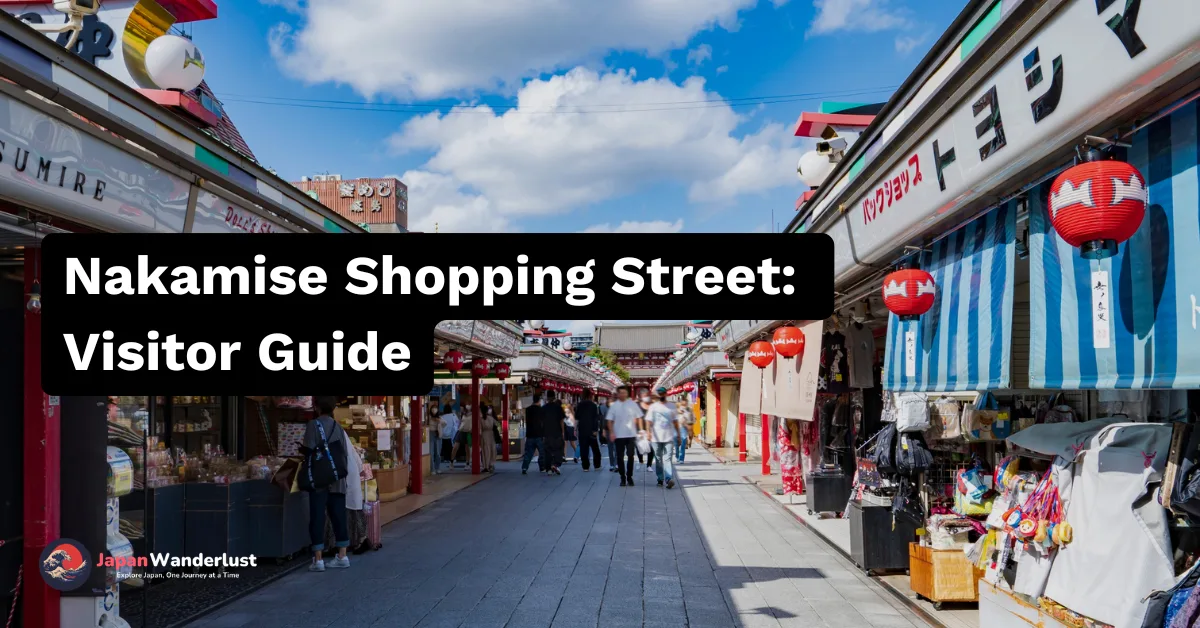
Nakamise Dori, also known as Nakamise Shopping Street, is a 250-meter traditional market street in the Asakusa district of Taito City, Tokyo. It runs from Kaminarimon Gate to Hozomon Gate at Senso-ji Temple, so you experience it as both a cultural gateway and a compact place to enjoy street food and buy souvenirs in Asakusa.
If you are planning a first visit to Tokyo, Nakamise Dori is one of the easiest ways to step into “old Tokyo” without leaving the city center. You walk a short, flat arcade lined with long-running snack stalls and souvenir shops, then arrive directly at Senso-ji’s main hall. It fits smoothly into any Asakusa half-day plan, or as one stop in a custom Tokyo itinerary with a local guide on a private guided tour of Tokyo.
What Is Nakamise Dori 仲見世通り?
Nakamise Dori is a historic shopping street in Asakusa, Tokyo, with around 90 shops selling traditional snacks and souvenirs between Kaminarimon Gate and Hozomon Gate at Senso-ji Temple. You walk it as the main Asakusa shopping street on your way to the temple, which makes it ideal for first-time visitors and families who want a traditional market feel in a short, walkable area.
During the Edo period, local residents around Senso-ji Temple were granted the right to open shops for pilgrims and visitors. This decision created one of Japan’s oldest shopping streets and locked Nakamise into the daily life of the temple district. Despite rebuilding after the Great Kanto Earthquake and World War II, it has kept its role as a commercial corridor connected to Senso-ji, Hozomon, Kaminarimon, and nearby Asakusa Shrine. Today, it appears in almost every [ASAKUSA TRAVEL GUIDE] and sits naturally inside wider [TOKYO THINGS TO DO] planning.
Historical Timeline of Nakamise Dori
| Year | Milestone |
|---|---|
| 1688–1735 | Local residents granted rights to open stalls for Senso-ji visitors, forming the origin of Nakamise |
| 1885 | Street rebuilt with Western-style brick shops by the Tokyo government |
| 1923 | Area destroyed by the Great Kanto Earthquake |
| 1925 | Shopping street rebuilt with reinforced concrete structures |
| 1945 | Shops damaged by World War II fires and later restored by locals |
| 1992 | Shop shutters decorated with “Asakusa picture scroll” artworks |
Is Nakamise Dori a Market, a Shopping Street, or a Temple Approach?
Nakamise Dori functions as all three at once: a shopping street, a street-food market, and the formal pedestrian approach to Senso-ji Temple. Unlike stand-alone markets, everyone walking to the main hall naturally passes through it, so you move from everyday Tokyo into a religious space through this corridor.
From a planning point of view, this explains why Nakamise feels different from a normal retail street. You are not only shopping. You are following a ritual path that has linked merchants and worshippers for centuries. That layered role gives Nakamise its distinct identity within the Asakusa district and sets it apart from modern shopping arcades elsewhere in Tokyo.
How Is Nakamise Dori Different From Other Tokyo Shopping Streets?
Nakamise Dori differs from streets like Ameyoko, Takeshita Street, or Shin-Nakamise because it exists specifically to serve Senso-ji Temple visitors. The products, layout, and crowd flow are shaped by religious tourism rather than fashion, nightlife, or discount retail.
Where Takeshita Street focuses on youth culture and trends, Nakamise centers on tradition, food, and symbolic souvenirs linked to Asakusa and Buddhist pilgrimage culture. That is why you usually see Nakamise inside [ASAKUSA THINGS TO DO] rather than general “Tokyo shopping” round-ups.
Who Originally Built Nakamise Dori and Why It Still Exists Today
Nakamise Dori began when local residents were officially allowed to open shops for people visiting Senso-ji Temple in the Edo period. This legal permission turned the approach path into a permanent commercial street tied directly to temple foot traffic.
Its survival through earthquakes and wartime damage shows its value as both infrastructure and cultural property in Asakusa. Instead of replacing it with a modern mall, the area chose to rebuild the same street because it still served Tokyo’s oldest temple. That continuity is why you can walk the same pilgrimage-shopping route today.
What Can You Experience at Nakamise Dori?
At Nakamise Dori you experience a traditional Japanese shopping arcade with street food, souvenir shops, and Edo-style toys on the main approach to Senso-ji Temple. This compact market-style street works well if you want quick tastings, light shopping, and classic Asakusa temple-town scenery without crossing a large market district.
As you walk from Kaminarimon toward Hozomon Gate, you pass stalls selling ningyo-yaki cakes, senbei rice crackers, and manju buns, next to shops for folding fans, kimono accessories, and Edo-style wooden toys. Many travelers snack here, stop for photos at Kaminarimon and Hozomon, then continue to Asakusa Shrine, Shin-Nakamise Street, or the Sumida River promenade. Nakamise becomes a natural “bridge” between casual street life and the more formal atmosphere of the main hall at Senso-ji.
Street Highlights on Nakamise Shopping Street
- Traditional ningyo-yaki cakes and senbei rice crackers near Kaminarimon
- Matcha soft-serve and wagashi Japanese sweets stands
- Manju steamed buns filled with sweet red bean paste
- Edo-style wooden toys, kites, and classic Japanese children’s goods
- Folding fans, kimono accessories, and crafts related to Asakusa and Senso-ji
What Are the Most Popular Foods on Nakamise Shopping Street?
Nakamise Dori is best known for traditional Japanese street snacks such as ningyo-yaki cakes, senbei rice crackers, manju steamed buns, and matcha-based sweets. These are small, easy-to-carry items that you can eat quickly between sights without sitting for a full meal.
For many visitors, these foods become their first “hands-on” encounter with Asakusa’s food culture. The layout encourages you to buy one or two items at a time rather than order a full course, which makes Nakamise ideal for casual grazing before or after entering Senso-ji Temple. If you prefer a sit-down meal, you can treat these stalls as pre- or post-temple snacks and choose a restaurant in the wider Asakusa neighborhood afterward.
Is Nakamise Dori Good for Kids and Families?
Nakamise Dori can be a fun stop for kids thanks to snack stalls, colorful packaging, and traditional toys. Families often enjoy letting children choose small items, like wooden toys or sweets, as a memory of their temple visit.
The main challenge for families is crowd density. With strollers, peak hours can feel tight and slow. If you are visiting with young children, arriving early in the morning or later in the evening will make it easier to move as a group. Because Nakamise connects directly to Senso-ji’s wider grounds, you can combine short shopping bursts with open spaces where kids can decompress.
How Do You Get to Nakamise Dori?
You reach Nakamise Dori mainly from Asakusa Station in Taito City, with a short walk on the Ginza Line or Asakusa Line bringing you directly to Kaminarimon Gate. This makes the Nakamise Shopping Street easy to include if you are using Tokyo’s rail network, local buses, or Skytree Shuttle services, while drivers need to rely on nearby paid parking lots rather than on-site spaces.
From Asakusa Station, you follow signs for Kaminarimon and reach the gate in about 3–5 minutes on foot. From Tawaramachi Station on the Ginza Line, the walk is about 10 minutes through local streets before you arrive at the temple district. Several bus routes, including those connecting to Tokyo Skytree, stop near Asakusa Imahan Kokusai Street. As part of a broader Tokyo sightseeing plan, you can pair Nakamise with Skytree, Ueno, or the Sumida River area and use Asakusa as your practical base for transfers.
Access & Transport for Nakamise Dori
| Transport | Station / Stop | Walking Time | Estimated Cost | Notes |
|---|---|---|---|---|
| Train / Subway | Asakusa Station (Ginza / Asakusa Line) | 3–5 minutes | ¥170–¥300 | Closest access. Follow signs for Kaminarimon Gate. |
| Train / Subway | Tawaramachi Station (Ginza Line) | 10 minutes | ¥170–¥300 | Slightly longer walk through neighborhood streets. |
| Bus | Asakusa Imahan Kokusai Street | 8 minutes | ¥220–¥500 | Includes Skytree Shuttle and local bus routes. |
| Car | N/A | N/A | N/A | No dedicated parking. Use nearby paid lots. |
What Are the Opening Hours and Admission Fees at Nakamise Dori?
Nakamise Dori has free admission, and most shops open roughly between 9:00 and 20:00 with exact times set by each vendor. You can walk the street at almost any time, but you only get the full street-food and souvenir experience while businesses are operating.
In practice, it is best to treat Nakamise as a daytime and early-evening destination inside the Asakusa temple district. Each stall has its own schedule, and some close earlier on quieter weekdays, so there is no single “last entry” or closing bell. Walking the street remains free at all times and is separate from any donations you may give at Senso-ji Temple. After hours, many shops close their shutters, and the painted Asakusa scenes become the main feature rather than active sales. If you want food and shopping, aim for mid-morning to early evening within your [ASAKUSA ITINERARY].
Nakamise Dori Hours & Fees
| Category | Details |
|---|---|
| Typical Shop Hours | Around 9:00–20:00, varies by shop |
| Regular Holidays | Varies by individual store |
| Admission | Free to walk Nakamise Shopping Street |
| Adult / Child / Senior | No entry fee |
When Is the Best Time to Visit Nakamise Dori?
The best time to visit Nakamise Dori is early in the morning or in the evening, especially in spring and autumn when conditions are more comfortable. These windows suit you if you want a calmer approach to Senso-ji Temple and clearer photos of the Asakusa shopping street without shoulder-to-shoulder crowds.
In spring (March–April), cherry blossoms around the Asakusa area add seasonal color to the route from Kaminarimon to the temple grounds. In autumn (October–November), temperatures are lower and soft decorations in the neighborhood make street food and browsing more pleasant. Midday on weekends and holidays is consistently crowded, and pushing a stroller or moving in a group becomes slower. If you plan to continue to Tokyo Skytree or walk along the Sumida River after your visit, starting at Nakamise in the early morning helps you move smoothly from temple-town atmosphere to river and tower views in one day.
Seasonal & Time-Based Guidance for Nakamise Dori
- Spring (March–April): Cherry blossoms near Senso-ji and along the Sumida River
- Autumn (October–November): Cooler weather and seasonal decorations in Asakusa
- Best Time of Day: Before 10:00 or in the evening to avoid peak congestion
- Midday: Very crowded, especially on weekends and national holidays
What Tips Should You Know Before Visiting Nakamise Dori?
Before visiting Nakamise Dori, you should prepare for dense foot traffic, narrow walking space, and many small purchases that still often favor cash. The street is great if you like browsing slowly and sampling snacks, but it can feel tiring if you are in a hurry or managing a stroller in peak-time crowds.
Because Nakamise is both a shopping street and the shared approach route to Senso-ji Temple and Asakusa Shrine, pedestrian etiquette is important. Eating while walking is discouraged, and most stalls expect you to stand near the shop or use nearby benches. Many modern vendors accept cards, but cash is still common for low-priced snacks and small souvenirs. Restrooms are available around Senso-ji and the Asakusa Culture Tourist Information Center, and coin lockers are usually at Asakusa Station rather than on Nakamise itself. Free Wi-Fi at nearby complexes such as Asakusa ROX can help you check maps or plan your next stop.
Practical Tips for Nakamise Shopping Street
- Walk at the local pace and yield in narrow sections of the arcade.
- Avoid eating while walking. Use shop-front areas or benches instead.
- Do not block storefronts or pathways when taking photos.
- Expect fixed prices. Bargaining is not typical in Asakusa souvenir shops.
- Carry some cash for small items, especially lower-priced snacks and trinkets.
- Lower your voice and keep behavior calmer as you approach the temple grounds.
What Are the Best Nearby Places to Visit After Nakamise Dori?
The best nearby places after Nakamise Dori are Senso-ji Temple, Kaminarimon Gate, Asakusa Shrine, Shin-Nakamise Street, the Sumida River area, and Tokyo Skytree. These spots let you extend your time in Asakusa or move on to the Skytree district in Sumida without changing your overall base.
Directly beyond Nakamise Dori you reach the main hall and five-story pagoda of Senso-ji, one of Tokyo’s most visited Buddhist temples. To the side, Asakusa Shrine offers a quieter Shinto setting in the same precinct. Parallel to Nakamise, Shin-Nakamise Street adds another covered arcade with a slightly more modern mix of shops and eateries. A short walk brings you to the Sumida River for open views and river cruises. With a short train ride or Skytree Shuttle bus, you can continue to Tokyo Skytree, a major broadcasting and observation tower with a large shopping and dining complex. Together, these stops form a simple route many travelers use in [TOKYO SKYTREE & ASAKUSA ITINERARY] plans.
Nearby Walking-Distance & Linked Spots
- Senso-ji Temple (0 minutes): Historic Buddhist temple precinct at the end of Nakamise Dori.
- Kaminarimon Gate (1 minute): Large red lantern gate marking the entrance to Asakusa’s temple district.
- Asakusa Shrine (5 minutes): Adjacent Shinto shrine associated with the founders of Senso-ji.
- Shin-Nakamise Street (5 minutes): Parallel covered arcade with additional shops and eateries.
- Sumida River (10 minutes): Riverside path with views and access to river cruises.
- Tokyo Skytree (about 15 minutes by train): Tall observation tower and shopping complex in nearby Sumida.
Frequently Asked Questions About Nakamise Dori
Is Nakamise Dori worth visiting if I have limited time in Tokyo?
Yes. Nakamise Dori gives you traditional snacks, souvenirs, and direct access to Senso-ji Temple in a compact area. It works well even if you only have a few hours in Asakusa as part of a wider Tokyo visit.
Do shops on Nakamise Dori accept credit cards?
Many shops accept credit cards, especially for higher-priced items. For small snacks and low-cost souvenirs, you should still carry some cash to avoid any issues at cash-only stalls.
How crowded does Nakamise Dori get?
Nakamise Dori is busiest in the late morning and afternoon, especially on weekends and holidays. If you want easier movement and less crowding, plan to visit early in the morning or later in the evening.
Is Nakamise Dori safe to walk at night?
Nakamise Dori is generally safe at night, but most shops close by evening. You can still enjoy the atmosphere, shutters, and temple lighting, but you should not expect active street food or shopping after hours.
