
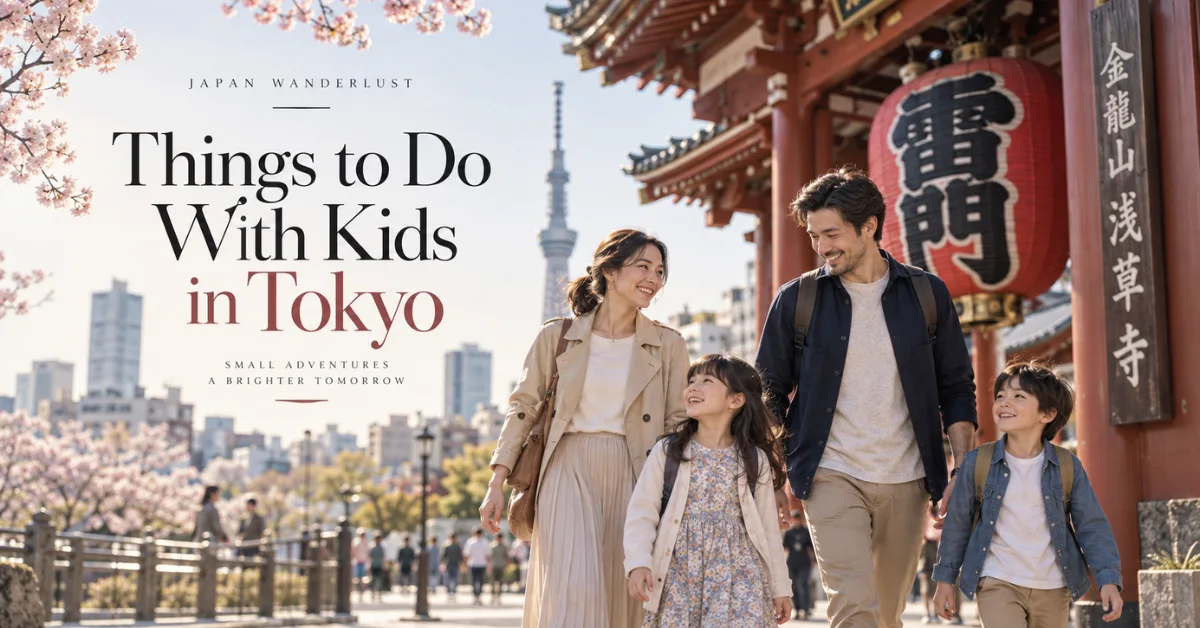
Tokyo with kids means filtering out a city built mostly for adults on their first trip. This guide skips past the temples and observation decks that dominate most Tokyo lists and focuses on what actually holds a child’s attention: hands-on play, animals, characters, and a solid rainy-day backup.
Families get more out of Tokyo when the day matches a kid’s energy level, not just an adult’s itinerary. A digital art museum or indoor play center gives young kids room to move, while older kids get more from a ninja class or a sumo demonstration than a quiet shrine walk.
The activities below differ mainly by age fit, indoor versus outdoor, and how far ahead you need to book. Some, like teamLab Planets, work for a three-year-old and a twelve-year-old on the same visit. Others are built for one age band, and a few need tickets reserved weeks ahead.
This guide covers 15 activities across Tokyo, grouped loosely by age so you can build a day around what your kids will actually enjoy. The comparison table below gives a quick first pass; the full entries after it explain what each place involves.
What Are the Best Things to Do With Kids in Tokyo?
Below are the best things to do in Tokyo with kids.
- teamLab Planets Tokyo
- Tokyo Disneyland & DisneySea
- Tokyo DisneySea
- KidZania Tokyo
- Sanrio Puroland
- Ueno Park & Zoo
- Senso-ji Temple
- Nakamise Street
- A Ninja Experience
- Meiji Shrine
- Yoyogi Park
- Sumida Aquarium
- ASOBono!
- Tokyo Skytree
- Sumoland Tokyo Ryogoku
- Shibuya Parco
- Arcades & Purikura
- Tokyo Joypolis
These activities give children a mix of hands-on experiences, animals, city views, traditional Japanese culture, entertainment, and outdoor sightseeing. The best options depend on the child’s age, interests, weather, and how much walking your family is comfortable with.
If you’re planning more of your itinerary, our guide to things to do in Tokyo covers even more places and experiences worth considering.
1. teamLab Planets Tokyo
teamLab Planets Tokyo is a barefoot digital art museum in Toyosu, on Tokyo Bay. Visitors walk through water, climb through mirrored rooms, and move across floating flower gardens while digital projections respond to their presence. It works well for families who want an art experience built around movement rather than looking at framed pieces from a distance.
| Quick fact | Details |
| Best for | sensory play, photography, ages 6 and up |
| Time needed | 1.5 to 2 hours |
| Area | Toyosu, Koto Ward |
| Indoor/outdoor | indoor |
| Reservation needed | yes, timed ticket |
| Stroller friendly | no, water rooms require bare feet |
After checking bags and shoes into lockers, visitors roll up their pants and move through four main installations and two garden spaces. Water sits knee-deep in some rooms, a giant ball room shifts color as people push through it, and the flower garden changes through the day as its digital blooms open and close.
The value here comes from physically moving through the artwork rather than viewing it from a distance, which makes it easier for kids to stay engaged than a conventional museum would. teamLab Planets also sits a short walk from KidZania Tokyo, so pairing the two makes an efficient day in Toyosu without much extra transit.
Some rooms run dark or rely on mirrored surfaces that can overwhelm very young kids, so this fits elementary-age children better than toddlers. Expect damp pant legs by the end, and book weekend slots well ahead since tickets sell out.
2. Tokyo Disneyland & DisneySea
Tokyo Disneyland and Tokyo DisneySea are two separate gated parks that make up Tokyo Disney Resort in Urayasu, just outside central Tokyo. Reached by the JR Keiyo Line or the Disney Resort Line monorail to Maihama Station, the resort suits families planning at least one full day of rides, parades, and character encounters.
| Quick fact | Details |
| Best for | full-day family outings, all ages |
| Time needed | full day per park |
| Area | Urayasu, Chiba (via Maihama Station) |
| Indoor/outdoor | mostly outdoor |
| Reservation needed | yes, date-specific ticket |
| Stroller friendly | yes |
Each park requires its own ticket tied to a specific date. Disneyland leans on classic Disney and Pixar characters with rides suited to younger kids, such as It’s a Small World and Pooh’s Hunny Hunt, while DisneySea builds entire themed ports around films and original stories, covered in the next entry.
The official Tokyo Disney Resort app is worth setting up before arrival, since it handles ride entry reservations and wait-time tracking, and queues for headline attractions can run well over an hour without it.
A standard ticket admits one park for the day. Families should settle on which park fits the group before booking, since switching later usually isn’t possible. Younger kids drawn to classic characters tend to do better at Disneyland, while DisneySea’s atmosphere and thrill rides suit older kids and adults more.
3. Tokyo DisneySea
Tokyo DisneySea is the second park at Tokyo Disney Resort, built around seven themed ports that exist only at this location, since no other Disney park anywhere else has a DisneySea. It suits families with older kids or teens who want more elaborate theming and a wider range of thrill rides than Disneyland offers.
| Quick fact | Details |
| Best for | teens, thrill rides, atmosphere |
| Time needed | full day |
| Area | Urayasu, Chiba (via Maihama Station) |
| Indoor/outdoor | mostly outdoor |
| Reservation needed | yes, date-specific ticket |
| Physical demand | moderate to high, large park |
The ports include Mediterranean Harbor near the entrance, American Waterfront, Mysterious Island with its Journey to the Centre of the Earth ride, Arabian Coast, Lost River Delta with an Indiana Jones-themed attraction, Port Discovery, and the newer Fantasy Springs area built around Frozen, Tangled, and Peter Pan.
The water-facing layout and an evening harbor show give DisneySea a different rhythm from Disneyland’s Main Street model, which makes it a strong second day for families splitting a Disney Resort trip across two visits.
Fantasy Springs draws heavy demand, so check the app for any entry lottery or paid priority-access requirement before the visit. Several signature rides also carry height minimums that exclude younger kids, so check restrictions before promising a specific ride to a small child.
4. KidZania Tokyo
KidZania Tokyo is an indoor role-play city on the third floor of LaLaport Toyosu, where kids ages 3 to 15 try around 100 jobs, from firefighter to pilot to news anchor, and earn a play currency called KidZos. It fits families with elementary-age kids especially well, since children old enough to work through activities on their own get more out of a full session.
| Quick fact | Details |
| Best for | ages 3 to 15, role-play, independence |
| Time needed | 5 to 6 hours (one shift) |
| Area | LaLaport Toyosu, Koto Ward |
| Indoor/outdoor | indoor |
| Reservation needed | yes, advance booking |
| Stroller friendly | yes, elevators throughout |
The park runs on two shifts, morning and evening, with a full changeover between them. Kids receive an activity set at check-in, move through pavilions doing jobs, deposit their KidZos at an in-park ATM, and spend them at shops before the shift ends.
Unlike most theme parks, adults cannot enter the pavilions with their kids, which gives children a rare stretch of independent decision-making inside a supervised setting. English Wednesday sessions run more activities in English, which helps visiting families who don’t read Japanese.
Popular dates can sell out weeks ahead, so book as soon as travel dates are fixed. teamLab Planets sits a short walk away, so combining a KidZania shift with teamLab before or after makes for an efficient Toyosu day.
5. Sanrio Puroland
Sanrio Puroland is a fully indoor theme park in Tama City dedicated to Sanrio characters including Hello Kitty, My Melody, Cinnamoroll, and Kuromi. It suits families with younger kids who already know the characters, since much of the park’s appeal rests on meeting and photographing them rather than thrill rides.
| Quick fact | Details |
| Best for | younger kids, character fans, rainy days |
| Time needed | 3 to 4 hours |
| Area | Tama City (via Tama Center Station) |
| Indoor/outdoor | indoor |
| Reservation needed | recommended, check operating calendar |
| Good with kids | yes, especially ages 3 to 10 |
From Shinjuku, the Keio Line reaches Tama Center Station in around 30 to 40 minutes, and the park entrance is a short walk from there. Inside, character-themed rides and a parade fill the main hall, with character greeting sessions running through the day.
Because the whole park sits under one roof, it works well as a rainy-day or extreme-heat option when outdoor sightseeing loses its appeal, and the parade schedule gives the day a natural structure to plan around.
The park does not open every day of the week during off-peak periods, so check the operating calendar before building it into an itinerary. Most shows and signage stay in Japanese, which adds atmosphere but limits how much English-speaking parents can translate on the spot.
6. Ueno Park & Zoo
Ueno Park is a large public park in northern Tokyo that holds several museums, a shrine, and Ueno Zoo, Japan’s oldest zoo. It works as a budget-friendly stop for families who want to mix green space with animal viewing and, if time allows, a museum visit.
| Quick fact | Details |
| Best for | budget days, animals, mixed-age groups |
| Time needed | 2 to 4 hours |
| Area | Ueno, Taito Ward |
| Indoor/outdoor | outdoor (zoo has some indoor exhibits) |
| Cost level | low |
| Stroller friendly | yes |
Ueno Zoo splits into an East Garden and West Garden connected by Aesop Bridge, with polar bears, gorillas, elephants, and a shoebill stork spread across both sides, plus a small children’s zoo area with more approachable animals for younger kids to get close to.
Ueno Zoo’s giant pandas, Xiao Xiao and Lei Lei, returned to China in January 2026. Families visiting specifically to see pandas should check the zoo’s website first. The rest of the collection still supports a solid half-day, and pairing the zoo with the Tokyo National Museum or Ueno Toshogu Shrine next door fills out a full day without changing stations.
7. Senso-ji Temple
Senso-ji is Tokyo’s oldest Buddhist temple and the main cultural anchor of Asakusa. Visitors enter through Kaminarimon Gate, walk the length of Nakamise Shopping Street, and reach the main temple hall through Hozomon Gate. It works well as a first stop for families new to Tokyo, since the layout is compact and walkable with kids.
| Quick fact | Details |
| Best for | first-time visitors, culture, photography |
| Time needed | 1 to 1.5 hours |
| Area | Asakusa, Taito Ward |
| Indoor/outdoor | outdoor |
| Stroller friendly | yes, mostly flat paved ground |
| Cost level | free |
Past Hozomon Gate, the grounds open onto the main hall, a five-story pagoda, and several smaller shrines, where kids can draw an omikuji paper fortune for a small fee as a simple hands-on activity.
Asakusa gives families an immediate, walkable contrast between old and modern Tokyo, and the area combines easily with Tokyo Skytree and Sumida Aquarium across the river for a fuller day without much extra transit.
Arriving early means fewer crowds around Kaminarimon, but many Nakamise shops will not have opened yet, so families chasing a quiet photo may need to trade that against having food stalls open for kids.
8. Nakamise Street
Nakamise Street is the roughly 250-meter shopping street connecting Kaminarimon Gate to Senso-ji’s inner grounds, lined with close to 90 stalls selling snacks, souvenirs, and traditional crafts. For families, it doubles as a food stop and a low-pressure way to introduce kids to Japanese street snacks before or after the temple itself.
| Quick fact | Details |
| Best for | food exploration, souvenirs, all ages |
| Time needed | 30 to 45 minutes |
| Area | Asakusa, Taito Ward |
| Indoor/outdoor | outdoor, covered walkway |
| Cost level | low to moderate |
Kid-friendly snacks along the street include ningyo-yaki, small cakes filled with sweet bean paste, along with senbei rice crackers and melonpan, next to stalls selling yukata, folding fans, and small toys that make easy souvenirs.
Most stalls open around 9:00 AM, later than Senso-ji’s grounds. Midday crowds on the street can move slowly with a stroller, so an early or late-afternoon pass tends to be more comfortable than a midday visit.
9. A Ninja Experience
Several ninja-themed dojos and cafes operate around Asakusa, offering short costume, photo, and skills sessions built for visiting families rather than serious martial arts training. It suits families looking for a hands-on activity to pair with a Senso-ji visit, since most venues sit within walking distance of the temple.
| Quick fact | Details |
| Best for | ages 3 and up, hands-on play |
| Time needed | 30 to 90 minutes |
| Area | Asakusa, Taito Ward |
| Indoor/outdoor | indoor |
| Reservation needed | yes, book ahead |
| Good with kids | yes |
A typical session includes changing into a ninja costume, basic training such as shuriken, or throwing star, practice or simple stealth movements, and a photo set, with some venues adding a short samurai or history exhibit.
Programs vary widely by venue and age range, so check whether a specific dojo separates young kids, who mostly get costumes and photos, from older kids and adults who do more physical training like shuriken throwing. Book ahead, since popular time slots fill quickly, especially around midday.
10. Meiji Shrine
Meiji Shrine is a Shinto shrine dedicated to Emperor Meiji and Empress Shoken, reached through a forested approach and a series of large wooden torii gates near Harajuku Station. It gives families a quiet, green contrast to Harajuku’s crowded shopping streets just a few minutes away.
| Quick fact | Details |
| Best for | culture, quiet break, photography |
| Time needed | 1 to 1.5 hours |
| Area | Shibuya, near Harajuku Station |
| Indoor/outdoor | outdoor |
| Stroller friendly | yes, gravel paths |
| Cost level | free |
From the Harajuku entrance, a gravel path runs through wooded grounds for around ten minutes before reaching the main shrine buildings, where visitors can watch the standard purification and prayer rituals and, on some weekends, a traditional wedding procession crossing the courtyard.
The walk itself works as a reset for families coming from busier stops, since the forest cover and gravel paths slow the pace down before the next activity on the day’s plan.
The walk to the inner shrine is longer than it looks on a map, so factor in extra time with young kids or a stroller. The Yoyogi entrance on the opposite side offers a shorter, less crowded route in if the Harajuku side is busy.
11. Yoyogi Park
Yoyogi Park sits next to Meiji Shrine and is one of Tokyo’s largest open green spaces, with lawns, a cycling course, and playground areas. It works well right after a temple or museum stop, giving kids room to run that most Tokyo sightseeing days don’t offer.
| Quick fact | Details |
| Best for | running around, picnics, breaks |
| Time needed | 1 to 2 hours |
| Area | Shibuya |
| Indoor/outdoor | outdoor |
| Cost level | free |
| Stroller friendly | yes |
Weekends bring street performers, food trucks, and, in late March and early April, dense crowds under cherry blossoms, while weekday visits tend to be calmer and better suited to a simple picnic break.
Shade is limited across much of the open lawn area, so midday visits in summer call for sun protection and water. Pairing the park with Meiji Shrine beforehand makes a natural half-day loop without a station change.
12. Sumida Aquarium
Sumida Aquarium is a fully indoor aquarium on the fifth and sixth floors of Tokyo Skytree Town, a short walk from Oshiage Station. It fits naturally into a Skytree visit, since both sit in the same complex, and its open pool-style penguin tank tends to hold kids’ attention longer than a typical glass-tank aquarium.
| Quick fact | Details |
| Best for | rainy days, ages 3 and up |
| Time needed | 1.5 to 2 hours |
| Area | Oshiage, Sumida Ward |
| Indoor/outdoor | indoor |
| Stroller friendly | yes |
| Good with kids | yes |
The layout has no fixed route, with an open floor plan and plenty of seating, so families can linger at the penguin pool or jellyfish zone rather than moving through in one direction, and the on-site Penguin Cafe gives an easy break point.
The aquarium sits about a 20-minute walk from Senso-ji across the Sumida River, which lets families combine Asakusa’s temple visit, the aquarium, and Skytree into one connected day without doubling back on transit.
Weekday hours run shorter than weekends. Check the current schedule before planning a late-afternoon arrival, especially if pairing it with Skytree the same day.
13. ASOBono!
ASOBono! is one of the largest indoor play facilities in Tokyo, located inside Tokyo Dome City in Bunkyo Ward, near Suidobashi and Korakuen stations. It suits families with toddlers and preschoolers especially well, since it includes a dedicated crawling area for babies alongside ball pools, a play house, and a Plarail train-play zone for older kids.
| Quick fact | Details |
| Best for | toddlers, preschoolers, rainy days |
| Time needed | 1.5 to 3 hours |
| Area | Bunkyo Ward (Tokyo Dome City) |
| Indoor/outdoor | indoor |
| Good with kids | yes, ages 0 and up |
| Restroom/change facilities | yes |
The space splits into themed zones, including an active sea-themed play area, a city zone for role-play in a mini restaurant or shop, and a separate soft-play crawling garden built for babies under two.
The facility can hit capacity during busy periods and rainy days, so arriving soon after opening improves the odds of getting straight in. Tokyo Dome City itself has enough other attractions nearby to fill the rest of the day if the group needs to split by age.
14. Tokyo Skytree
Tokyo Skytree is a 634-meter broadcasting and observation tower in Sumida, connected directly to the Tokyo Solamachi shopping complex and Sumida Aquarium. It gives families city views from two observation levels and works well paired with the aquarium or Senso-ji on the same day.
| Quick fact | Details |
| Best for | city views, first-time visitors, families |
| Time needed | 1.5 to 2 hours |
| Area | Sumida Ward |
| Indoor/outdoor | indoor |
| Reservation needed | recommended for weekends |
| Best time | late afternoon into evening |
The Tembo Deck sits at around 350 meters and the higher Tembo Galleria at around 450 meters, connected by a spiral walkway with a few glass-floor sections that surprise some kids and unsettle others.
Visiting across daylight into evening lets families watch the city change as lights come on, which a single fixed timeslot visit misses, though this means blocking out enough time for the shift to actually happen.
Weekend timeslots can sell out, so book ahead if the visit needs to land on a specific day. Check visibility forecasts too, since haze or cloud cover can flatten the view regardless of time of day.
15. Sumoland Tokyo Ryogoku
Sumoland Tokyo Ryogoku is a sumo-themed dinner show in Ryogoku, Tokyo’s traditional sumo district, supervised by former yokozuna Asahifuji. It gives families a way to experience sumo culture without needing tournament tickets, which only go on sale a few times a year in Tokyo.
| Quick fact | Details |
| Best for | families, cultural experience, all ages |
| Time needed | about 2 hours |
| Area | Ryogoku, Sumida Ward |
| Indoor/outdoor | indoor |
| Reservation needed | yes |
| Accessibility | not wheelchair accessible |
The program runs a ring entrance ceremony performed by former top-division wrestlers, a chanko nabe chicken hotpot meal, and a mochi-pounding activity that invites guests, including kids, to take a turn with the mallet.
Unlike watching an actual tournament from the stands, the show format keeps kids engaged at close range and gives them a chance to interact directly with former wrestlers rather than observing from a distance.
The venue is not wheelchair accessible, and seating is assigned rather than chosen, so families with mobility needs should confirm accessibility directly before booking. Showtimes run on a fixed daily schedule that fills up. Reserve ahead of the visit date.
16. Shibuya Parco
Shibuya Parco is a shopping complex whose sixth floor, branded Cyberspace Shibuya, gathers Nintendo Tokyo, Pokemon Center Shibuya, Capcom Store Tokyo, and Jump Shop on a single floor. It suits families with older kids and teens into games and anime more than younger children, since the draw here is merchandise and photo spots rather than hands-on play.
| Quick fact | Details |
| Best for | tweens, teens, gaming and anime fans |
| Time needed | 1.5 to 2.5 hours |
| Area | Shibuya |
| Indoor/outdoor | indoor |
| Cost level | free entry, shopping optional |
| Stroller friendly | yes, elevators available |
Nintendo Tokyo carries games, hardware, and character goods with a hands-on demo area, Pokemon Center Shibuya centers on a life-size Mewtwo statue that draws a steady photo queue, and Capcom Store Tokyo and Jump Shop round out the floor with merchandise from franchises like Street Fighter, One Piece, and Dragon Ball.
Weekend queues for the Mewtwo photo spot can run several minutes deep, so a weekday visit or an early weekend arrival makes for an easier stop. It’s worth setting a spending expectation with kids before browsing four character stores back to back.
17. Arcades & Purikura
Tokyo’s game arcades and purikura photo booths are common across entertainment districts like Shibuya, Ikebukuro, and Akihabara, offering claw machines, rhythm games, and decorated photo-sticker sessions. They work as a short, low-commitment stop to break up a longer sightseeing day rather than a full destination on their own.
| Quick fact | Details |
| Best for | short breaks, older kids, teens |
| Time needed | 20 to 60 minutes |
| Indoor/outdoor | indoor |
| Cost level | low, pay per play |
| Good with kids | best for elementary age and up |
Claw machines, often called UFO catchers, and photo booths take coins directly, while purikura studios add digital filters, stickers, and backgrounds to photos before printing them, giving kids an easy souvenir to take home from the day.
Many machines are cash-only, so keep coins on hand, and purikura editing screens run almost entirely in Japanese, which is manageable with some trial and error but worth budgeting extra time for on a first visit. The noise and light levels can overwhelm toddlers, so this fits older kids better.
18. Tokyo Joypolis
Tokyo Joypolis is a three-floor indoor amusement park operated by Sega inside the DECKS Tokyo Beach mall in Odaiba, with more than 20 rides and attractions built around video-game and VR technology. It suits families with older kids and teens who want thrill rides without weather risk, since the entire park sits indoors.
| Quick fact | Details |
| Best for | older kids, teens, rainy days |
| Time needed | 3 to 5 hours |
| Area | Odaiba, Minato Ward |
| Indoor/outdoor | indoor |
| Physical demand | moderate to high on thrill rides |
| Age fit | best for elementary age and up |
Rides mix physical motion with digital effects, such as a roller coaster that starts inside an arcade-style enclosed section before opening into a real drop, alongside VR simulators and a competitive halfpipe game that responds to how well two players sync their movements.
A passport ticket gives unlimited access to rides for a flat price, and same-day re-entry lets families step out to explore the rest of Odaiba’s shops and views before coming back in.
Some rides carry a minimum height requirement of around 110 centimeters. Check restrictions before promising a specific ride to a younger child. Children under six generally enter the park for free, though individual attractions still charge admission.
What Are the Best Areas in Tokyo for Families With Kids?
The best areas in Tokyo for families with kids include Odaiba, Ueno, Asakusa, Shibuya, and the Tokyo Bay area. Each offers a different type of family experience, from museums and indoor attractions to parks, temples, shopping, and observation decks.
Odaiba works well for families who want several indoor attractions close together, while Ueno combines Ueno Zoo, museums, and a large public park. Asakusa is a good choice for introducing children to traditional Tokyo through Senso-ji Temple and Nakamise Street. Shibuya is better suited to older children and teenagers who enjoy shopping, gaming, pop culture, and busy city environments. Families do not need to visit every area, so it is usually easier to group attractions by neighborhood and spend part of the day in one area rather than crossing Tokyo repeatedly.
What Are the Best Indoor Things to Do With Kids in Tokyo?
The best indoor things to do with kids in Tokyo include teamLab Planets, KidZania Tokyo, Sumida Aquarium, ASOBono!, Tokyo Joypolis, museums, arcades, and indoor character attractions. These are especially useful during rainy days, very hot summer afternoons, or colder winter weather.
Tokyo has many indoor attractions that can fill several hours without feeling like a backup plan. Younger children may enjoy indoor play areas, aquariums, and role-playing attractions, while older children and teenagers may prefer digital art, gaming, arcades, and interactive entertainment. Mixing indoor and outdoor activities in the same day can also make sightseeing easier for children who become tired from long periods of walking.
What Can Families Do in Tokyo on a Rainy Day?
Families can spend a rainy day in Tokyo visiting aquariums, interactive museums, indoor amusement centers, shopping complexes, arcades, or hands-on attractions such as KidZania and teamLab Planets. Many of these places are located close to train stations, so families can move around the city without spending too much time outside.
Odaiba and the Tokyo Bay area are particularly convenient on wet days because several attractions, restaurants, and shopping facilities can be reached within the same area. Tokyo Skytree Town is another practical option because families can combine Sumida Aquarium, shopping, restaurants, and other indoor activities in one location. Keeping one or two indoor alternatives in your itinerary can make a rainy day much easier to manage.
What Are the Best Free Things to Do With Kids in Tokyo?
Some of the best free things to do with kids in Tokyo include visiting Senso-ji Temple, walking through Meiji Shrine, spending time in Yoyogi Park, exploring Ueno Park, seeing Shibuya Crossing, and walking through family-friendly neighborhoods such as Asakusa.
Free attractions are useful for balancing the cost of theme parks, museums, and ticketed experiences. Parks and temple grounds also give children space to slow down between busy attractions. Families can easily combine a free activity with one paid attraction in the same area, such as visiting Senso-ji before another Asakusa activity or walking through Meiji Shrine before continuing to Harajuku and Shibuya.
What Are the Best Things to Do With Toddlers in Tokyo?
The best things to do with toddlers in Tokyo are usually slower-paced attractions with space to move around, easy access to restrooms and food, and the option to leave when needed. Good choices include Ueno Park, Ueno Zoo, Sumida Aquarium, ASOBono!, Yoyogi Park, and shorter visits to places such as Senso-ji Temple.
Toddlers can become tired quickly in busy stations, long queues, and crowded attractions, so a lighter itinerary usually works better than trying to fit several major sights into one day. Plan one main activity in the morning, allow time for lunch and rest, then add a flexible afternoon activity nearby. Parks, aquariums, and indoor play spaces are especially useful because families can adjust the length of the visit depending on the child’s energy level.
What Are the Best Things to Do With Teenagers in Tokyo?
The best things to do with teenagers in Tokyo include teamLab Planets, Shibuya, Harajuku, Tokyo Joypolis, arcades, purikura, Shibuya PARCO, Tokyo Skytree, and other attractions connected to gaming, anime, fashion, technology, and Japanese pop culture.
Teenagers may enjoy Tokyo more when the itinerary includes places they already recognize from social media, games, anime, fashion, or Japanese culture rather than only temples and traditional sightseeing. A balanced day could combine a cultural stop such as Meiji Shrine with Harajuku and Shibuya, or pair an observation deck with arcades, shopping, and food nearby. Giving teenagers some choice over one or two stops can also make the day feel less like a fixed sightseeing schedule.
What Is the Best Way to Get Around Tokyo With Kids?
The best way to get around Tokyo with kids is usually by train and subway, combined with short walks between nearby attractions. Tokyo’s public transportation network reaches most major sightseeing areas, making it unnecessary for families to use taxis or private vehicles for every journey.
The easiest approach is to group attractions by area and avoid crossing the city several times in one day. For example, families can visit Meiji Shrine, Harajuku, and Shibuya together, or combine Senso-ji, Nakamise Street, and Tokyo Skytree. Families who prefer help with routing, timing, and choosing age-appropriate stops can also consider a Tokyo private tour for families built around their children’s ages and interests.
Is the Tokyo Subway Easy With Kids?
Yes, Tokyo’s subway and train systems are generally easy to use with kids once you understand the basic route. Stations have clear signs, many lines use English station names and numbers, and major attractions are usually within walking distance of a station.
The harder part for families is not understanding the trains but dealing with large stations, rush-hour crowds, stairs, and long transfers. Try to avoid weekday commuter periods when possible, especially in the early morning and around the evening rush. Routes with fewer transfers are often better for families even if they take a few minutes longer. A guided Tokyo private tour can also make the first day easier for families who want help navigating the city while seeing the main sights.
Is Tokyo Stroller-Friendly?
Tokyo is reasonably stroller-friendly, especially around major attractions, shopping centers, parks, and newer stations, but some older stations, narrow streets, and crowded areas can be more difficult to navigate.
Most large stations have elevators, although finding the correct elevator route can sometimes take longer than expected. Lightweight or foldable strollers are easier to manage on trains and inside crowded stations. In areas such as Asakusa or Harajuku, it can also be easier to visit earlier in the day before pedestrian traffic becomes heavier.
How Many Days Do Families Need in Tokyo With Kids?
Families should spend at least three to five days in Tokyo with kids if they want to see several major attractions without rushing. Three days can cover the main highlights, while four or five days give families more time for theme parks, indoor attractions, shopping, and slower days.
A shorter Tokyo stay works best when attractions are grouped by area. One day could focus on Asakusa and Tokyo Skytree, another on Meiji Shrine, Harajuku, and Shibuya, and another on Odaiba or a major family attraction. Families planning to visit Tokyo Disneyland or Tokyo DisneySea should normally treat each park as a full-day activity rather than trying to combine it with sightseeing elsewhere in Tokyo. If Tokyo is part of a longer trip, Japan Wanderlust also offers private tours in Japan for families who want to combine Tokyo with destinations such as Mt. Fuji, Hakone, Kyoto, or other parts of Japan.
