
Tokyo is one of those cities that somehow keeps surprising you, and a well-planned 7-day Tokyo itinerary gives most first-time visitors just the right amount of time to take it all in. One week is enough to explore the city’s most beloved neighborhoods, visit its iconic landmarks, discover its incredible food scene, and still fit in a day trip beyond the city limits. This guide shows you how to make the most of one week in Tokyo, balancing the must-see highlights with the kind of slower, unhurried exploration that makes a trip truly memorable.
What makes a great Tokyo 1-week itinerary isn’t just about how many days you have. It’s about how thoughtfully those days are arranged. Tokyo is a city of distinct neighborhoods, each with its own personality, and its world-class train network makes getting around surprisingly easy once you understand the lay of the land. The key is grouping nearby areas together: places like Asakusa, Ueno, and Tokyo Skytree sit close to each other and feel natural to visit on the same day, rather than zigzagging across the city.
One of the most common mistakes in a Tokyo week-long itinerary is trying to squeeze too much into each day. Some guides will have you rushing through Shibuya, Harajuku, Shinjuku, and Akihabara before dinner, and while it’s technically possible, it often leaves you feeling frazzled rather than fulfilled. In our experience, visiting fewer neighborhoods per day means you actually get to feel each place rather than just pass through it.
This 7 days in Tokyo itinerary follows the approach recommended by seasoned Japan travelers and trusted Tokyo travel guides: plan around geographic zones, build in time between spots, and include one carefully chosen day trip, whether that’s the mountain scenery of Hakone or the temples and waterfalls of Nikko. Tokyo genuinely rewards travelers who take their time.
If you’re hoping for a Tokyo trip that covers all the essentials without turning into an exhausting checklist, a week in Tokyo is one of the most well-balanced options for a first visit. You’ll see the city properly, breathe it in, and leave with memories that go well beyond just ticking off the sights.
Is a Week in Tokyo Enough? How Many Days You Actually Need
A week in Tokyo, seven days, covers the major districts, fits in one real day trip, and gives you a decent feel for how the city actually runs. It won’t get you everything. Nobody’s week does, and that’s fine. Tokyo has 23 special wards and over 14 million people in them, so “seeing it all” was never really on the table. The question worth asking is whether you used the days you had well.
In our experience, that usually splits into five full days in the city proper and two for a day trip or a slower look at a neighborhood you’d otherwise rush through. Plan by zone instead of by attraction and this holds up fine. Most itineraries fall apart when people try to cram Shibuya, Harajuku, Shinjuku, and Akihabara into a single day. You can do it, technically. You’ll leave having seen none of them properly. We stick to one or two neighborhoods a day here, so you come away with an actual sense of the place instead of a list of photos.
What fits comfortably in a week:
- Core neighborhoods: Shinjuku, Shibuya, Harajuku, Asakusa, Akihabara, Yanaka, Ueno
- Cultural anchors: Senso-ji Temple, Meiji Shrine, teamLab Borderless (or Planets), Tokyo Skytree or Tokyo Tower
- Food districts: Tsukiji Outer Market, Shimokitazawa, Ginza dining
- One day trip: Hakone (Mt. Fuji views and onsen) or Nikko (shrines and mountain scenery)
- One slower neighborhood day for markets, cafes, and unscheduled wandering
What needs more time or its own trip:
- Kyoto and Nara (minimum 2 nights, ideally 3)
- Kamakura and Enoshima on top of a Tokyo-heavy schedule
- Outer Tokyo areas like Hachioji or Okutama
- More than one overnight day trip from your Tokyo base
“Zone fatigue” is real. Bounce between three or four unrelated districts in a day and the transit time piles up, your energy tanks by mid-afternoon, and everything starts to blend together. A week in Tokyo works when you treat each day as one zone, not a highlights reel.
How 7 days in Tokyo compares to 5 or 10
Seven days sits in a useful middle ground. Five days forces you to make hard cuts. Ten days gives you room to slow down or extend into the broader Kanto region or onto Kyoto.
| 5 Days | 7 Days | 10 Days | |
| Core Tokyo districts | 4–5 districts (rushed) | 6–7 districts (comfortable) | 7–8 districts (comfortable) |
| Day trips | 1 short day trip (Nikko or Hakone, not both) | 1 full day trip (Hakone recommended) | 2 day trips or 1 overnight |
| Slower neighborhood days | None | 1 | 2–3 |
| Kyoto extension | Not realistic | Possible as 2-night add-on | Comfortable 3-night add-on |
| Akihabara + Yanaka + Shimokitazawa | Must cut 1–2 | All three fit | All three, with room to revisit |
| Teamlab + major museums | Choose one | Both fit | Both, with repeat visits possible |
| Overall pace | Fast, minimal margin for delays | Moderate, recoverable if one day runs long | Relaxed, flexible |
Seven days works as a standalone Tokyo trip or as the Tokyo leg of a longer Japan itinerary. The most common extension is a 2-night Kyoto add-on, which you reach via Shinkansen from Tokyo Station or Shinagawa in roughly 2 hours 15 minutes on the Nozomi.
If you plan to connect Tokyo and Kyoto, a 7-day Japan Rail Pass covers the cost of that Shinkansen leg alongside your Tokyo-area JR travel, making it worth the upfront price. A 5-day stay in Tokyo leaves too little buffer to absorb a same-day departure to Kyoto without feeling abrupt.
Top Things to Do in Tokyo in 7 Days
If you want the short version instead of the day-by-day walkthrough, here’s everything from this itinerary grouped by type instead of by day, with the day number so you can jump to that section below.
Temples and shrines
- Senso-ji Temple (Day 1): Tokyo’s oldest temple. Go before 9am, before the tour groups show up
- Meiji Shrine (Day 2): a 1.7km walk through cedar forest to a working shrine, worth doing before 10am
Views over the city
- Tokyo Skytree (Day 1): 350m observation deck, book ahead or expect a long weekend queue
- Tokyo Metropolitan Government Building (Day 3): free 202m observation deck, no ticket required
- Tokyo City View / Mori Art Museum (Day 6): 53rd floor of Mori Tower in Roppongi, one ticket covers both
Gardens and green space
- Shinjuku Gyoen (Day 3): French, English, and Japanese gardens in one park, ¥500 entry
- Ueno Park (Day 1): five museums within walking distance, good for an afternoon wind-down
- Imperial Palace East Gardens (Day 5): free entry, and about as close as most visitors get to the palace grounds
- Hamarikyu Gardens (Day 5, optional): a stroll garden on Tokyo Bay, ¥300 entry, closes at 5pm
Museums and art
- Tokyo National Museum (Day 1): the largest collection of Japanese art in the world
- Hakone Open Air Museum (Day 4): over 120 outdoor sculptures, including a Picasso pavilion
- teamLab Planets (Day 6): book this one weeks or months out. Walk-up tickets are basically gone
- Mori Art Museum (Day 6): rotating exhibitions on the 53rd floor of Mori Tower
Food and markets
- Tsukiji Outer Market (Day 5): sushi breakfast for ¥1,500-3,000. Go before 9:30am while the stalls are still fully stocked
- Nakamise Shopping Street (Day 1): the covered approach to Senso-ji, good for souvenirs and ningyo-yaki
- Omoide Yokocho (Day 3, optional): a narrow yakitori alley near Shinjuku Station’s west exit
- Ginza’s back streets (Day 5): yakitori counters and standing sushi bars east of Chuo-dori
Neighborhoods worth just wandering
- Shibuya Crossing and Harajuku (Day 2): Takeshita Street and Omotesando sit 500 meters apart and feel like two different cities
- Kabukicho and Golden Gai (Day 3): Shinjuku’s neon entertainment strip and its 200-plus tiny bars
- Akihabara (Day 6): there’s no single must-see here. Just wander the side streets and upper floors
- Shimokitazawa and Yanaka Ginza (Day 7): the slowest, least touristy stops in the whole plan
Day trip
- Hakone (Day 4): Lake Ashi, the Owakudani volcanic valley, and the Romancecar from Shinjuku
- Nikko or Kamakura: the two alternatives if Hakone doesn’t fit your dates, covered further down
That’s the full list. The day-by-day version below adds timing and transit between each stop.
What Is the best 7-day Tokyo itinerary for first-time visitors?
This itinerary is built for first-time visitors and structured by geography. Each day groups districts that sit close to each other, so you spend time in Tokyo rather than crossing it. The result is a plan where most days involve one or two train transfers rather than five, and where you arrive at your first stop with energy instead of transit fatigue.
The 7-day arc moves through three loose zones: east Tokyo (Asakusa, Ueno, Skytree) on Day 1, the west-side cultural corridor (Harajuku, Shibuya, Shinjuku) across Days 2 and 3, a day trip out of the city on Day 4, the central business and arts belt (Ginza, Imperial Palace, Roppongi) on Days 5 and 6, and a slower, local-focused final half-day on Day 7 before departure. If this is your first trip to Tokyo, that order also front-loads the easier orientation days (temples, an observation deck, a park) before the day trip and the busier central districts later in the week.
Day 4 is the most logistically demanding day in the plan. The Hakone day trip requires an early departure from Shinjuku, weather-dependent decisions about Mt. Fuji visibility, and a timed return to avoid the evening rush. Read the Day 4 section in full before you travel and check the Hakone weather camera the night before.
| Day | Theme | Key Districts |
| Day 1 | Old Tokyo and vertical views | Asakusa, Tokyo Skytree, Ueno |
| Day 2 | Shrines, street fashion, and the crossing | Harajuku, Meiji Shrine, Shibuya |
| Day 3 | Gardens, government, and late-night alleys | Shinjuku Gyoen, Kabukicho, Golden Gai |
| Day 4 | Day trip: mountain views and volcanic valleys | Hakone, Lake Ashi, Owakudani |
| Day 5 | Markets, palaces, and upscale streets | Tsukiji, Imperial Palace, Ginza |
| Day 6 | Digital art, electronics, and rooftop culture | Toyosu, Akihabara, Roppongi |
| Day 7 | Slow Tokyo and departure | Shimokitazawa, Yanaka, airport transfer |
Day 1 – Asakusa, Tokyo Skytree, and Ueno
Begin at Senso-ji Temple no later than 7:00am, before tour groups arrive. Pre-booked Tokyo Skytree tickets are strongly recommended for the afternoon.
The two anchors of this day are Senso-ji and Tokyo Skytree, both within walking distance of each other and both best experienced at specific times of day.
Senso-ji Temple
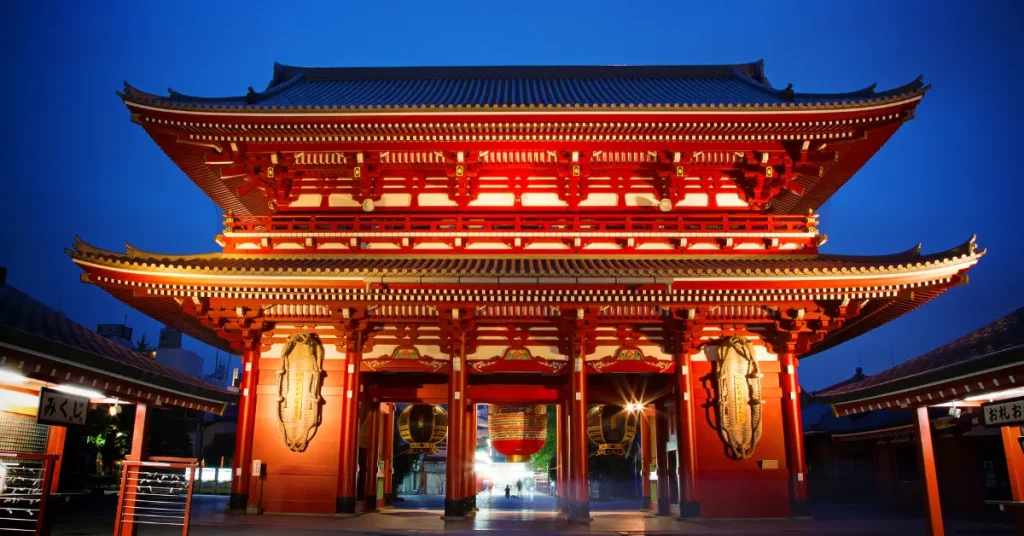
Senso-ji Temple is Tokyo’s oldest and most visited temple, and the gap between a 7:00am visit and a 10:00am visit is significant. Early morning, the incense smoke drifts through a quiet courtyard and the main hall is accessible without a crowd pressing behind you. Senso-ji is a functioning Buddhist temple, not a theme park attraction.
Dress modestly, and take a few minutes at the large bronze cauldron in front of the main hall: worshippers draw the incense smoke toward themselves as an act of purification. Observing this before entering the hall adds context that makes the visit more meaningful. Nakamise Shopping Street, the covered approach to the temple, opens around 9:00am and is the right place to buy packaged souvenirs and try ningyo-yaki (small bean-paste cakes shaped as temple bells and pigeons).
Tokyo Skytree
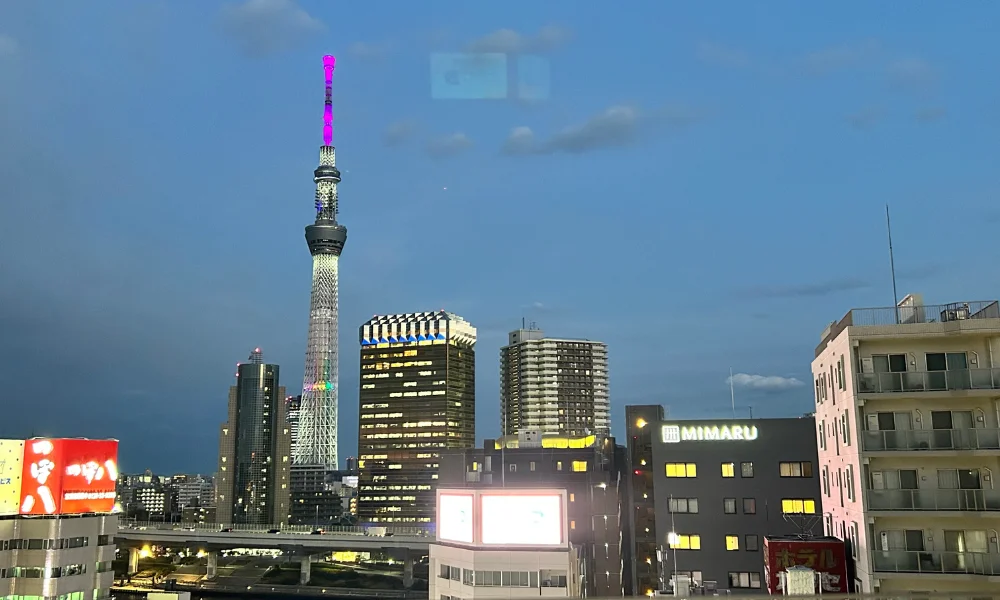
Tokyo Skytree stands 634 meters and holds two observation decks. The Tembo Deck at 350 meters is included in the standard ticket. Walk-up queues can exceed 90 minutes on weekends and public holidays. Book tickets online in advance through the official Skytree website and go directly to the priority lane. Clear days offer views toward Mt. Fuji to the southwest, which makes the late morning or early afternoon the ideal window before haze builds.
From Asakusa to Skytree, it is a 10-minute walk across the Azuma Bridge, or two stops on the Tobu Skytree Line from Asakusa Station.
If you have extra time: The Tokyo Solamachi shopping complex at the base of Skytree is worth 20–30 minutes if you want a sit-down lunch without backtracking to Asakusa.
Move to Ueno by early afternoon via the Ginza Line (two stops from Asakusa to Ueno, around 5 minutes). Ueno Park contains five major museums within walking distance of each other. For first-timers, the Tokyo National Museum is the right choice: its main Honkan building holds the world’s largest collection of Japanese art, and two to three hours covers the highlights without rushing. Ueno Park itself is pleasant for a walk toward the end of the afternoon, particularly around Shinobazu Pond.
Sleep in Asakusa or Ueno tonight. Both neighborhoods put you in a strong position for tomorrow’s westward move to Harajuku and Shibuya.
If the Skytree observation deck is sold out for your date, the Tokyo Tower observation deck in Minato is a workable alternative and requires less advance planning, though it sits further from today’s other stops.
Day 2 – Shibuya Crossing, Harajuku, and Meiji Shrine
Start from your hotel by 8:30am to reach Meiji Shrine before the late-morning crowds. No advance tickets are required for today, but IC card transit access is needed throughout.
The two anchors are Meiji Shrine, which sets the tone for the morning, and Shibuya Crossing, which closes the day on an entirely different register.
Meiji Shrine
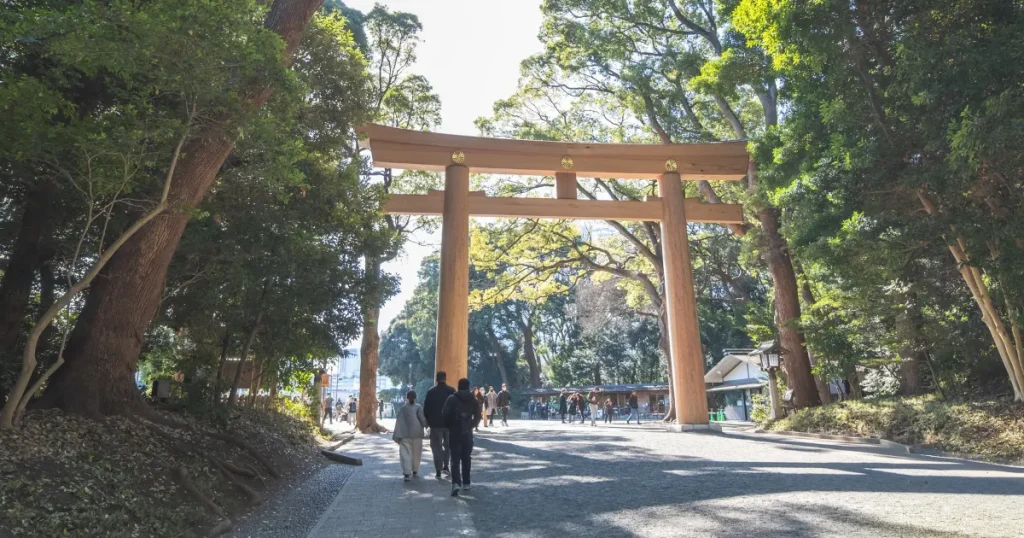
Meiji Shrine sits inside 70 hectares of forested parkland in the middle of one of Tokyo’s densest areas. The approach through the cedar-lined forest path runs approximately 1.7 kilometers from the main torii gate to the shrine building itself. That walk is not a formality to get through quickly. It functions as a genuine decompression, with the ambient noise of the city dropping away within a few minutes of entering the trees. Budget 30 to 45 minutes for the forest approach and the shrine grounds before the main complex fills with visitors. Arrive before 10:00am and you will share the path with a handful of people rather than a tour group.
Shibuya Crossing
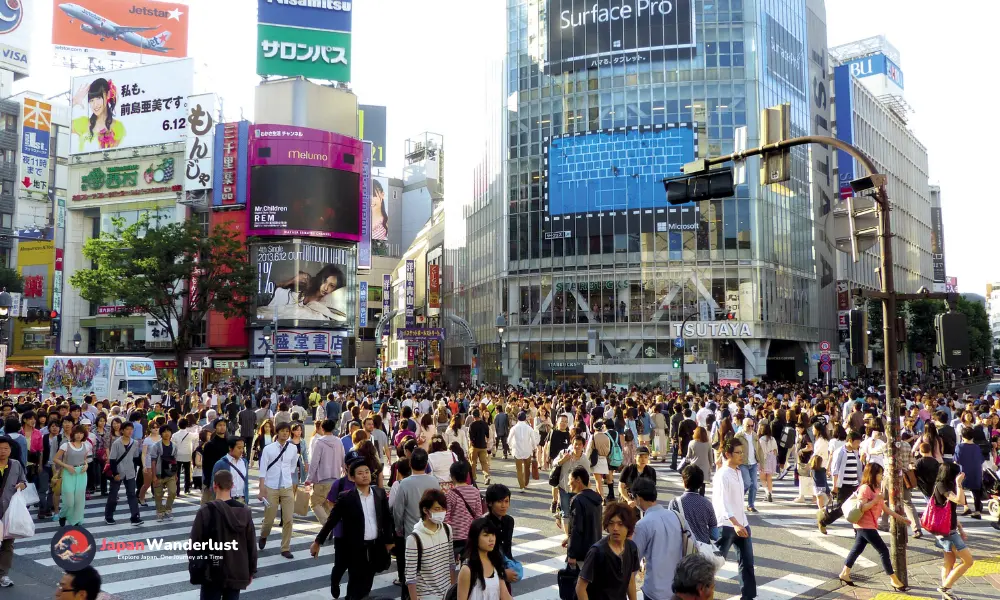
Shibuya Crossing is most often photographed from street level, which produces a limited view. The better perspectives are from above. The Starbucks on the second floor of the building directly facing the crossing (the Shibuya Tsutaya building) has window seats that look directly down onto the intersection.
Mag’s Park, the rooftop terrace of the Mag’s Park building on the opposite corner, offers a wider angle and is free to access. Visit the crossing at scramble peak times: around 12:30pm, 5:00pm, or just after 7:00pm when the density of pedestrians is highest.
Between the shrine and the crossing, the day moves through two contrasting versions of Harajuku. Takeshita Street is narrow, chaotic, and deliberately excessive: it is the home of Harajuku crepes, layered Lolita fashion, and teenage street culture at its most concentrated. It takes around 20 minutes to walk end to end.
Omotesando, three minutes south by foot, is the same neighborhood’s architectural counterpart: a wide, tree-lined boulevard with flagship stores designed by Tadao Ando, Herzog and de Meuron, and Kengo Kuma. Both are worth time, and the contrast between them within 500 meters is itself a useful piece of Tokyo context.
Transit for today is straightforward. Meiji Shrine is a 10-minute walk from Harajuku Station on the JR Yamanote Line. Omotesando and Takeshita Street are both walkable from there. Shibuya is two stops south on the Yamanote Line or a short walk down Omotesando.
If you have extra time: Yoyogi Park, which borders the Meiji Shrine grounds, is worth a 20-minute walk on the way back toward Harajuku Station. On weekends, the park often hosts informal music performances and group activities near the main entrance.
Sleep in Shibuya or Shinjuku tonight. Shinjuku is the base for tomorrow and positions you directly for the morning without any transit required.
If rain falls during the forest walk to Meiji Shrine, continue anyway: the cedar canopy provides reasonable cover, and the wet forest floor adds to the atmosphere rather than detracting from it. Rain is less manageable at Shibuya Crossing if you plan to use the rooftop vantage point; shift that to the Starbucks window instead.
Day 3 – Shinjuku: Gardens, Government, and Golden Gai
Start at Shinjuku Gyoen when it opens at 9:00am. No advance booking is needed for today, but arriving early at the garden is worth it.
The two anchors are Shinjuku Gyoen in the morning and Golden Gai in the evening, with the Tokyo Metropolitan Government Building bridging the gap in the middle of the day.
Shinjuku Gyoen National Garden
Shinjuku Gyoen National Garden is the most underestimated green space in central Tokyo. Entry costs ¥500, and the 58-hectare garden holds French formal gardens, an English landscape section, and a Japanese traditional garden within a single site. It is genuinely one of the best places in the city to slow down without leaving central Tokyo.
Alcohol is not permitted inside, which keeps the atmosphere calm even on busy weekend afternoons. Budget 60 to 90 minutes.
Cherry blossom season (late March to early April) makes this one of the most sought-after spots in the city; outside that window it remains quiet and well-maintained.
Tokyo Metropolitan Government Building
Tokyo Metropolitan Government Building provides a 360-degree observation deck at 202 meters with no entry fee and no advance ticket required. This is a meaningful practical advantage over Skytree and Tokyo Tower on days when you want views without the wait or the cost.
The north and south towers each have an observation floor; the south tower is open until 10:30pm on most nights, making it useful for an evening city view as an alternative to the Golden Gai if you prefer something quieter.
Transit within Shinjuku today is mostly on foot. The government building is a 10-minute walk from Shinjuku Station’s west exit. Shinjuku Gyoen is a 10-minute walk from the south exit. Kabukicho, Tokyo’s entertainment district, is directly northeast of the east exit.
Move into the evening by heading through Kabukicho, the neon-lit entertainment zone known for its pachinko parlors, karaoke buildings, and street food stalls. It is loud, dense, and worth an hour of wandering even if none of the venues appeal. From Kabukicho, Golden Gai is a 5-minute walk east.
Golden Gai
Golden Gai is a grid of six narrow alleyways containing over 200 tiny bars, most seating between five and eight people. You do not need a reservation at most of them. Walk the alleys first before committing to a bar: look for English-friendly signage or a chalkboard menu in the window, which signals the bar is accustomed to non-Japanese-speaking visitors.
Some bars operate as regulars-only spaces and will politely decline walk-in guests; this is not rudeness, it is how the neighborhood functions. Do not photograph other patrons without asking first. Most bars have a table charge of ¥500 to ¥1,000 on top of your drinks.
If you have extra time: The Omoide Yokocho alley (Memory Lane), just outside the west exit of Shinjuku Station, is a 10-minute walk from Golden Gai and worth a stop before or after: a tight row of yakitori stalls with smoke drifting over the street and very little room to move.
Sleep in Shinjuku tonight. Tomorrow’s Day 4 departure is from Shinjuku Station, and an early start matters.
If the observation deck at the Metropolitan Government Building is closed for maintenance (check the official Shinjuku city website), the Bunkamura area near Shibuya offers a reasonable gallery alternative for a midday culture stop.
Day 4 – Day Trip to Mt. Fuji and Hakone
Depart Shinjuku Station no later than 8:00am. This is the most logistically complex day in the plan. Check the Hakone Ropeway weather camera the night before to assess Mt. Fuji visibility. No same-day booking is available for the Romancecar; purchase tickets in advance.
The two anchors are Lake Ashi and the Hakone Open Air Museum, connected by the Hakone area’s own internal transit loop.
Hakone
The Romancecar express (Odakyu Line) runs from Shinjuku to Hakone-Yumoto in approximately 85 minutes and is the most comfortable option for this day trip. Reserve seats in advance through the Odakyu website or at the Odakyu counter in Shinjuku Station.
The alternative is the JR Shinkansen to Odawara (50 minutes from Shin-Osaka or 35 minutes from Tokyo Station on the Kodama), then a local transfer into Hakone, which is faster but more fragmented. The Romancecar is the better experience and keeps the morning simple.
From Hakone-Yumoto, board the Hakone Tozan switchback railway up to Gora, then the Hakone Tozan Cable Car to Sounzan, then the Hakone Ropeway to Owakudani and onward to Togendai on Lake Ashi. This transit loop is how the day connects its points. It sounds complex but is well-signed and runs on fixed schedules.
The Hakone Free Pass, purchased at Shinjuku before departure, covers the Romancecar fare (partially) and all Hakone internal transit for the duration of your stay.
Lake Ashi
Lake Ashi is the volcanic crater lake from which Mt. Fuji is most famously photographed, with the mountain reflected in still water and a traditional torii gate in the foreground. Pirate Ship replica cruises cross the lake between Togendai and Hakone-machi, taking around 30 minutes. The view of Fuji depends entirely on cloud cover.
Mt. Fuji is most reliably visible from October through February; summer humidity and cloud build-up make clear views uncommon from June through September. If the mountain is obscured, the lake and surrounding hills remain worthwhile, but calibrate your expectations before the trip.
Hakone Open Air Museum
Hakone Open Air Museum sits between Gora and Chokoku-no-Mori Station on the Tozan railway and holds over 120 outdoor sculptures set across a hillside garden, including a dedicated Picasso pavilion. Budget 90 minutes to two hours.
It is one of the best outdoor museum experiences in Japan and holds up even in overcast weather, which makes it the backbone of the day regardless of Fuji visibility.
Owakudani
Owakudani is a volcanic valley with active sulfuric vents and the famous kuro-tamago, black eggs hard-boiled in volcanic spring water. The ropeway station here offers one of the clearest elevated views of Mt. Fuji when conditions allow.
Owakudani occasionally closes due to volcanic activity or high sulfur levels; check the Hakone Ropeway official site the morning of your trip.
Begin the return journey from Hakone-Yumoto by 4:30pm to arrive back in Shinjuku before the worst of the evening rush.
If you have extra time or want to extend: Staying overnight in a Hakone ryokan upgrades this day significantly. A traditional ryokan includes kaiseki dinner, private or shared onsen, and a slower morning to observe the mountain at dawn when visibility is often best. If you add one ryokan night, adjust the Day 5 start accordingly.
Sleep back in Shinjuku tonight (or in a Hakone ryokan if extending).
If Mt. Fuji visibility is poor and you want a mountain alternative, the Fuji Five Lakes area (reached via highway bus from Shinjuku Bus Terminal in around 2 hours) offers closer proximity to the mountain itself and multiple lake viewpoints, though it works better as a half-day addition to an overnight trip than a standalone day trip replacement.
Day 5 – Imperial Palace, Ginza, and Tsukiji Market
Start at Tsukiji Outer Market by 8:00am for breakfast. No advance booking is required for today’s core plan, but the Inner Market tuna auction is an entirely separate matter (see below).
The two anchors are Tsukiji for the morning and Ginza for the afternoon and evening, with the Imperial Palace East Gardens bridging the midday gap.
Tsukiji Market
The original wholesale fish market relocated its inner operations to Toyosu in 2018. What remains at Tsukiji is the Outer Market: a dense grid of stalls selling fresh sushi, tamagoyaki (Japanese rolled omelette), seafood skewers, dashi stock, kitchen knives, and pickled vegetables.
For visitors, the Outer Market is the experience. Arrive early, before 9:30am, when the stalls are fully stocked and the energy is at its peak. Sushi breakfast from one of the small counter restaurants along the main lane is the best meal of the day and costs ¥1,500 to ¥3,000 per person.
The tuna auction at the new Toyosu Inner Market requires lottery registration months in advance through the Tokyo Metropolitan Central Wholesale Market website; the number of available visitor slots is extremely limited. Do not arrive at Tsukiji expecting to see the auction.
Imperial Palace East Gardens
Imperial Palace East Gardens are free to enter, require no booking, and sit a 20-minute walk or short subway ride from Tsukiji. The gardens occupy the former site of Edo Castle’s innermost citadel and include stone foundation ruins, curated planting areas, and a wide formal lawn. The Kokyo Gaien plaza outside the palace moat is worth a slow walk for the views across the water toward the Nijubashi bridge. The palace itself is not open to the general public except on two days per year (January 2 and February 23).
Move into Ginza by early afternoon. Ginza is Tokyo’s most expensive shopping district and also one of its most architecturally interesting: Hermes, Chanel, Apple, and Louis Vuitton all commissioned significant buildings here, and the street-level architecture is worth examining even without entering.
Itoya, the flagship stationery store on Chuo-dori, is one of the best retail experiences in the city for travelers who appreciate paper, pens, and precision goods. It occupies 12 floors and is genuinely worth an hour. Ginza also holds several small art galleries that operate free or low-cost admission and change exhibitions regularly.
Evening in Ginza’s back streets (the area east of Chuo-dori, toward Higashi Ginza and Shimbashi) offers a different energy from the main boulevard: yakitori restaurants, standing sushi bars, and craft cocktail bars that cater to the post-work Tokyo crowd rather than international tourists.
If you have extra time: The Hamarikyu Gardens, a 10-minute walk south of Ginza, are a traditional stroll garden on Tokyo Bay with a teahouse on a pond. Entry costs ¥300. They close at 5:00pm, so fit this in before the Ginza evening.
Sleep in Shinjuku, Shibuya, or any central base tonight. Tomorrow pulls east toward Toyosu and Akihabara.
If Tsukiji is unusually crowded or a stall you wanted is closed, the Ameya-Yokocho market in Ueno offers a different but energetic street market experience as a morning alternative, though it skews more toward dry goods and street food than fresh seafood.
Day 6 – TeamLab Planets, Akihabara, and Roppongi
Start at TeamLab Planets in Toyosu at your pre-booked entry time, ideally 10:00am. Advance tickets are non-negotiable for this day. If you have not yet booked, do it now before reading further.
The two anchors are TeamLab Planets and the Mori Art Museum in Roppongi, with Akihabara in between.
TeamLab Planets
TeamLab Planets in Toyosu is a barefoot, immersive digital art experience spread across several large-scale rooms, each built around water, light, reflection, or botanicals. The experience runs approximately 90 minutes at a comfortable pace.
Tickets sell out weeks, sometimes months, in advance. This is consistently the single most commonly missed booking in any Tokyo trip, and it cannot be resolved on arrival: walk-up entry is rarely available.
Book through the TeamLab official website before you book your flights if you can. Wear or bring clothing you are comfortable rolling up to the knee, as some rooms involve wading through shallow water. Lockers are provided for bags and shoes.
From Toyosu, take the Yurakucho Line to Iidabashi and transfer to the Oedo Line to Akihabara, or use the Rinkai Line to Osaki and switch to the Yamanote Line for a direct route. Total transit is 25 to 35 minutes.
Akihabara
Akihabara is best absorbed with two to three hours and no fixed agenda. The main boulevard (Chuo-dori) is lined with multi-floor electronics retailers, anime goods stores, and maid cafes. The more interesting browsing is in the side streets and upper floors: retro game shops with boxed Super Famicom cartridges, model kit retailers, and specialist audio equipment stores.
Yodobashi Camera Akihabara is one of the largest electronics stores in the world and useful for anything from adapters to cameras. Akihabara has no single unmissable attraction; it is a neighborhood to wander rather than tick off.
Akihabara is also one of the clearest examples of how Japan’s modern culture travels globally before visitors ever arrive. Retro games, anime stores, figurines, electronics, maid cafés, and character goods turn the area into a physical version of the Japanese pop culture many younger travelers first discovered online. That connection helps explain why Gen Z travelers are so fascinated by Japan’s pop culture and city experiences
Move to Roppongi in the evening. The Mori Art Museum sits on the 53rd floor of Mori Tower and is open until 10:00pm on most weekdays and Tuesdays (hours vary by exhibition; check the website).
The museum entry ticket also includes access to the Tokyo City View observation deck on the same floor. An izakaya dinner in the Roppongi or Azabu area after the museum closes out the evening well; the neighborhood has a higher concentration of international-friendly restaurants than most other Tokyo areas.
If you have extra time: The National Art Center Tokyo is a 10-minute walk from Roppongi Hills and operates a large-scale rotating exhibition space with no permanent collection, meaning what is on depends on the month. Worth checking the schedule.
Sleep in your central base tonight. Tomorrow is a lighter half-day, and departure logistics will depend on whether you are flying from Narita or Haneda.
If TeamLab Planets is fully sold out for your entire trip window and you cannot secure tickets, teamLab Borderless (which relocated to Azabudai Hills in 2024) operates a separate ticketed experience and is worth attempting as an alternative.
Day 7 – Shimokitazawa, Yanaka, and Departure
Day 7 is not a write-off. Two of Tokyo’s most distinctive neighborhoods, Shimokitazawa and Yanaka, are both reachable within 30 minutes of central Tokyo and both reward a slow, unhurried morning. Start by 9:00am to fit both before a midday airport transfer.
The two anchors are Shimokitazawa for the first half of the morning and Yanaka Ginza for the second, before heading to the airport.
Shimokitazawa
Shimokitazawa is the closest Tokyo gets to a bohemian neighborhood: narrow lanes filled with independent coffee shops, jazz bars, used vinyl record stores, vintage clothing boutiques, and small live music venues.
It has no famous temple, no observation deck, and no must-see attraction. Its value is entirely in the texture of the streets: a slow walk, a good coffee, a browse through a record crate.
The vintage clothing market is particularly strong here, with multiple shops selling curated secondhand pieces at prices well below central Tokyo retail. From Shinjuku, take the Odakyu Line to Shimokitazawa (two stops, around 5 minutes). Give it 60 to 90 minutes.
Yanaka Ginza
Yanaka Ginza is a traditional shotengai, a covered shopping street of small, family-run shops, in the Yanaka district near Nippori. The area retained much of its pre-war low-rise architecture and has a reputation as one of the last places in Tokyo that feels like it did several decades ago.
It is also known locally for its large cat population, which is not a tourism gimmick: cats genuinely lounge in doorways and wander between the stalls. Yanaka is 30 minutes from Shimokitazawa via the Odakyu and JR lines (transfer at Shinjuku), or 5 minutes from Nippori Station on the JR Yamanote Line. Allow 60 minutes.
Departure logistics:
- Narita Airport is 55 to 85 minutes from central Tokyo depending on the service used (Narita Express from Tokyo or Shinjuku Station is the most direct). If flying from Narita, leave your final neighborhood stop by 12:30pm at the latest for a late-afternoon flight, earlier for anything before 3:00pm.
- Haneda Airport is 30 to 40 minutes from Shinjuku via the Keikyu Line (transfer at Shinagawa) or the Tokyo Monorail from Hamamatsucho. Shimokitazawa and Yanaka both connect to Haneda with more comfortable margins than to Narita.
- Luggage forwarding (takuhaibin) is worth using if you are carrying large bags. Services such as Yamato Transport allow you to send luggage from your hotel directly to the airport the day before departure for around ¥2,000 to ¥3,000 per bag. This removes the burden of navigating busy stations with luggage on your final morning and makes Shimokitazawa and Yanaka logistically easy rather than stressful.
Today has no failure-proofing stop because the pace is already relaxed. If rain falls, Shimokitazawa’s covered shopping lanes and Yanaka’s roofed shotengai handle it without issue.
Where should you stay in Tokyo for 7 Days?
Your neighborhood base in Tokyo shapes the entire logistical structure of your week. The three neighborhoods that work best as a 7-day home base are Shinjuku, Shibuya, and Asakusa. Each serves a different travel style, and choosing based on hotel price alone rather than transit position is the most common accommodation mistake first-time visitors make.
Tokyo’s train network is dense but directional. Most major lines run through the western hubs (Shinjuku, Shibuya, Harajuku) or the eastern corridor (Ueno, Asakusa, Akihabara). Staying in Shinjuku or Shibuya keeps you within 15 minutes of most JR Yamanote Line stops and within easy reach of JR lines that connect to Hakone. Staying in Asakusa puts you on the Tokyo Skytree side of the city, which is excellent for east Tokyo days but adds 30–40 minutes of transit on days that pull you west.
| Neighborhood | Best For | Approximate Price Range (per night) |
| Shinjuku | First-time visitors, transport convenience, easy Hakone access | ¥10,000–¥35,000 |
| Shibuya | Central location, nightlife proximity, Harajuku and Omotesando walkability | ¥12,000–¥40,000 |
| Asakusa | Traditional atmosphere, slightly lower prices, east Tokyo access | ¥7,000–¥20,000 |
Shinjuku is the most practical choice for a 7-day itinerary built around this guide. It is served by JR lines, the Tokyo Metro, Keio, and Odakyu lines, meaning nearly every destination in this plan is reachable with one or zero transfers. It is also the departure point for the Romancecar express to Hakone. The trade-off is that Shinjuku is loud, busy, and dense. If that environment drains you, Shibuya offers nearly equivalent connectivity with a slightly more varied street-level experience.
Asakusa is the right choice if you prioritize atmosphere over logistics, plan to spend significant time in Ueno, Akihabara, and the east side of the city, and are comfortable with a slightly longer commute on west-side days.
Budget, mid-Range, and luxury accommodation options
Tokyo’s accommodation range is unusually wide, and quality at every tier is generally high by international standards.
Budget (¥3,000–¥6,000 per night):
- Capsule hotels such as Nine Hours Shinjuku or The Millennials Shibuya offer a clean, compact sleep with shared facilities. These work well for solo travelers comfortable with limited personal space.
- Hostels with private rooms, such as Bunka Hostel Tokyo in Asakusa, offer more social atmosphere and often include small common areas.
- Budget business hotels at the lower end of the market, particularly around Ueno and Akihabara, provide private rooms at this price point.
Mid-Range (¥8,000–¥15,000 per night):
- Toyoko Inn and APA Hotel are the most reliable chains at this level. Both offer compact but private rooms, breakfast options, and locations near major stations throughout the city.
- Dormy Inn properties are a step above standard business hotels, with in-house onsen facilities and late-night ramen service included. The Dormy Inn Akihabara and Dormy Inn Shinjuku are both well-positioned for this itinerary.
- Sotetsu Fresa Inn and Richmond Hotel are solid mid-range alternatives with consistent quality.
Luxury (¥40,000+ per night):
- The Park Hyatt Shinjuku occupies the upper floors of the Shinjuku Park Tower and is recognized for its views, spa, and the New York Bar. Concierge support at this level makes advance reservations and difficult bookings considerably easier.
- Aman Tokyo, in the Otemachi Tower near the Imperial Palace, offers a quieter, more restrained luxury experience with an exceptional onsen pool.
- Andaz Tokyo Toranomon Hills combines contemporary design with a Shiodome-area location and multiple restaurant options in-house.
Luxury accommodation in Tokyo frequently includes access to onsen or heated bath facilities, multi-restaurant dining within the property, and concierge teams capable of securing bookings at high-demand restaurants that are otherwise nearly impossible to reserve without a local contact.
How do you get around Tokyo in 7 Days?
Transit setup on Day 1 is the single most useful thing you can do before your first attraction. The foundation is a Suica or Pasmo IC card, loaded with credit and tapped on and off every gate. Without it, you pay per journey in cash, miss automatic fare adjustments when you switch between overlapping networks, and spend meaningful time at ticket machines every time you travel.
Day 1 transit setup, step by step:
- On arrival at Narita or Haneda, locate the IC card machines near the train gates before you exit the arrivals hall.
- Purchase a Suica (available at JR East machines) or Pasmo (available at Tokyo Metro and Toei machines). Either card works across all Tokyo rail, metro, bus, and many convenience stores.
- Load a starting balance of ¥2,000–¥3,000. You can top up at any station machine or at convenience stores.
- Alternatively, add a Suica card directly to Apple Wallet or Google Wallet before departure from home. This removes the need for a physical card and works identically at every gate.
- Tap in and tap out at every gate. The system deducts the correct fare automatically.
Tokyo Metro vs. JR Lines
The Tokyo Metro operates 9 lines and covers most inner-city movement efficiently. For this itinerary, the Ginza Line (Shibuya to Asakusa), Hibiya Line, and Marunouchi Line will be your most-used Metro routes. Metro fares are generally lower than JR for short hops within the city center.
JR Lines, particularly the Yamanote Line loop, are the better choice when connecting outer nodes: Shinjuku, Shibuya, Harajuku, Ueno, Akihabara, and Tokyo Station all sit on the loop. For day trips, JR is the only network that matters. The Romancecar (Odakyu Line) runs from Shinjuku to Hakone-Yumoto in around 85 minutes without a Shinkansen ticket. Nikko is reached via Tobu Railway from Asakusa Station or via JR from Ueno.
When taxis make sense:
Taxis in Tokyo are clean, metered, and honest, but expensive for medium distances. Use them late at night when the last train has passed, when carrying heavy luggage between a hotel and a station, or for short hops in areas where the nearest Metro stop is a significant walk. Rideshare apps have limited penetration in Tokyo. Standard taxi hailing or a taxi app such as GO is the most reliable approach.
Using the Tokyo Metro like a local
The nine Tokyo Metro lines and the four main JR Yamanote Line stops that anchor this itinerary overlap at a handful of key interchanges. Understanding which stations connect which networks removes most of the confusion around Tokyo transit.
For this 7-day plan, the stations you will pass through most often are Shinjuku (JR, Odakyu, Keio, three Metro lines), Shibuya (JR Yamanote, Ginza Line, Hanzomon Line, Fukutoshin Line), and Asakusa (Ginza Line, Tobu Skytree Line). Ueno functions as your east-side hub, connecting the Ginza Line to the JR lines heading toward Akihabara and Tokyo Station.
Rush hour in Tokyo runs from approximately 7:30 to 9:30 in the morning and 5:30 to 8:00 in the evening. The advice is not simply to avoid these windows for comfort. The practical issue is that heavily loaded trains make navigating with a day bag harder, delays compound across transfers, and the energy cost of a packed commute before a full day of walking is real. Shifting your first morning departure to 9:30 or later costs you perhaps 45 minutes of attraction time but preserves your capacity for the rest of the day.
Google Maps is the most reliable navigation tool for Tokyo transit in real time. It reads the full network including Metro, JR, Toei, and private lines, updates for service disruptions, and displays platform numbers and transfer walking times with reasonable accuracy. Japan Transit Planner and Navitime are solid alternatives, but Google Maps is sufficient for this itinerary and requires no separate app download for most travelers. Set your walking pace to “slow” in Google Maps settings if you tend toward a more relaxed pace, as the default underestimates transfer times at large interchanges like Shinjuku and Shibuya.
How much does a week in Tokyo actually cost?
A week in Tokyo costs between ¥56,000 and ¥84,000 for budget travelers, ¥126,000 to ¥196,000 for mid-range travelers, and ¥420,000 or more for those staying in luxury hotels and dining at high-end restaurants. The honest answer to whether $1,000 USD (approximately ¥150,000 at current exchange rates) is enough for one week in Tokyo: yes, if you keep accommodation lean and eat where locals eat. It is a tight but workable budget for a mid-range experience, or a comfortable one if you stay in capsule hotels or budget business hotels.
Japan charges a 10% consumption tax on almost all purchases, including meals and accommodation. This is already included in most displayed prices, but not always in restaurant menus or some hotel rate summaries, so check before assuming the listed figure is your final cost. Tipping is not practiced in Japan. Leaving a tip at a restaurant or handing cash to a hotel porter is considered confusing at best and rude at worst. The service culture is built around the assumption that good service is standard, not exceptional. Do not tip, under any circumstances.
| Budget Tier | Accommodation | Food | Transport | Activities | Daily Total |
| Budget | ¥3,000–6,000 (capsule/hostel) | ¥1,500–3,000 (convenience stores, standing bars) | ¥800–1,200 (Metro/JR IC card) | ¥500–2,000 (free parks, low-cost museums) | ¥8,000–12,000 |
| Mid-Range | ¥8,000–15,000 (business hotel) | ¥4,000–8,000 (sit-down restaurants, izakaya) | ¥1,200–2,000 (Metro/JR + occasional taxi) | ¥2,000–4,000 (major attractions, TeamLab, Skytree) | ¥18,000–28,000 |
| Luxury | ¥40,000+ (Park Hyatt, Aman, Andaz) | ¥15,000–30,000 (omakase, hotel dining) | ¥3,000–6,000 (taxis, private transfers) | ¥5,000–10,000 (private tours, premium access) | ¥60,000+ |
A few costs that catch first-time visitors off guard: the Hakone day trip on Day 4 runs ¥5,000 to ¥7,000 per person including the Hakone Free Pass and Romancecar seat reservation. TeamLab Planets tickets cost ¥3,200 per adult. Tokyo Skytree observation deck runs ¥2,100 for the Tembo Deck. Budget these as fixed line items before you calculate daily averages, or they will compress your food and discretionary spending unexpectedly.
Where to Eat in Tokyo on Any Budget
Tokyo holds more Michelin-starred restaurants than any other city in the world, and some of the best meals available cost under ¥500. The range is wider here than almost anywhere else.
Under ¥700 (convenience store and vending options):
- Onigiri (rice balls) from 7-Eleven, Lawson, or FamilyMart cost ¥120 to ¥180 each and are freshly restocked throughout the day. Japanese convenience store food is not a fallback option; it is a genuine food culture with seasonal specials, hot counters, and quality that consistently surprises first-time visitors.
- A convenience store breakfast of onigiri, a tamago (egg) sandwich, and a canned coffee or green tea totals around ¥400 to ¥600.
- Hot foods from the counter, including nikuman (steamed pork buns) and karaage (fried chicken), are available at most branches for ¥130 to ¥250 per item.
¥700 to ¥1,500 (standing counters and lunch sets):
- Standing ramen shops and soba counters are common near train station exits throughout the city. A bowl of ramen costs ¥800 to ¥1,200. You typically order from a ticket machine at the entrance, hand the ticket to the counter staff, and eat at a standing or low-stool counter. The entire experience takes 15 to 20 minutes.
- Lunch teishoku (set meals) at sit-down restaurants include a main dish, rice, miso soup, and pickles for ¥900 to ¥1,400. Many restaurants that would cost ¥3,000 per person at dinner offer these lunch sets at a significant discount.
- Tsukiji Outer Market sushi breakfast counter: ¥1,500 to ¥3,000 for a multi-piece set with miso soup.
¥2,500 to ¥4,500 (izakaya dinner with drinks):
- An izakaya evening meal with two to three shared plates and two drinks per person runs ¥2,500 to ¥4,500. Izakayas are Japanese gastropubs where you order multiple small dishes over the course of the evening. They are the most social and flexible dining format in the city and suit groups as well as solo travelers.
- Yakitori counters (grilled chicken skewer restaurants) usually charge ¥180 to ¥300 per skewer and pair well with draft beer or highballs.
¥15,000 and above (omakase and premium dining):
- Omakase sushi, where the chef selects and prepares each piece in sequence directly in front of you, starts at around ¥15,000 per person at credible counters and reaches ¥80,000 or more at the most sought-after restaurants. Advance booking is essential, often weeks to months ahead. Some counters require a Japanese-speaking intermediary to book, though concierge services at luxury hotels routinely handle this.
- Kaiseki (multi-course traditional Japanese cuisine) falls in a similar price range. If you plan one high-end meal during the week, kaiseki or omakase is where the money is best spent.
What cultural rules should you know before Visiting Tokyo?
Tokyo is an extremely easy city to visit as a foreigner, but a handful of cultural norms directly affect your day-to-day experience. Ignoring them does not usually lead to confrontation, but observing them makes your interactions smoother and earns visible appreciation from locals.
- Do not eat while walking. Eating on the move is considered inconsiderate in most of Tokyo. The exception is designated festival areas and specific street food zones like Nakamise Shopping Street in Asakusa, where vendors sell food explicitly intended to be eaten on site. Elsewhere, step aside, eat, then continue.
- Keep trains quiet. Phone calls on the Tokyo Metro and JR trains are not permitted. Most passengers sit in silence or use earphones at low volume. Set your phone to silent before boarding. Speaking at normal conversation volume with a travel companion is acceptable; a loud phone conversation is not.
- Remove shoes when indicated. Shoes come off at ryokan entrances, many traditional restaurants with tatami seating, and some temple interiors. A step up from street level, a row of slippers at an entrance, or a staff member gesturing toward your feet are the common signals. Wear clean socks throughout the trip.
- Carry cash. Card acceptance has improved significantly in Tokyo over recent years, but many smaller izakayas, ramen counters, temple stalls, and some mid-range restaurants still operate cash-only. Carry a minimum of ¥10,000 (around $65–70 USD) on your person daily. ATMs at 7-Eleven convenience stores and Japan Post offices reliably accept international cards.
- Queue and wait your turn. Lines form at train doors (marked on the platform), at ticket machines, and at popular restaurants. Joining a queue without waiting is noticed. At busy train stations, stand in the marked waiting lanes and board only after other passengers have exited.
- Tattoo rules at onsen and some ryokan. Many public baths (onsen) and traditional inns still enforce a no-tattoo policy, particularly at facilities that operate large shared bathing areas. This rule is applied inconsistently, with some modern facilities now offering exceptions, but it remains standard practice at many traditional establishments. If you have visible tattoos and want to use an onsen, book a private bathing room (kashikiri onsen) in advance. These are available at numerous ryokan in Hakone and throughout Japan and are reserved exclusively for your group during the booking window. Do not arrive at a public onsen with visible tattoos and expect the policy to be overlooked.
Seasonal Timing: When Is the Best Time to Visit Tokyo?
No single season is objectively best. The right time depends on what you prioritize.
| Season | Weather | Crowds | Best For | Mt. Fuji Visibility |
| Spring (March–April) | Mild, 10–18°C, occasional rain | Highest of the year, especially during cherry blossom peak | Cherry blossom viewing, Ueno Park, Shinjuku Gyoen | Moderate (spring haze reduces clarity) |
| Summer (July–August) | Hot and humid, 28–35°C, typhoon risk in August | High, particularly at outdoor attractions | Matsuri festivals, fireworks, Sumida River | Poor (cloud cover frequent, haze common) |
| Autumn (October–November) | Comfortable, 14–22°C, low humidity | Moderate, below spring levels | General sightseeing, fall foliage, day trips | Good (October–November offers clear days) |
| Winter (December–February) | Cold, 3–10°C, dry and clear | Low, best accommodation prices | Illumination events, uncrowded museums, New Year celebrations | Best (December–February clearest views) |
Cherry blossom season, which peaks in late March to early April depending on the year, is the single most popular period to visit Japan. Hotels in central Tokyo book out three to six months in advance during this window, and prices at all accommodation tiers rise significantly. If you are planning a spring visit, lock in accommodation as early as possible and check the Japan Meteorological Corporation’s blossom forecast (released in January each year) to narrow down your dates.
Autumn is the most consistently rewarding season for a first visit. The weather is cooperative, the light is clear, Hakone views are reliable, and the fall foliage in Shinjuku Gyoen and Ueno Park arrives without the same level of crowd intensity as spring blossom season.
What Are the Most Common Mistakes on a Tokyo Itinerary?
Most Tokyo trips that feel unsatisfying share the same structural problems. These are correctable in the planning stage and difficult to fix once you are on the ground.
- Over-clustering districts into a single day. Attempting Asakusa, Akihabara, Shibuya, and Harajuku in one day is a common planning error. Each of those neighborhoods warrants two to three hours of genuine engagement. Forcing four into one day means transit time eats your morning, you arrive at each place tired and pressed for time, and you leave with a shallow impression of all of them. This itinerary is built around one or two districts per day for exactly this reason.
- Not pre-booking what cannot be resolved on arrival. TeamLab Planets tickets sell out weeks in advance and walk-up entry is essentially unavailable. The Tsukiji Inner Market tuna auction requires lottery registration months ahead. Popular ramen counters such as Ichiran and Fuunji in Shinjuku operate queues that can run 30 to 60 minutes at peak times. Identify what requires advance booking before you leave home and treat those bookings as fixed anchors around which the rest of the day is planned.
- Underestimating transit times between districts. Google Maps Tokyo transit directions are accurate, but many itineraries written for Tokyo assume teleportation. Asakusa to Shibuya is 35 to 40 minutes door to door. Toyosu (TeamLab) to Akihabara is 25 to 35 minutes depending on the route. These are not trivial gaps, especially when you factor in platform transfers at large stations like Shinjuku and Shibuya, where transferring between lines adds 10 to 15 minutes beyond what the maps suggest.
- Assuming Google Translate covers all menus. Google Translate’s camera function handles printed menus reasonably well, but handwritten specials boards, regional dialects in menu descriptions, and photographs-only menus are common failure points. Two practical alternatives: the Picture This Food app (trained on Japanese food imagery) handles visual menu items effectively, and plastic food display cases outside most traditional restaurants let you point directly at what you want without any translation needed. Pointing is not rude; it is a widely understood communication method that restaurant staff respond to without hesitation.
- Skipping the IC card setup. Paying cash per journey instead of using a Suica or Pasmo card costs more per trip, requires exact change or card machine interaction at every station, and eliminates the automatic fare adjustment that kicks in when you switch between overlapping networks. Over seven days of transit, this adds up in both time and money. Set up your IC card at the airport on Day 1, before you board your first train.
- Treating Day 7 as dead time. The instinct to spend the final day at the hotel or in a shopping mall near the airport wastes one of the plan’s most flexible windows. Shimokitazawa and Yanaka are both within 30 minutes of central Tokyo, both work beautifully as a slow morning, and both leave sufficient time for an airport transfer on any flight departing mid-afternoon or later.
Should You Add a Day Trip to Kyoto or Nikko?
Whether a side trip makes sense within a 7-day Tokyo itinerary depends on travel time, what gets cut, and honest expectations about what you will actually see.
| Destination | Travel Time from Tokyo | Feasibility as Day Trip | Best For |
| Kyoto | 2h 15min (Nozomi Shinkansen from Tokyo Station) | Not recommended | Temples, geisha districts, traditional culture needs 2–3 nights minimum |
| Nikko | 2h (Tobu limited express from Asakusa, or JR from Ueno) | Yes, strong day trip | UNESCO shrines, mountain scenery, Tosho-gu complex |
| Kamakura | 1h (JR Yokosuka Line from Shinjuku via Ofuna, or from Tokyo Station) | Yes, ideal half-day or full-day | Giant Buddha, Zen temples, coastal town atmosphere |
| Hakone | 1h 25min (Romancecar from Shinjuku) | Yes, covered in Day 4 | Mt. Fuji views, open-air museum, onsen |
Kyoto requires an honest caveat that most competitor itineraries skip. The Shinkansen journey from Tokyo to Kyoto is 2 hours 15 minutes each way on the Nozomi, which is the fastest service. A day trip to Kyoto therefore costs you 4.5 hours of travel time out of a 16-hour waking day. What remains is roughly 10 hours in Kyoto, which sounds workable until you factor in transit within Kyoto itself (buses are slow and crowded; taxis are expensive), the distance between Fushimi Inari in the south, Arashiyama in the west, and Gion in the center, and the reality that Kyoto rewards slow exploration far more than a rushed sprint between Instagram locations. Two nights is the practical minimum.
Three is comfortable. A day trip to Kyoto from Tokyo produces a surface-level experience of a city that deserves more. If Kyoto is a priority, extend the trip or plan a dedicated Japan itinerary that treats Kyoto as a separate base.
Nikko works as a genuine day trip and is the strongest single-day excursion for travelers who are not doing Hakone. The Tosho-gu shrine complex is a UNESCO World Heritage Site and one of the most ornately decorated religious buildings in Japan. The surrounding mountain landscape and Kegon Falls add variety beyond the shrine. Depart from Asakusa on the Tobu Nikko Line’s limited express by 8:00am, arrive by 10:00am, and return by late afternoon.
Kamakura is the most accessible and logistically painless option, and the best recommendation for a 7-day Tokyo itinerary that has already included Hakone. The Great Buddha (Kotoku-in) is 13 meters tall, can be entered for ¥20, and sits within a 10-minute walk of Hase Station. The hiking trail between Kita-Kamakura and Kamakura passes through forested temple grounds and takes 45 minutes at a comfortable pace.
The town has a coastal, small-city atmosphere that is genuinely different from central Tokyo, and the whole excursion fits inside a half day, leaving the afternoon available for another Tokyo district or an earlier return for a final evening in the city.
