
Tokyo fits an unusual range of experiences into one city, from centuries-old temples to observation decks hundreds of meters up. This guide rounds up 44 attractions and experiences across Tokyo, covering historic sites, food markets, neighborhoods, gardens, and modern landmarks.
These stops span very different sides of the city: shrine forests, seafood markets, fashion and nightlife districts, rooftop views, and traditional gardens. Together they support sightseeing, food, culture, and shopping, whether the goal is hitting Tokyo’s best-known landmarks or finding quieter alternatives nearby.
The list differs in ways worth planning around. Some places, like teamLab Planets or the Ghibli Museum, need advance reservations that sell out weeks ahead, while others are free and open without a ticket. Sights also cluster by area, and a few, like the Tsukiji morning market, only make sense at specific hours.
This guide covers all 44 in detail, for first-time visitors and repeat travelers alike. The comparison table below highlights a few standouts by what they suit, how much time they take, and whether booking ahead matters.
Quick Picks for Things to do in Tokyo
| Place or activity | Best for | Time needed | Reservation needed |
| Shibuya Scramble Crossing | First-time visitors, a free photo stop | 10-30 minutes | Not needed |
| Senso-ji Temple | Culture and history | 45-60 minutes | Not needed |
| Meiji Jingu Shrine | Quiet nature and culture | 45-60 minutes | Not needed |
| Tokyo Skytree | City views | 1-2 hours | Recommended in advance |
| teamLab Planets TOKYO | Immersive art | 1-2 hours | Required, book ahead |
| Tsukiji Outer Market | Food and morning market culture | 1-2 hours | Not needed |
| Tokyo Metropolitan Government Building Observatories | Free skyline views | 30-45 minutes | Not needed |
| Ghibli Museum | Families and Studio Ghibli fans | 2 hours | Required, about a month ahead |
| Shinjuku Golden Gai | Evening and nightlife | 1-2 hours | Not needed |
1. Cross the Shibuya Scramble Crossing
Shibuya Scramble Crossing sits directly outside Shibuya Station’s Hachiko exit, and it’s the busiest pedestrian crossing in the world. When the lights change, all directions go at once and several thousand people move across the intersection in under a minute, then it empties and refills a few seconds later. It costs nothing and takes no planning, which makes it an easy first stop for almost any traveler passing through Shibuya.
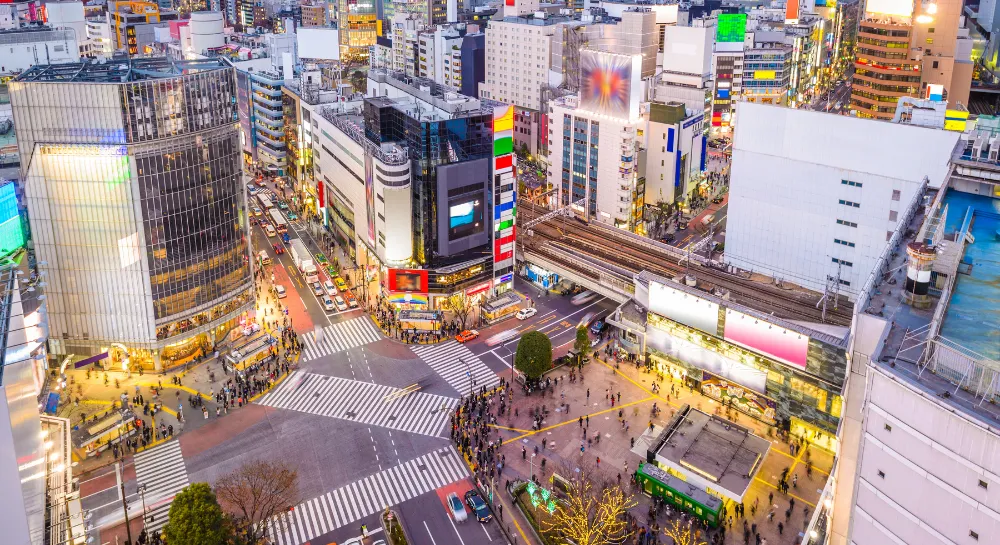
Most people cross a few times just to feel the scale of it, then look for a higher vantage point. The second-floor window of the Starbucks inside Tsutaya Books gives a free, unhurried view of the whole intersection. For something higher, Shibuya Sky’s rooftop deck looks down on the crossing from 229 meters, and Mag’s Park on top of the Magnet by Shibuya109 building is a cheaper alternative with a similar angle. The giant video screens and neon signage around the intersection are part of the view, especially after dark.
Give it 10 to 15 minutes if you’re just crossing and photographing, longer if you want a spot at a window seat during a busy changeover. Evening rush hour, roughly 5 to 8 PM, is the most dramatic time to see it at full capacity, while an early morning visit before 9 AM shows the same crossing nearly empty, which is its own kind of interesting. Rain doesn’t slow it down. If you’re heading toward Harajuku or Meiji Jingu Shrine afterward, this is a natural starting point since both are a short walk or one train stop away.
2. Visit Senso-ji Temple in Asakusa
Senso-ji is Tokyo’s oldest temple, founded in the year 645, and it remains the spiritual center of the Asakusa neighborhood. The approach alone tells you what you’re walking into: a giant red lantern hangs at Kaminarimon Gate, guarded by wind and thunder god statues, before a shopping street leads toward the temple grounds themselves.
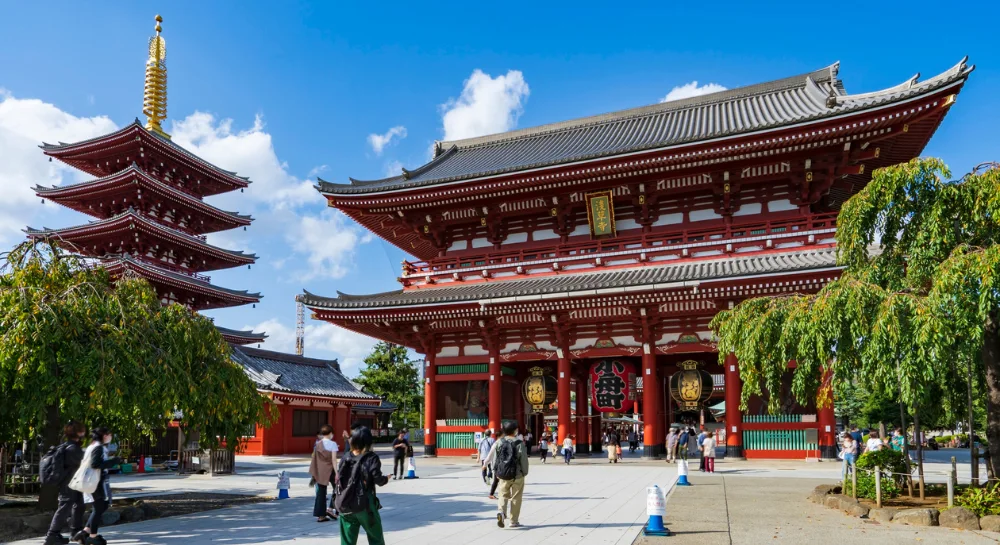
Past the shopping street, Hozomon Gate marks the entrance to the temple complex, flanked by a five-story pagoda on one side. The main hall enshrines a golden statue of Kannon, the goddess of mercy, that’s said to have been pulled from the Sumida River by two fishermen in the 7th century. In front of the hall, a large bronze incense cauldron sends smoke that visitors waft toward themselves for good fortune, and a nearby stand sells omikuji, paper fortune slips that range from great luck to bad luck. None of it requires a ticket or a reservation.
Senso-ji draws heavy crowds by mid-morning, so arriving before 8 AM gives you a genuinely different experience: quiet grounds, soft light, and space to actually see the architecture instead of moving with a crowd. The trade-off is that most shops along the approach won’t be open yet. Evening works too, since the temple grounds stay accessible after dark even though shops close, and the pagoda lit up at night is worth seeing on its own. Budget 45 minutes for the temple itself, more if you’re combining it with the surrounding streets. For more on Senso-ji’s main hall and what to look for once you’re inside, we’ve got a full breakdown.
3. Walk Through Meiji Jingu Shrine
Meiji Jingu is a Shinto shrine dedicated to Emperor Meiji and Empress Shoken, set inside a forest of around 120,000 trees donated from across Japan when the shrine was built in 1920. Walking in from Harajuku Station, the transition is immediate: city noise drops away within a few steps of passing under the first torii gate, replaced by gravel paths and forest on both sides.
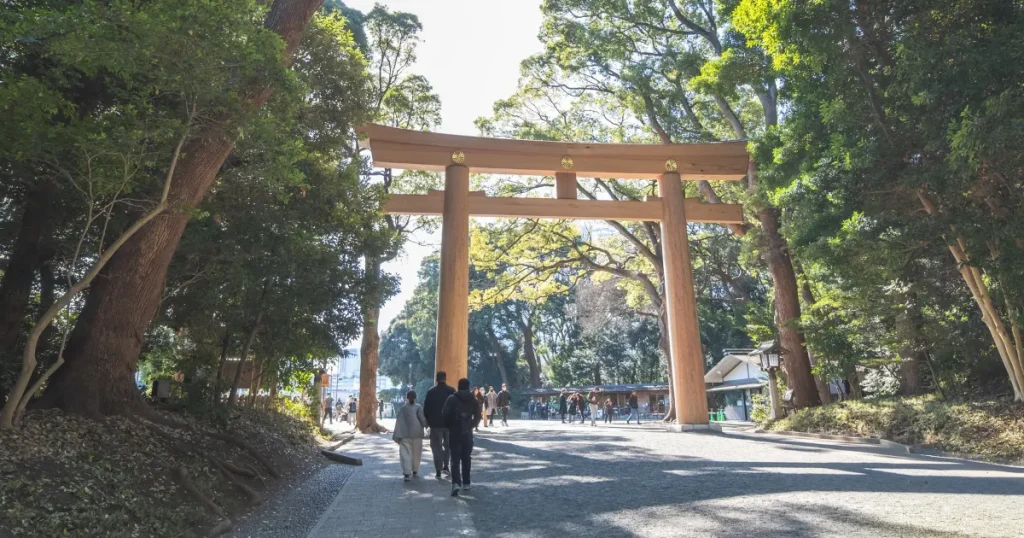
The walk to the main shrine buildings takes about 10 minutes past a wall of sake barrels donated by breweries around Japan, and a facing wall of French wine barrels, both symbolic offerings rather than anything you can taste. At the inner shrine, visitors follow the standard Shinto purification ritual at the temizuya fountain before approaching the main hall. Weekends often bring traditional wedding processions, with the bride and groom in full ceremonial dress crossing the courtyard, which is worth timing your visit around if you want to see one.
Plan for 45 minutes to an hour for the full loop from entrance to shrine and back, more if the Treasure Museum interests you (it charges a separate fee). The forest keeps things cool and shaded even in summer, so this is a comfortable midday stop when other outdoor spots feel punishing. Yoyogi Park sits right next to the shrine’s south entrance, making the two easy to combine into one visit if you have the morning free.
4. Ride Up Tokyo Skytree
Tokyo Skytree is Japan’s tallest structure at 634 meters, and its two observation levels give two different kinds of view over the city. The Tembo Deck, at 350 meters, is included with every ticket, while the Tembo Galleria at 450 meters is a paid upgrade that adds a spiraling glass-walled skywalk near the very top.
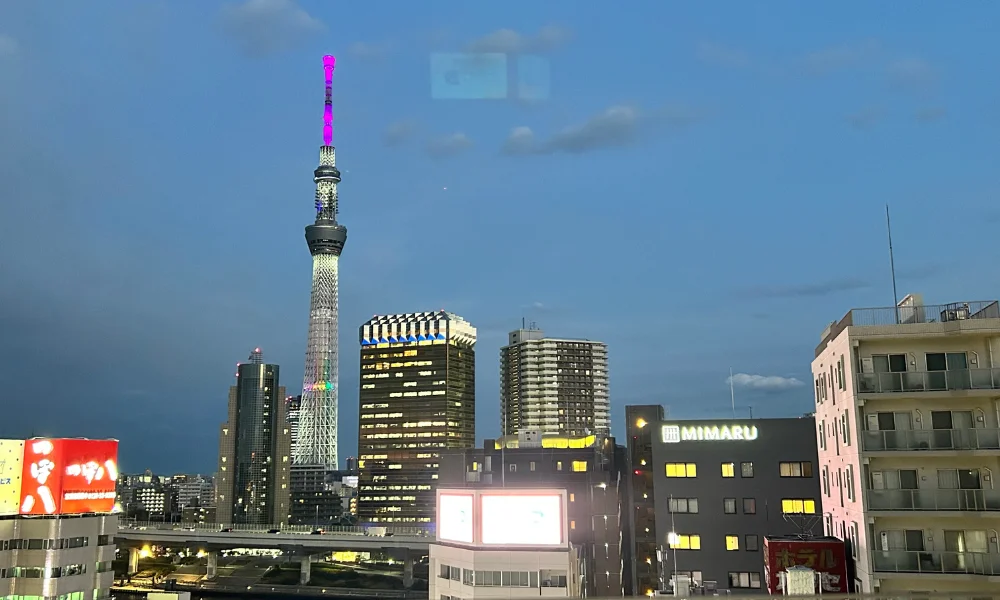
Once inside, there’s a genuine difference between the two levels worth knowing before you buy:
- Tembo Deck (350m) — three floors with 360-degree views, a café, a section of glass flooring you can stand on, and interactive touchscreens that identify what you’re looking at, including Mount Fuji on clear days.
- Tembo Galleria (450m) — a single spiraling corridor with floor-to-ceiling glass, the highest point most visitors can reach, and noticeably thinner crowds than the deck below.
Ticket pricing changes by date, with weekdays typically cheaper than weekends and holidays, so it’s worth booking online in advance rather than assuming a fixed price. Clear winter days (December through February) give the best chance of spotting Mount Fuji from the deck, while sunset slots fill first for obvious reasons. At ground level, Tokyo Solamachi wraps the tower base with over 300 shops and restaurants plus the Sumida Aquarium, so it’s easy to turn this into a half-day stop rather than a quick photo visit. For a closer look at Skytree’s observation decks and which ticket makes sense for your visit, see our detailed breakdown.
5. Stroll Shinjuku Gyoen National Garden
Shinjuku Gyoen is a 58-hectare park a 10-minute walk from Shinjuku Station’s south exit, and it packs three distinct garden styles into one space: a traditional Japanese strolling garden with koi ponds and arched bridges, a formal French garden with rose beds and plane tree avenues, and an open English landscape garden with wide lawns.
Cherry blossom season turns this into one of Tokyo’s most popular hanami spots, with around 1,000 cherry trees across the grounds, and autumn brings equally strong color from the maples in the Japanese garden section. Outside those peaks, it’s simply a quiet, well-maintained place to walk that feels far removed from Shinjuku’s density just outside the gates. There’s a greenhouse near the Japanese garden worth a look if the weather isn’t cooperating.
Admission runs 500 yen for adults, and the garden closes on Mondays (shifting to Tuesday if Monday is a national holiday), with gates open from 9 AM to 4:30 PM and last entry at 4 PM. During peak cherry blossom season in late March and early April, advance online reservations become necessary since walk-up capacity fills fast. Outside that window, it’s an easy walk-in visit. Two hours covers a relaxed loop through all three garden styles, and it pairs well with an early Shinjuku morning before the neighborhood’s bars and department stores get going in the afternoon.
6. Step Into teamLab Planets TOKYO
teamLab Planets is a barefoot, full-body art museum in Toyosu where you walk through water instead of just looking at installations. Shoes come off at the entrance, and several rooms have you wading ankle-deep through illuminated water or moving through mirrored spaces where the boundary between your body and the artwork gets deliberately blurred.
The exhibition expanded by roughly 1.5 times in early 2026, adding new zones including Athletic Forest and an enlarged Catching and Collecting Forest alongside the original water gardens and lamp forest. Because everything responds to movement and to other visitors nearby, no two walks through feel identical, and there’s no fixed route to follow. Entry runs on 15-minute timed reservation slots that routinely sell out on weekends, so booking a specific date and time ahead of arrival matters here more than at most Tokyo attractions.
Bring a change of clothes or at least a small towel since the water rooms will get you wet past the ankle, and skip tights or anything you don’t want damp. The museum is scheduled to run through the end of 2027, so there’s no urgency around a closing date the way there is with some Tokyo attractions right now. It sits a few minutes’ walk from Toyosu Market, which makes an easy same-day pairing if you’re already out that way for an early market visit.
7. Explore Akihabara Electric Town
Akihabara built its reputation on electronics after the war and has since layered anime, manga, and gaming culture on top of that foundation. Multi-story electronics retailers like Yodobashi Camera anchor the district, while the surrounding blocks are dense with retro game shops, figure and model stores, and manga specialists stacked floor after floor.
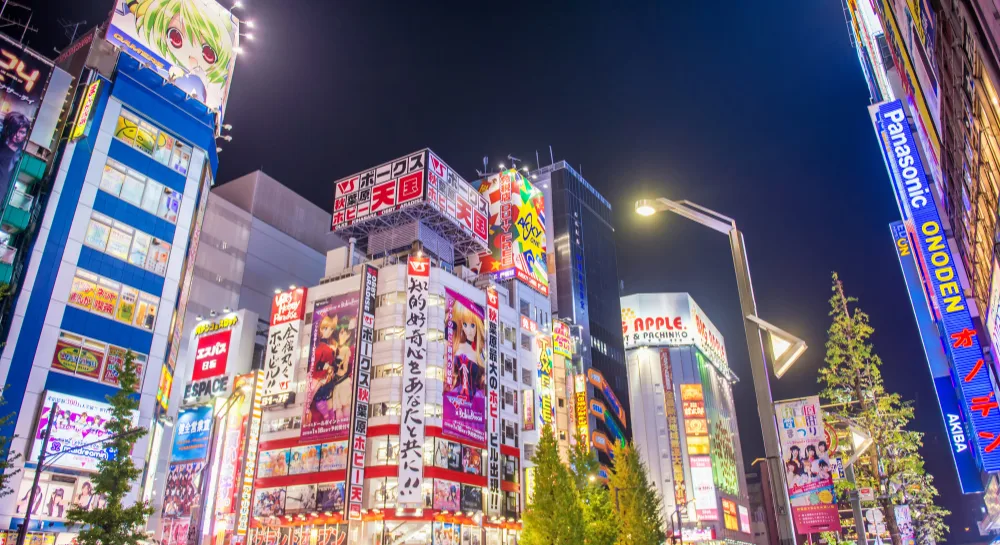
Maid cafes are one of the neighborhood’s more visible exports, staffed by servers in costume who address customers with exaggerated politeness, and they’re aimed squarely at tourists as much as longtime fans at this point. Beyond that, arcades here run several stories deep with everything from claw machines to rhythm games and purikura photo booths, and duty-free electronics shopping draws a steady stream of visitors looking for cameras, gaming hardware, or niche Japanese-market electronics not sold abroad.
Two to three hours covers a solid walk through the main strip, more if you’re serious about digging through used game or collectible shops, which reward slower browsing over a quick pass-through. Akihabara Station sits directly on the JR Yamanote and Chuo lines as well as the Tsukuba Express, so it’s a simple add-on to a day that includes Ueno or Tokyo Station. Weekend afternoons bring the heaviest foot traffic in the main pedestrian zone, while weekday mornings are noticeably calmer if browsing without crowds matters to you.
8. Wander the Streets of Asakusa
Asakusa is the old-Tokyo neighborhood built up around Senso-ji, and it’s worth treating as more than just the temple grounds. Low-rise buildings, narrow side streets, and a slower pace than most of central Tokyo give it a genuinely different character from Shibuya or Shinjuku, closer to what much of the city looked like before postwar rebuilding.
Rickshaw pullers work the streets around the temple, offering short guided rides through the neighborhood’s back lanes for those who want a narrated pass through the area. The Sumida River runs along one edge of Asakusa, with a pier for river cruises toward Odaiba and clear views across the water to Tokyo Skytree, a striking contrast between old Asakusa and the modern skyline facing it. Once the tourist shops close in the late afternoon, the neighborhood shifts into a quieter, more local evening rhythm, with izakayas and small restaurants filling in where daytime crowds thinned out.
Asakusa Station connects via the Tokyo Metro Ginza Line, Toei Asakusa Line, and Tobu Skytree Line, so it’s reachable directly from most parts of the city. A morning here covers the temple grounds and shopping street comfortably, while an evening return shows a noticeably different, calmer version of the same streets.
9. Take in the View from Shibuya Sky
Shibuya Sky is the rooftop observation deck on top of Shibuya Scramble Square, 229 meters above the intersection below, and it’s built around three distinct spaces rather than a single viewing floor.
- Sky Gallery — the indoor level just before the rooftop, with a retro-futuristic music bar and digital art installations.
- Sky Stage — the open-air rooftop itself, with 360-degree views, rooftop hammocks, and unobstructed sightlines toward Mount Fuji on clear mornings.
- Sky Gate — the escalator sequence leading up, treated as part of the experience rather than just transit.
Reservations matter here more than at almost any other Tokyo observation deck. Sunset slots in particular sell out well in advance, and walking up hoping for a same-day golden hour ticket is a common way to leave disappointed. If Mount Fuji is the priority over the skyline itself, a clear morning slot around 10:30 AM often gives a sharper view than sunset does, from the southwest corner of Sky Stage.
Hours run 10 AM to 10:30 PM with last entry at 9:20 PM, and the open-air deck can close temporarily in high wind or rain, though the indoor Sky Gallery stays open regardless. Give yourself 60 to 90 minutes, and if you’re leaving during a busy evening, head to the elevator with about 10 minutes left on your slot rather than waiting until it ends, since everyone else will be doing the same thing at once. For ticket types and how sunset booking actually works, see our full guide to Shibuya Sky’s rooftop deck.
10. See Tokyo from Tokyo Tower
Tokyo Tower has been part of the skyline since 1958, a red-and-white lattice tower modeled loosely on the Eiffel Tower but built taller, at 333 meters. It offers a calmer, less crowded alternative to Skytree, with two observation levels: the Main Deck at 150 meters and the Top Deck at 250 meters.
The Main Deck comes with every ticket and includes the Lookdown Window, a glass floor panel that gives a direct view straight down to the street. Reaching the Top Deck requires the separate Top Deck Tour, a reservation-based experience that walks small groups through a themed sequence covering the tower’s history before arriving at the 250-meter observation floor. FootTown, the complex at the tower’s base, holds shops, restaurants, and an aquarium, giving the area enough to fill an afternoon even without going up.
Sunset and evening are the strongest times to visit, since the tower’s own illumination and the city lights below both come into play after dark, and this tends to draw smaller crowds than Skytree at the same hour. Budget 90 minutes for the Main Deck alone, longer with the Top Deck Tour included. It sits within walking distance of Zojoji Temple, which makes for an easy combination if you’re already in the Minato area. For details on how the Tokyo Tower’s two decks compare and which ticket is worth it, we’ve laid it out separately.
11. Eat Your Way Through Tsukiji Outer Market
Tsukiji Outer Market is often misunderstood by visitors who’ve heard the market “closed.” What actually happened is that the inner wholesale market, including the famous tuna auctions, moved to Toyosu in 2018. The outer market, a dense retail grid of roughly 400 to 460 shops and food stalls, never left and remains one of the best food destinations in the city.
The morning here runs on a rhythm worth understanding before you go. Tamagoyaki stalls turn out fresh, slightly sweet layered egg skewers starting around 6 AM, and the well-known ones sell out by mid-morning. Sushi counters serve breakfast-hour sets that are noticeably fresher and cheaper than dinner-hour sushi elsewhere in the city, and dried goods, knife shops, and tea sellers fill in the surrounding lanes for anyone shopping rather than just eating. Most vendors expect cash, and ordering is informal: point, ask, and eat standing at the stall rather than looking for table service.
The sweet spot for visiting is 8 to 10 AM, before the crowds thicken and after the earliest prep work clears out. By 11 AM the narrow lanes get genuinely congested, and by early afternoon most shops have already shut for the day. The market closes on Sundays and a handful of Wednesdays tied to the wholesale market calendar, so check the date before planning around it. Navigating a market like this well, knowing which stalls are worth the wait and which lanes to skip, is exactly the kind of thing that’s easier with private tours of Tokyo built around food rather than a fixed sightseeing list.
12. Shop and People-Watch in Harajuku
Harajuku is Tokyo’s youth fashion district, and it holds two very different characters within a few minutes’ walk of each other. Omotesando, the wide, tree-lined boulevard on one side, is lined with flagship stores from major fashion houses and feels closer to a European shopping avenue than anywhere else in Tokyo. Takeshita Street, the narrow, crowded lane on the other side, is a separate stop on this list in its own right and covers the district’s louder, more youth-driven side.
Beyond those two main streets, the backstreets threaded between them (often called Ura-Harajuku) hold a quieter mix of vintage and thrift shops, small cafes, and independent boutiques that don’t get the same foot traffic. This is where the neighborhood rewards slower browsing rather than a fast walk-through, since the interesting shops aren’t on the main strip.
Weekend afternoons bring the heaviest crowds to both Omotesando and Takeshita Street, while weekday mornings are considerably calmer if you’re trying to actually look at what’s in the shop windows rather than move with foot traffic. Harajuku Station and Meiji-jingumae Station both sit at the edge of the district, making it a natural pairing with Meiji Jingu Shrine or Yoyogi Park on the same outing. Two to three hours covers a reasonable pace through both the main streets and a few backstreets.
13. See the Imperial Palace Grounds
The Tokyo Imperial Palace sits on the former site of Edo Castle and remains the residence of the Emperor, a 10 to 15 minute walk from Tokyo Station’s Marunouchi exit. Most visitors experience it from Kokyo Gaien, the open plaza in front of the palace, which gives a clear view of Nijubashi, the two bridges that form the ceremonial entrance to the inner grounds. This plaza view is free, open 24 hours, and needs no reservation.
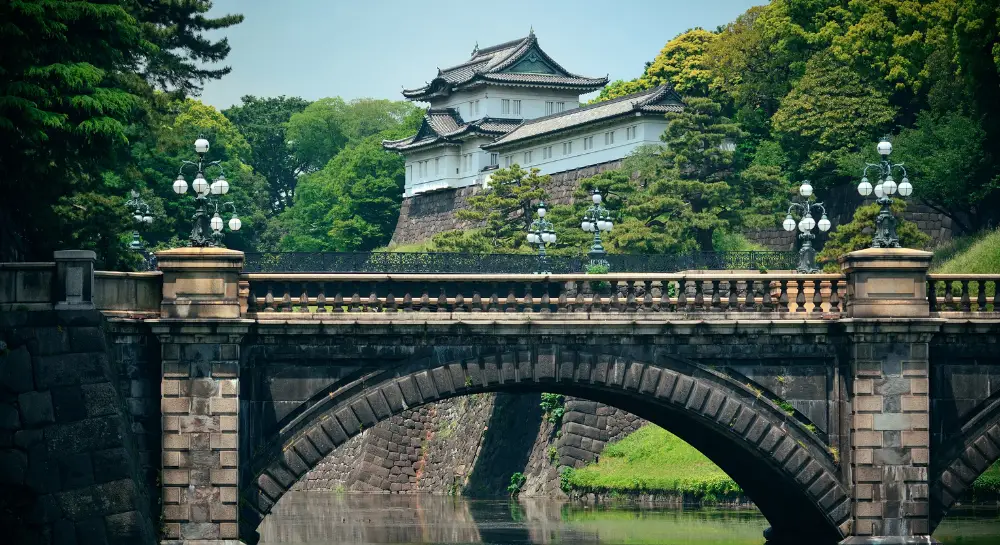
Going further requires more planning. The inner grounds themselves are closed to casual walk-in visits, but the Imperial Household Agency runs a free guided tour through the outer sections of the inner palace, including the Fujimi watchtower and a close view of Nijubashi from inside the moat that most photographers never see. That tour requires an advance online reservation at the agency’s booking site along with original photo ID at the gate, and it’s closed on Sundays, Mondays, and national holidays.
Budget 20 to 30 minutes for the plaza view alone, or closer to 75 minutes if you’ve booked the guided tour. Wear comfortable shoes either way, since the grounds cover gravel paths with real distance between points of interest. If formal palace history interests you but the tour dates don’t line up with your trip, the East Gardens nearby (covered separately in this list) offer a free, walk-in alternative that touches similar ground.
14. Get Lost in teamLab Borderless at Azabudai Hills
teamLab Borderless reopened at Azabudai Hills in Minato Ward in 2024, after the original Odaiba location closed in 2022 during redevelopment of the waterfront complex that housed it. It’s worth being clear about this upfront, since visitors regularly confuse it with teamLab Planets in Toyosu: Borderless is a different venue, a different concept, and no longer anywhere near Odaiba.
Where Planets is a barefoot, water-immersive experience, Borderless is built as a wandering museum without a fixed map or route, with artworks that move between rooms and blend into each other depending on where visitors happen to be standing. Flowers bloom across walls and floors, light sculptures shift with mirrored reflections, and the overall effect changes depending on how many people are moving through a given space at once.
Tickets are timed and sell out fast, especially weekend slots, which tend to be gone within a few days of release. Weekday mornings run noticeably calmer. Mirrored floors are common throughout, so pants or shorts work better than a skirt or dress, and shoes need to be easy to slip on and off. Plan for around two hours to see the exhibition properly. It sits about 15 minutes on foot from Roppongi Station, making it easy to combine with a Roppongi Hills visit on the same day.
15. Spend a Day in Odaiba
Odaiba is Tokyo’s entertainment island in the bay, reached most scenically by the Yurikamome monorail, a driverless elevated line that climbs over the Rainbow Bridge on its way in. The Rinkai Line offers a faster but less interesting alternative. Either way, the island is spread out enough that a single day here covers a genuinely different pace than a neighborhood-hopping day in central Tokyo.
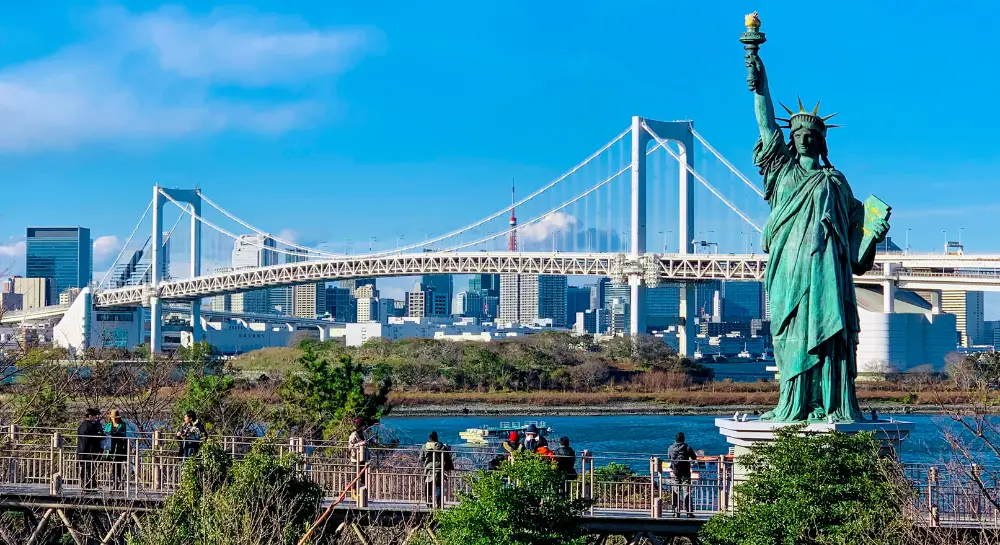
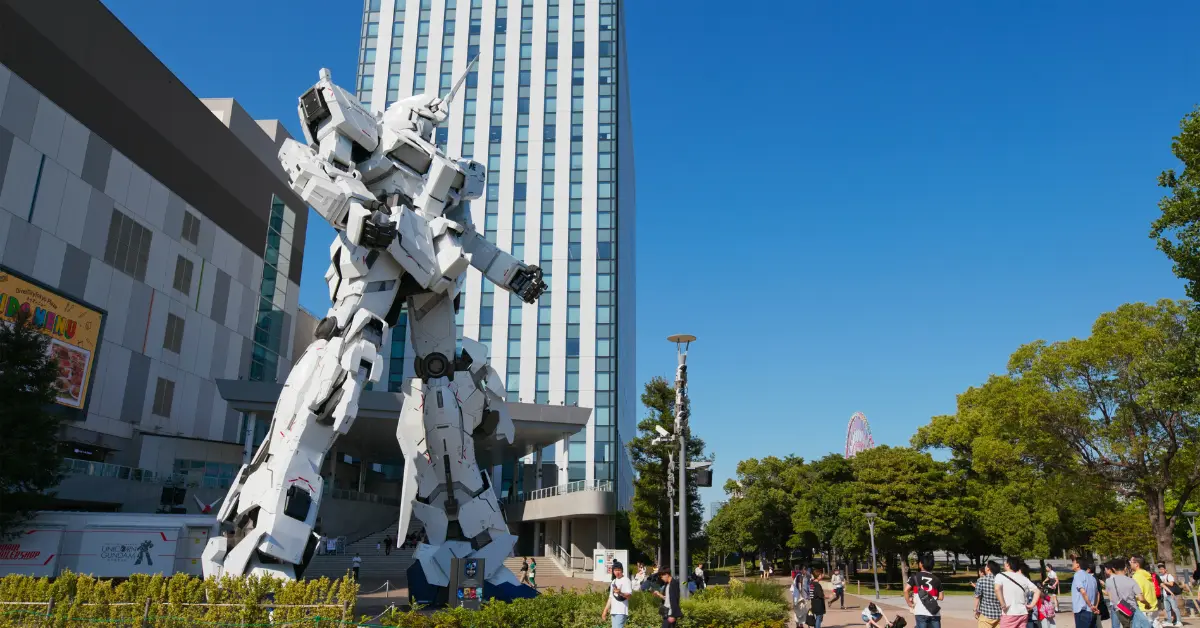
DiverCity Tokyo Plaza anchors one end, home to Gundam Base, a shop dedicated to model kits that will remain a permanent draw regardless of what happens outside. That’s worth flagging directly: the life-size Unicorn Gundam statue standing outside the building is scheduled to be dismantled at the end of August 2026, so if seeing it matters to your trip, that window is closing fast.
Elsewhere on the island, Odaiba Marine Park’s artificial beach isn’t for swimming but gives one of the better angles on the Rainbow Bridge at sunset, and Miraikan, the national science museum, is worth the stop if a rainy-day option matters. One common point of confusion: teamLab Borderless used to be here but relocated to Azabudai Hills in 2024, so anyone coming to Odaiba specifically for digital art should redirect there instead.
A half-day covers the Gundam statue, the beach, and a mall stop, while a full day allows time for Miraikan and unhurried shopping across Aqua City and Decks Tokyo Beach. Odaiba also pairs naturally with Toyosu, one stop further on the same monorail line, if teamLab Planets or the fish market is part of your planning a Tokyo itinerary around the bay area.
16. Explore Tokyo Station and Marunouchi
Tokyo Station’s red-brick Marunouchi building is one of the few surviving examples of early 20th-century Western-style architecture in a city that rebuilt itself twice over the past century, first after the 1923 earthquake and again after World War II. The station itself functions as a hub for shinkansen, JR lines, and several subway lines, but the building is worth pausing for even if you’re not catching a train.
Underground, the Tokyo Station First Avenue and Character Street shopping arcades run for a considerable stretch beneath the station, filled with regional snack shops, ramen alleys, and character merchandise stores that make for an easy detour between trains.
Above ground, the Marunouchi side of the station opens onto a business district of glass office towers, high-end shopping at buildings like Marunouchi Building and Shin-Marunouchi Building, and tree-lined streets that feel noticeably calmer than Shinjuku or Shibuya at street level.
The station sits a 10 to 15 minute walk from the Imperial Palace’s Kokyo Gaien plaza, making the two a natural pairing for a morning that starts with history and ends with lunch in Marunouchi. Weekday lunch hours bring a wave of office workers through the underground arcades, while evenings and weekends are considerably quieter. Thirty minutes covers a walk through the station architecture and a look at the plaza outside; add an hour or more if the underground shopping streets interest you.
17. Walk Through Ueno Park
Ueno Park is one of Tokyo’s oldest public parks, established in 1873 on the grounds of a former temple complex, and it functions today as a cluster of museums, a zoo, a shrine, and a large pond all within walking distance of each other. The Tokyo National Museum sits inside the park and is covered separately in this list, but Ueno Park itself is worth treating as a destination beyond just that one building.
Shinobazu Pond, at the park’s southern edge, is ringed by a walking path and covered in lotus flowers through summer, with a small island shrine reachable by a footbridge. Ueno Zoo, Japan’s oldest zoo, sits within the park grounds and draws steady crowds for its giant pandas. Cherry blossom season turns the park’s central avenue into one of Tokyo’s most crowded hanami spots, with food stalls and blue tarps claiming spots under the trees from early morning.
Ueno Station connects directly to the park’s north side via the JR Yamanote and several other lines, making this an easy stop on a day that also includes Akihabara or Asakusa, both a short train ride away. Outside peak cherry blossom weeks, the park is a comfortable, unhurried walk, and two hours covers the grounds at a relaxed pace without going inside any of the museums.
18. Shop and Dine in Ginza
Ginza has been Tokyo’s upscale shopping district since the Meiji era, and it still carries that identity today through flagship stores for international luxury brands alongside long-established Japanese department stores like Mitsukoshi and Matsuya. The main street, Chuo-dori, closes to vehicle traffic on weekend afternoons, turning the road itself into pedestrian space for browsing and outdoor cafe seating.
Beyond the department stores, Ginza holds a dense concentration of art galleries, specialty stationery shops, and some of Tokyo’s most established restaurants, including sushi counters that have operated for generations. Kabukiza Theatre, the city’s main venue for kabuki performances, sits at the district’s edge and gets its own entry later in this list, so it’s worth treating as a separate stop rather than folding into a Ginza shopping visit. Evenings shift the district’s character, with rooftop bars and higher-end dining taking over from the daytime retail crowd.
Ginza Station connects via the Tokyo Metro Ginza, Marunouchi, and Hibiya lines, putting it within easy reach of Tokyo Station and the Imperial Palace area. Weekend afternoons, when Chuo-dori goes pedestrian-only, are the liveliest and most photogenic time to visit, while weekday mornings are calmer and better suited to unhurried browsing. Two to three hours covers a solid walk through the main shopping streets.
19. Visit the Ghibli Museum in Mitaka
The Ghibli Museum is a small, purpose-built museum in Mitaka designed personally by Hayao Miyazaki, and it holds original sketches, sets, and exhibits connected to Studio Ghibli’s films rather than functioning as a conventional retrospective. It sits on the edge of Inokashira Park, about 15 minutes’ walk from Kichijoji Station through the park itself, or closer to Mitaka Station on the opposite side.
The catch, and the thing to plan around before anything else, is that every ticket requires an advance reservation and nothing is sold at the door. Tickets go on sale at 10 AM Japan time on the 10th of each month for the following month, and popular entry slots, particularly weekends, have sold out within minutes during busy travel seasons.
Entry times run at 10:00, 12:00, 14:00, and 16:00, though once inside there’s no fixed exit time. The museum includes a short original film screened at its small Saturn Theater, one screening per ticket, shown without subtitles since the visual storytelling doesn’t depend on dialogue comprehension.
Because tickets sell out fast and are tied to a specific date and entry time, this is one of the few Tokyo attractions worth booking before finalizing the rest of a trip itinerary. Two hours covers the museum at a comfortable pace, and combining the visit with a walk through Inokashira Park either before or after makes good use of the trip out to Mitaka.
20. Snap a Photo with the Hachiko Statue
Hachiko is a small bronze statue outside Shibuya Station’s Hachiko exit, honoring an Akita dog who continued to wait at the station for his deceased owner every day for nearly a decade in the 1920s and 1930s. The statue itself is modest in size, easy to miss among the crowds if you’re not looking for it, but it’s become one of Tokyo’s most reliable meeting points.
Most visitors spend five or ten minutes here, enough time for a photo and a moment to read the small plaque explaining the story. It sits directly across from the Shibuya Scramble Crossing, making it a natural stop right before or after crossing, rather than a separate trip on its own.
For the full story behind Hachiko’s decade-long wait and why the statue draws so many visitors, we’ve covered it in more detail.
21. Browse Takeshita Street
Takeshita Street is the narrow, densely packed pedestrian lane running through the heart of Harajuku, and it’s built around a younger, louder version of Tokyo fashion than the boulevards nearby. Crepe stands, cheap accessory shops, purikura photo booths, and fast-fashion boutiques line both sides of a street that’s rarely wider than a car lane, and it fills with foot traffic through most of the day.
The crowding here is real and worth planning around rather than being surprised by. Weekend afternoons pack the street shoulder to shoulder, and moving from one end to the other can take considerably longer than the walk itself would suggest.
A weekday morning visit, before around 11 AM, shows a noticeably calmer version of the same street with shops still setting up. Thirty minutes to an hour covers a walk end to end with a stop for a crepe, and it connects directly at one end to Harajuku Station.
22. Shop Along Nakamise Shopping Street
Nakamise is the roughly 250-meter shopping street connecting Kaminarimon Gate to Senso-ji Temple’s inner grounds, and it’s been operating in some form since the Edo period, making it one of Japan’s oldest shopping streets still in daily use. Around 90 small shops line both sides, selling traditional snacks, souvenirs, folding fans, and craft items rather than the generic tourist goods found in many other districts.
Food is a major part of the appeal here. Stalls sell fresh senbei rice crackers, ningyo-yaki (small cakes shaped like dolls or lanterns), and age-manju, fried sweet buns, meant to be eaten while walking rather than sat down for. Shops tend to close by early evening, generally around 6 PM, well before the temple grounds themselves close, which means an evening walk down Nakamise shows shuttered storefronts rather than the lively daytime version most photos capture.
Morning crowds build steadily and by mid-morning the street can feel genuinely packed shoulder to shoulder, so an early visit, ideally before 9 AM, gives more room to actually browse rather than just move with the crowd. Fifteen to twenty minutes covers the walk itself, longer with stops for food or shopping. For more on the street’s history and what to look for while shopping along Nakamise Street, see our dedicated guide.
23. Photograph Kaminarimon Gate
Kaminarimon, the Thunder Gate, marks the formal entrance to Senso-ji Temple and to Nakamise Shopping Street beyond it. A massive red lantern, roughly four meters tall, hangs at the gate’s center, flanked by wooden statues of Fujin, the god of wind, and Raijin, the god of thunder, standing guard on either side.
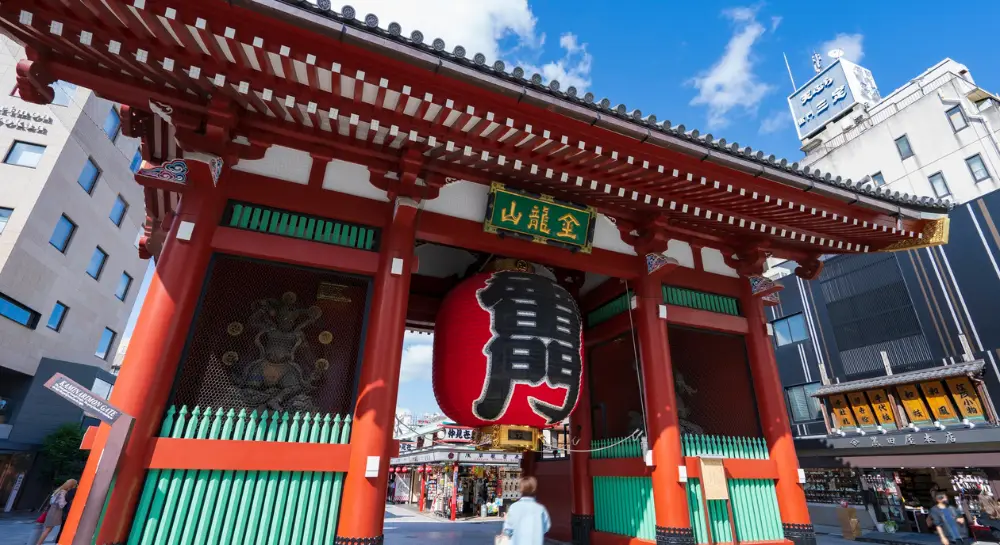
The gate itself takes only a few minutes to see properly, but it’s consistently one of the most photographed single spots in Asakusa, which means getting a clear shot without other visitors in frame usually means arriving before 8 AM.
Later in the day, expect to wait for a gap in foot traffic or accept other people in the background. It functions less as a standalone destination and more as the starting point for a Senso-ji or Nakamise visit, so most travelers pass through it on the way to one of those rather than visiting it in isolation.
24. See National Treasures at the Tokyo National Museum
The Tokyo National Museum, inside Ueno Park, holds Japan’s largest collection of art and archaeological objects, spread across several buildings that each cover different ground. The Honkan, the main building, focuses on Japanese art and history from prehistory through the 19th century, while the Toyokan covers Asian art more broadly, and the Heiseikan hosts special exhibitions and archaeological finds.
Given the scale of the collection, most first-time visitors do better picking one or two buildings rather than attempting all of them in a single visit. The Honkan alone covers samurai armor, ceramics, calligraphy, and Buddhist sculpture across two floors, and moving through it properly takes a couple of hours on its own. Special exhibitions, which rotate periodically and sometimes carry an additional fee, draw the heaviest crowds and are worth checking in advance if a specific one is the reason for visiting.
Two to three hours covers a focused visit to one or two buildings, while a full morning or afternoon allows time to see the grounds and gardens between buildings as well. The museum sits a short walk from Ueno Station, making it easy to combine with the rest of Ueno Park on the same day, and it’s closed on Mondays like most Tokyo museums, so that’s worth checking before planning around it.
25. Visit Toyosu Market
Toyosu Market replaced the old Tsukiji wholesale market in 2018, taking over the fish, produce, and famous tuna auctions in a modern, purpose-built facility on Tokyo Bay. Unlike Tsukiji’s outer market, which is a walk-in retail experience, Toyosu is built around observation more than shopping, with glassed-in walkways looking down onto the working market floor.
The tuna auction is the headline draw, running roughly 5:30 to 6:30 AM Monday through Saturday. There are two ways to watch it: a free upper-floor gallery that opens at 5 AM and needs no reservation, or a closer lower-floor observation deck that requires a free reservation through an online lottery, typically applied for about a month in advance. Missing the lottery isn’t a real loss though, since the upper gallery gives a full view of the auction floor through sealed glass with audio piped in. Beyond the tuna hall, separate observation areas look down on the general seafood and produce sections, which run at a calmer pace through the rest of the morning.
Arriving by 5 AM gives the best chance at a window spot for the auction and a look at buyers inspecting the tuna before bidding starts. The market’s sushi restaurants, tucked into the building, serve some of the freshest breakfast-hour sushi in Tokyo and are worth the visit even without catching the auction itself. The market follows the wholesale calendar, closed Sundays and certain Wednesdays, so check the date before setting an early alarm. One stop away on the Yurikamome line, Odaiba makes a natural continuation if you’re already out on the bay in the morning.
26. Bar Hop in Shinjuku Golden Gai
Golden Gai is a cluster of six narrow alleys in Shinjuku packed with more than 200 tiny bars, most seating no more than six to ten people at a time. The area survived postwar redevelopment largely intact, and the low wooden buildings and cramped, lantern-lit lanes give it a genuinely different atmosphere from the high-rise Shinjuku just a few streets away.
Each bar tends to have its own theme or specialty, run by an owner who’s often the only staff on hand, and many charge a seating or cover fee on top of drink prices, typically somewhere between 500 and 1,500 yen.
Not every bar welcomes walk-in tourists, and some post signs indicating regulars only or Japanese-speaking guests only, so it’s worth checking the entrance before sitting down, or picking one of the more visibly foreigner-friendly bars if that’s a concern. The alleys themselves are worth a slow walk even without stopping anywhere, since half the appeal is the density and character of the space.
Golden Gai gets going after dark and stays quiet through the day, with most bars opening from early evening into the early morning hours. It sits a short walk from Shinjuku Station’s east side, making it an easy add-on to an evening that starts elsewhere in Shinjuku. An hour or two covers a couple of bars comfortably, though it’s easy to lose track of time moving between them.
27. Eat at Omoide Yokocho
Omoide Yokocho, sometimes called Piss Alley by longtime foreign residents for its rougher pre-renovation history, is a cluster of narrow alleys just northwest of Shinjuku Station’s west exit, packed with small yakitori stalls and izakayas. Smoke from grilling skewers drifts through the lanes most evenings, and most of the roughly 60 shops seat only a handful of people at a counter.
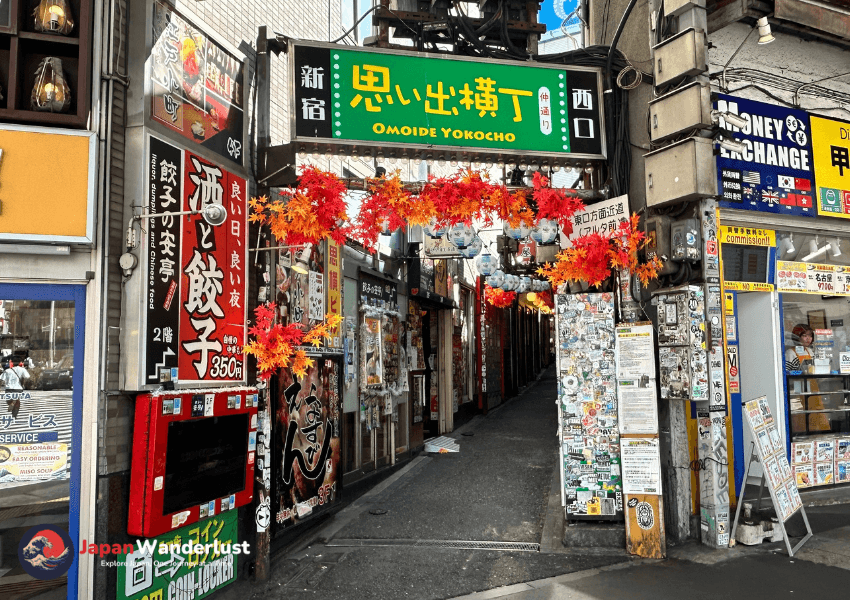
The food here runs toward grilled chicken skewers, offal, and other izakaya staples, generally cheap and meant to be eaten quickly at a cramped counter rather than lingered over. Some stalls cater openly to tourists with English menus and photos, while others remain firmly local, and it’s easy to tell the difference by looking at who’s already seated inside. The physical closeness of the alleys, buildings close enough to touch on both sides, is part of the draw rather than a drawback.
Evening is really the only time this place makes sense to visit, since most stalls open in the late afternoon and run through the night. It sits close enough to Shinjuku Station to fit in before or after a train, and 30 minutes to an hour covers a couple of stalls without rushing.
28. Take In the View from Roppongi Hills and the Mori Art Museum
Roppongi Hills is a large mixed-use complex anchored by Mori Tower, and its 52nd floor holds Tokyo City View, an indoor observation deck with panoramic sightlines toward Tokyo Tower, Tokyo Skytree, and Tokyo Bay. Mount Fuji is visible from here on clear days as well. One floor up, the Mori Art Museum runs rotating contemporary art exhibitions, and a combined ticket typically covers both the observatory and whatever exhibition is currently running.
The observatory stays open later than most in Tokyo, until 11 PM on weeknights and past midnight on Friday and Saturday nights, making it one of the better options for a late evening view after dinner elsewhere in Roppongi. Because the Mori Art Museum’s program rotates every few months, it’s worth checking what’s currently showing before counting on the museum half of the ticket, since the museum closes to the public between exhibitions.
Roppongi Station sits a few minutes’ walk away on both the Hibiya and Oedo lines, connecting directly into the complex. An hour covers the observatory alone; add 45 minutes to an hour if a current exhibition at the Mori Art Museum is part of the plan. Sunset slots draw the biggest crowds, so a mid-afternoon or later evening visit tends to be noticeably calmer.
29. Get a Free View from the Tokyo Metropolitan Government Building
The Tokyo Metropolitan Government Building in Shinjuku offers two observation decks, one in each of its twin towers, both sitting at 202 meters and both completely free, no ticket or reservation required. That makes it a genuine standout among Tokyo’s observation decks, most of which charge an entrance fee and require timed tickets.
The two towers don’t run on identical schedules or offer quite the same experience. The South Observatory stays open later, until 10 PM, and tends to be the busier of the two during the day. The North Observatory closes earlier, around 5:30 PM, but is generally considered the better option for clear views toward Mount Fuji and tends to draw a quieter crowd, including more photographers taking advantage of the steadier lighting. Each tower closes on a different day of the month for maintenance, so if visiting a specific tower matters, it’s worth checking the current closure schedule rather than assuming both are open.
Visitors do pass through a bag check before the elevators, similar to airport-style security rather than anything invasive. Given that admission costs nothing, this is a low-risk stop to fit in around weather rather than something to plan a whole day around. Thirty to forty-five minutes covers a visit to one tower, and it sits a 10-minute walk from Shinjuku Station’s west exit, making it easy to combine with a Shinjuku Golden Gai or Omoide Yokocho evening nearby.
30. Step Into the Wizarding World at Warner Bros. Studio Tour Tokyo
Warner Bros. Studio Tour Tokyo sits in Nerima Ward on the former grounds of Toshimaen amusement park, and it walks visitors through authentic sets, costumes, and props from the Harry Potter and Fantastic Beasts films rather than presenting a ride-based theme park experience. The Great Hall, Diagon Alley, Hagrid’s Hut, and Platform 9¾ are all built as full-scale, walkable sets rather than backdrops.
Beyond walking through the sets, the tour includes interactive elements like green-screen broomstick flying and appearing in a moving portrait, along with the world’s largest dedicated Harry Potter retail shop and a Butterbeer bar. A visit typically runs three to four hours at a comfortable pace, longer if the shop and dining areas are a priority. Tickets are sold for specific entry times and need to be booked in advance rather than bought at the door.
Toshimaen Station, on the Seibu and Toei Oedo lines, sits a short walk from the entrance, and the station itself has been redecorated with Harry Potter themes worth noticing on the way in. Since this sits further from central Tokyo than most entries on this list, roughly 30 to 40 minutes from Ikebukuro depending on the line, it’s worth planning as its own half-day or full-day outing rather than pairing with other stops in the same trip.
31. Relax in Yoyogi Park
Yoyogi Park sits right next to Meiji Jingu Shrine’s south entrance, and the contrast between the two is part of what makes visiting both worthwhile. Where the shrine grounds stay quiet and forested, Yoyogi Park opens into wide lawns, a central fountain plaza, and open space that draws joggers, families, and groups gathering for picnics on any clear weekend.
Weekend afternoons bring out the park’s more eccentric side. Rockabilly dancers have gathered near the park’s entrance for decades, performing in leather jackets to 1950s music regardless of who’s watching, and street musicians, jugglers, and small performance groups scatter across the open areas throughout the day. Cherry blossom season turns the park into one of Tokyo’s most popular hanami spots, with the wide lawns making it easier to actually spread out a blanket than at more crowded spots elsewhere in the city.
There’s no fee to enter and no fixed route to follow, which makes this an easy stop to fold into a Harajuku or Meiji Jingu morning without much planning. An hour covers a walk through the main areas, longer if a picnic or a spot near the rockabilly dancers is part of the plan. Weekday mornings are calm enough for a genuinely quiet walk, while weekend afternoons show the park at its liveliest.
32. Watch Sumo Near Ryogoku Kokugikan
Ryogoku Kokugikan is sumo’s home arena in Tokyo, hosting three of the sport’s six annual Grand Sumo tournaments each year, in January, May, and September. Each tournament runs fifteen consecutive days, and the surrounding Ryogoku neighborhood built up around the sport still carries that identity, with sumo-themed restaurants and stables tucked into its streets.
If your trip happens to line up with a tournament, tickets range from ringside seats close enough to feel the impact of a match to more affordable box and chair seating further back. The September 2026 tournament runs from the 13th through the 27th, with general tickets going on sale August 8, so anyone traveling around that window should watch for the release date rather than assuming last-minute availability.
Outside tournament dates, the district itself is still worth a visit. Sumo stables in the neighborhood, including Arashio Stable, let visitors watch wrestlers’ morning practice sessions through a street-facing window, typically 6 to 9 AM on weekdays, free and without a reservation.
Chanko nabe, the protein-heavy hot pot wrestlers eat to bulk up, is served at several restaurants around Ryogoku and makes a natural meal to pair with either a tournament visit or a morning practice viewing. Ryogoku Station sits a one to two minute walk from the Kokugikan itself, making this an easy stop even without much time to spare. During a tournament, plan for several hours if attending a full day; outside tournament dates, an hour covers the neighborhood and a stable visit comfortably.
33. Browse Kappabashi Kitchen Town
Kappabashi is a stretch of shops in Asakusa dedicated entirely to restaurant and kitchen supply, and it’s where much of Tokyo’s food service industry buys its equipment. For visitors, the appeal is less about needing a commercial rice cooker and more about the specialty shops that sell things not found in ordinary kitchenware stores.
The best-known of these are the plastic food sample shops, selling the hyper-realistic replica dishes displayed in restaurant windows across Japan, along with knife shops carrying professional-grade Japanese blades, some offering engraving or sharpening on the spot. It’s a street built for browsing rather than a single standout destination, and most visitors spend anywhere from thirty minutes to an hour depending on how much shopping interests them.
Kappabashi sits about a 10 to 15 minute walk from Senso-ji, making it an easy add-on to an Asakusa morning rather than a separate trip. Shops here mostly follow regular daytime business hours and close in the early evening, so this works better as a midday stop than a late-afternoon one.
34. Spend a Day in Kichijoji and Inokashira Park
Kichijoji regularly ranks among the most livable neighborhoods in Tokyo, and it earns that reputation through a mix of green space, independent shops, and a walkable scale that’s rare this close to central Tokyo. Inokashira Park anchors the neighborhood, built around a central pond where visitors can rent rowboats and swan-shaped paddle boats, especially popular during cherry blossom season when the trees ringing the water bloom.
Sun Road and the surrounding shopping streets hold a dense mix of independent boutiques, secondhand clothing shops, and cafes that feel distinct from the chain-store density of Shibuya or Shinjuku. The Ghibli Museum sits at the park’s southern edge and is covered as its own entry earlier in this list, so it’s worth treating Kichijoji as a full destination beyond just that one stop rather than a quick pass-through on the way there.
A few hours covers a relaxed walk through the park and main shopping streets, and it’s easy to extend into a full afternoon with a boat ride and a stop for lunch. Kichijoji Station connects via the JR Chuo Line, about 20 minutes from Shinjuku, which makes it simple to fold into a longer day trip west of the city center. If you’re mapping out a week-long Tokyo itinerary and want a lower-key day mixed in among the major sights, this is a strong candidate.
35. Wander Shimokitazawa
Shimokitazawa built its identity as a bohemian, slightly scruffy alternative to Tokyo’s more polished shopping districts, and it’s held onto that character even as the neighborhood has become more popular with tourists. Narrow, winding streets packed with vintage clothing shops, small record stores, and secondhand bookshops give it a genuinely different feel from Harajuku’s more curated version of counterculture fashion.
Beyond shopping, the neighborhood has a strong live music and theater scene, with small venues hosting everything from indie bands to experimental theater most nights of the week. Cafes and casual restaurants fill the gaps between shops, many run by their owners rather than as chains, which keeps the overall pace slower than most Tokyo shopping districts. Recent redevelopment near the station has added some newer retail, though the older backstreets still carry most of the neighborhood’s character.
Shimokitazawa Station sits on the Odakyu and Keio Inokashira lines, about 10 minutes from Shibuya, making it an easy half-day addition to a day that starts elsewhere. Weekday afternoons and early evenings are the best time to browse without heavy crowds, while weekend nights bring out the live music crowd. Two to three hours covers a solid walk through the main shopping streets.
36. Dig Through Nakano Broadway
Nakano Broadway is a multi-story shopping complex that’s become one of the central hubs for otaku culture in Tokyo, anchored by multiple Mandarake stores spread across different floors, each specializing in a different category of manga, anime merchandise, trading cards, or vintage toys. It has a rougher, more lived-in feel than Akihabara, closer to a genuine collector’s market than a tourist-facing shopping strip.
The building itself is unglamorous, a shopping arcade from the 1960s that’s aged into its current identity almost by accident, and part of the appeal is digging through shops that don’t organize their stock for casual browsing. Serious collectors can spend hours here working through back issues, rare figures, and vintage packaging that turns up in Mandarake’s various specialty branches.
Nakano Station sits a short walk from the complex on the JR Chuo Line, just a few minutes from Shinjuku, making this an easy detour for anyone already spending a day in that part of the city. An hour covers a casual walk through the main shops, though collectors chasing something specific often stay considerably longer.
37. Shop the Stalls at Ameya-Yokocho Market
Ameya-Yokocho, usually shortened to Ameyoko, is a covered market street running alongside the JR tracks between Ueno and Okachimachi stations, and it traces its origins to a black market that formed here in the chaos immediately after World War II. Today it’s a dense stretch of stalls selling dried seafood, fresh produce, discount clothing, and street food, packed close enough together that browsing means moving slowly through a crowd almost by default.
Dried fish and seafood are a specialty here, with vendors calling out prices and samples on display, alongside more general discount shopping for clothing, bags, and cosmetics that draws a mix of tourists and local shoppers looking for a deal. Street food stalls fill in the gaps, and eating while walking is normal here rather than something to sit down for.
Weekend afternoons are the busiest and most atmospheric time to visit, when the street is at its loudest and most crowded, though that also means slower movement through the narrower sections. An hour covers a walk through the main stretch, and its position between Ueno and Okachimachi stations makes it a natural add-on to a day that includes Ueno Park or the Tokyo National Museum.
38. Explore Old Tokyo in Yanaka
Yanaka is one of the few Tokyo neighborhoods that survived both the 1923 earthquake and the World War II bombing campaigns largely intact, which means its narrow streets and low wooden buildings show what much of the city looked like before either disaster. Temples are dense here, more than seventy within the district, a legacy of Yanaka’s history as a temple town on the edge of old Edo.
Yanaka Cemetery, one of the neighborhood’s central features, is less somber than the name suggests, functioning as a quiet, tree-lined walking path as much as a burial ground, and cherry blossoms line its central avenue in spring. The neighborhood has also become known for its cats, with several strays that have become semi-official local mascots, along with cat-themed shops that have grown up around that reputation. Yanaka Ginza, the neighborhood’s main shopping street, runs a few hundred meters through small shops selling traditional snacks, pottery, and daily goods at a noticeably slower pace than Tokyo’s larger shopping districts.
Nippori Station connects to Yanaka via a short walk, putting it within easy reach of Ueno for anyone extending a museum day into the afternoon. Two to three hours covers a relaxed walk through the temples, cemetery, and shopping street, and this works well as a quieter counterpoint to a morning spent somewhere busier like Akihabara or Ueno Park.
39. Visit Zojoji Temple
Zojoji is a Buddhist temple sitting almost directly beside Tokyo Tower, and the pairing of the two, a centuries-old temple gate framed against a mid-century observation tower, makes for one of the more striking juxtapositions in the city. The temple served as the Tokugawa shogunate’s family temple for over two centuries, and Sangedatsumon, its main gate, dates back to the early 1600s, making it one of the oldest wooden structures in Tokyo to survive largely intact.
Beyond the main hall, the temple grounds hold rows of small stone Jizo statues, many dressed in red knitted caps and bibs, placed by parents in memory of children lost to miscarriage, stillbirth, or early death. It’s a quieter, more contemplative corner of the grounds than the main hall itself, worth a slow walk rather than a quick photo stop. Entry to the grounds is free, and fifteen to twenty minutes covers a visit, making this an easy add-on before or after seeing Tokyo Tower rather than a separate destination on its own.
40. Walk the Imperial Palace East Gardens
The Imperial Palace East Gardens occupy part of the former Edo Castle grounds and offer free, walk-in access to a section of the palace complex that most visitors don’t get to see otherwise. Unlike the guided inner-grounds tour covered earlier in this list, no reservation or ID is required here, just a ticket token handed out free at the gate.
Stone foundations from Edo Castle’s former keep still stand in the gardens, giving a sense of scale for what was once the largest fortress in Japan, even though the keep itself burned down in the 17th century and was never rebuilt. Ninomaru Garden, a traditional Japanese strolling garden within the grounds, adds a more cultivated contrast to the open lawns and stone ruins elsewhere in the complex. The Sannomaru Shozokan museum, which holds part of the imperial art collection, sits within the gardens as well.
The East Gardens keep a different schedule from the main Imperial Palace guided tour, closing on Mondays and Fridays rather than Sundays and Mondays, so it’s worth checking the current day before planning a visit around one or the other. An hour and a half covers the grounds at a comfortable pace, and since the main entrance sits close to Tokyo Station, this pairs naturally with a Marunouchi morning.
41. Stroll Hama-rikyu Gardens
Hama-rikyu is a landscape garden built during the Edo period as a feudal lord’s residence and duck hunting ground, later serving as a detached imperial palace before opening to the public after World War II. Its defining feature is a seawater pond that rises and falls with the tide, drawn directly from Tokyo Bay, a rare setup among Tokyo’s traditional gardens.
A teahouse sits on a small island in the middle of the pond, reachable by a wooden bridge, where visitors can stop for matcha and a seasonal sweet while looking back at the garden. The contrast between the traditional landscaping and the glass office towers of the neighboring Shiodome district, visible over the garden’s trees, is part of what makes this stop distinct from Tokyo’s more enclosed gardens. Around 300 cherry blossom trees bloom here in spring, and a stretch of rapeseed flowers turns parts of the grounds bright yellow in late February and March.
A modest entrance fee applies, and the garden connects easily to a water bus pier, with boats running to Asakusa along the Sumida River, a scenic alternative to the subway if you’re heading that direction next. An hour and a half covers a relaxed walk through the grounds with a stop at the teahouse, and its location near Tsukiji and Shiodome makes it easy to combine with either on the same day.
42. Watch a Performance at Kabukiza Theatre
Kabukiza is Tokyo’s dedicated kabuki theater in Ginza, the only venue in Japan built and operated solely for this traditional performing art. The current building, a fifth iteration of the theater dating back to 1889, opened in 2013 and blends a traditional facade with a modern high-rise office tower behind it.
Full performances run two and a half to three hours with intermissions and can be genuinely demanding for visitors without a background in kabuki or fluency in Japanese, especially without additional context. The single-act ticket system, called hitomaku-mi, solves this well for first-time visitors: tickets for just one act of a longer program, priced far below full-length tickets and sold same-day directly at the theater before each act begins, usually thirty minutes to two hours ahead depending on the act. English or Chinese caption rental is available for both single-act and full tickets, providing real-time translation and cultural context through the performance.
There’s no dress code, and bringing a bento to eat during intermission is a normal, expected part of the experience for full-length tickets. Single-act seats sit on the fourth floor and sell out on a first-come basis, so arriving early for the ticket window matters more than reserving online in advance. An hour covers a single act comfortably, while a full performance takes up most of an afternoon or evening. The theater sits directly on the Tokyo Metro Hibiya Line’s Higashi-Ginza Station, making it an easy stop to work into a Ginza shopping day.
43. Walk Rikugien Gardens
Rikugien is an Edo-period strolling garden built in the early 1700s, designed around scenes and imagery drawn from classical Japanese and Chinese poetry, with each part of the garden meant to evoke a specific literary reference. A central pond anchors the layout, ringed by a walking path that reveals a different framed view around nearly every bend.
Autumn draws the biggest crowds here, when the garden’s maples turn and the Tokyo Metropolitan Park Association runs evening illuminations that light the trees against the dark pond water, extending opening hours for the occasion. Spring brings a smaller but still notable moment with a large weeping cherry tree near the entrance that draws its own crowd when in bloom. Outside those two peaks, the garden is a considerably quieter, unhurried walk.
A modest entrance fee applies, and the garden sits close to Komagome Station on the JR Yamanote Line, making it a reasonable stop for anyone working their way around the loop line. An hour to ninety minutes covers the main path at a relaxed pace, more during illumination season if you’re staying for the lit-up evening view.
44. Visit Koishikawa Korakuen Gardens
Koishikawa Korakuen is one of Tokyo’s oldest surviving gardens, begun in the early 1600s for a branch of the Tokugawa family and completed with input from a Chinese Confucian scholar, whose influence shows in design elements borrowed from Chinese landscape traditions alongside the garden’s more typically Japanese features. Along with Hama-rikyu, it holds the rare distinction of being designated both a Special Scenic Spot and a Special Historic Site.
The garden recreates miniature versions of famous landscapes from both Japan and China, including a small rice paddy still cultivated today and a bridge modeled after a famous crossing in Kyoto. Its most unusual neighbor is the Tokyo Dome complex next door, and depending on where you’re standing in the garden, the dome’s white roof or the surrounding entertainment complex can be visible over the trees, an odd but genuine contrast with the historic grounds.
A modest entrance fee applies, and the garden sits an easy walk from Iidabashi and Korakuen stations, both served by multiple train lines. An hour to ninety minutes covers the main path, and pairing this with a Tokyo Dome City visit, whether for the amusement park or a baseball game, makes practical sense given how close the two sit to each other.
What is Tokyo so famous for?
Tokyo is famous for its dynamic blend of modern technology, traditional culture, and vibrant neighborhoods like Shibuya and Shinjuku. The city stands out with iconic attractions such as the Tokyo Tower, Meiji Shrine, and the bustling Shibuya Crossing, attracting tourists with its shopping, cuisine, and cultural landmarks.
Tokyo’s fame comes from its unique ability to integrate traditional elements, such as the historic Senso-ji Temple in Asakusa, with cutting-edge technology and entertainment seen in Akihabara’s Electric Town.
According to the Japan National Tourism Organization, Tokyo consistently ranks as a top travel destination due to its diverse attractions, including shopping districts like Ginza and Harajuku, and culinary hubs that range from Michelin-starred restaurants to street food markets. Tokyo’s international appeal also lies in its transport efficiency and cultural festivals, enhancing its image as both a modern metropolis and a keeper of Japan’s cultural heritage.
What part of Tokyo is most popular?
Shibuya is the most popular area in Tokyo for visitors, renowned for Shibuya Scramble Crossing, shopping centers like Shibuya 109, and nightlife. This vibrant neighborhood captures Tokyo’s energetic urban scene and is a major cultural and entertainment hub for both locals and tourists.
Shibuya’s popularity stems from its unique blend of shopping, dining, and entertainment, with iconic landmarks like the Hachiko Statue, which holds historical significance as a symbol of loyalty. Data from the Tokyo Convention & Visitors Bureau highlights Shibuya as one of the most visited areas, appealing particularly to young travelers due to its trendsetting fashion streets and digital art spaces like Shibuya Sky. Additionally, nearby areas such as Omotesando and Harajuku attract diverse crowds, enriching Shibuya’s status as a cultural heart of Tokyo.
Why is Tokyo So Overcrowded?
Tokyo’s high population density and popularity among tourists contribute to its crowded atmosphere. Many Japanese people live and work in the city, resulting in packed streets, especially around train stations like Tokyo Station. This central hub connects various areas of Tokyo and is constantly busy as both locals and tourists move between attractions.
Popular spots like Shinjuku Gyoen and Tokyo Skytree draw large crowds year-round, with many people booking tickets weeks in advance to secure entry during peak times. Shinjuku Gyoen’s beautiful seasonal displays make it a favorite for locals and tourists alike, especially during cherry blossom season. Additionally, shopping areas like Ginza and Asakusa often reach peak capacity, with vintage shops and traditional markets attracting daily visitors.
Tokyo’s limited space intensifies this congestion, as people flock to see unique landmarks. From sunrise to sunset, Tokyo’s cityscape, cultural sites, and efficient transportation make it a destination where planning ahead is essential for a smooth experience.
| Reasons for Overcrowding | Examples |
|---|---|
| High Population Density | Busy train stations like Tokyo Station |
| Popular Attractions | Shinjuku Gyoen, Tokyo Skytree |
| Seasonal Demand | Cherry blossoms, holidays |
Quick Tips for Navigating Crowds:
Local Favorites: Try to visit less busy spots or smaller vintage shops for a quieter experience.
Plan Ahead: Book tickets for popular spots like Tokyo Skytree weeks in advance.
Early or Late Visits: Arriving early or after peak hours can help avoid the heaviest crowds.
When is the Best Time to Visit Tokyo?
The best time to visit Tokyo depends on the experiences travelers want to enjoy. Spring, from March to May, offers beautiful cherry blossoms, drawing crowds to parks and temples for this seasonal highlight. This period is ideal for those looking to see Tokyo’s natural beauty mixed with the hustle and bustle of Tokyo’s city life. Popular spots like Shinjuku Gyoen and Ueno Park become breathtakingly colorful, while the weather remains mild and comfortable.
Fall, from September to November, is another recommended time, bringing cool temperatures and autumn foliage. Fall colors in gardens and parks create stunning views, providing a calmer feel without the peak season crowds. Winter offers its own appeal as well, with festive lights and seasonal events, while summer, though hot, is filled with festivals like the famous Sumida River Fireworks.
| Season | Highlights |
|---|---|
| Spring (Mar-May) | Cherry blossoms, mild weather, bustling parks |
| Summer (Jun-Aug) | Festivals, fireworks, vibrant nightlife |
| Fall (Sep-Nov) | Autumn leaves, pleasant temperatures, relaxed vibe |
| Winter (Dec-Feb) | Illuminations, seasonal festivals, New Year’s events |
Tips for Choosing Your Visit:
- Book in Advance: For spring, book weeks in advance to secure accommodations near popular blossom-viewing spots.
- Dress for the Season: Each season has unique weather; plan accordingly.
- Visit Gardens Early: For iconic sites like Shinjuku Gyoen, early morning is best to avoid crowds and enjoy a peaceful start to the day.
How Many Days Do You Need to Explore Tokyo?
To fully experience Tokyo, 3 to 5 days are recommended. This timeframe allows visitors to explore Tokyo’s major sights, such as Shibuya Crossing, the Meiji Shrine, and Asakusa’s Senso-ji Temple, while also enjoying shopping, local cuisine, and cultural activities.
A stay of three to five days provides enough time to visit Tokyo’s main neighborhoods, including Shibuya, Shinjuku, and Asakusa. According to the Japan Tourism Bureau, Tokyo ranks as one of the top cities for international travelers who seek diverse activities and sights. A 3-day visit can cover highlights like Tokyo Skytree and the Imperial Palace. With five days, visitors can add unique Tokyo experiences, such as exploring the tech shops of Akihabara and relaxing in Ueno Park.
Tokyo’s modern culture is another reason many travelers add extra time to their trip. Areas like Shibuya, Harajuku, Akihabara, and Odaiba are not just sightseeing stops. They are where visitors experience the anime, gaming, fashion, digital art, character shops, and social-media-famous city scenes that help explain why Gen Z travelers are increasingly obsessed with Japan’s modern culture
For those who want a deeper experience, a five-day stay gives room to visit nearby areas like Odaiba for waterfront attractions or Yokohama, a short train ride away, for additional cultural and entertainment options.
Suggested Itinerary Based on Stay Duration:
| Days | Suggested Activities |
| 3 Days Itinerary | Explore Shibuya, Senso-ji in Asakusa, and Akihabara. |
| 4 Days Itinerary | Add Tokyo Skytree, Ueno Park, and shopping in Ginza. |
| 5 Days Itinerary | Include Odaiba and a day trip to Yokohama or Kawagoe. |
Tips for Visitors:
- Plan Ahead: Pre-book popular spots like the Tokyo Skytree to avoid long waits.
- Get a Rail Pass: For 5-day trips, consider a regional rail pass to access nearby cities.
- Timing: Early mornings are best for popular sites like Meiji Shrine to enjoy a quieter experience.
What Can You See in 3 Days in Tokyo?
In three days, you can experience Tokyo’s essential highlights across several neighborhoods. Start in Shibuya with the iconic Shibuya Scramble Crossing and Hachiko Statue, then explore the nearby Meiji Shrine in Harajuku. This area also includes Takeshita Street, popular for its colorful fashion and unique shops.
On Day 2, head to Asakusa to visit Senso-ji Temple, Tokyo’s oldest temple. Stroll along Nakamise Shopping Street for traditional snacks and souvenirs. From there, head to Ueno Park, which houses museums, a zoo, and beautiful seasonal displays. End the day in Akihabara to see Electric Town, known for anime and electronics.
On Day 3, visit Tokyo Skytree for a panoramic view, then enjoy shopping in Ginza. Conclude with a visit to the peaceful Hamarikyu Gardens near Tokyo Bay or a Sumida River cruise for a scenic view of the city.
| Day | Highlights |
| Day 1 | Shibuya, Meiji Shrine, Takeshita Street |
| Day 2 | Senso-ji Temple, Ueno Park, Akihabara |
| Day 3 | Tokyo Skytree, Ginza, Hamarikyu Gardens |
Tips for Visitors:
- Start Early: Avoid morning crowds by arriving at key spots like Shibuya Crossing before 10 AM.
- Public Transit: Use a prepaid card like Suica or Pasmo for easy metro travel.
- Views: For clear views from Tokyo Skytree, visit on a sunny day.
What Can You See in 7 Days in Tokyo?
A week in Tokyo allows time for an in-depth look at its diverse neighborhoods, historical sites, and entertainment options. Start by exploring Shibuya, Harajuku, and Omotesando on Day 1 to get a feel for Tokyo’s bustling streets and modern shopping spots. On Day 2, visit Shinjuku, including the Tokyo Metropolitan Government Building for a free city view, and then experience Golden Gai’s nightlife.
Days 3 and 4 focus on Tokyo’s cultural side. Spend time in Asakusa at Senso-ji Temple and take a river cruise. The next day, tour Ueno Park and its museums, followed by a visit to the National Museum of Nature and Science.
On Days 5 and 6, try Akihabara for electronics and anime, and Odaiba for waterfront activities like the teamLab Borderless museum and Rainbow Bridge. Day 7 offers a day trip to Mount Fuji or Nikko for a memorable escape from the city.
| Day | Highlights |
| Day 1 | Shibuya, Harajuku, Omotesando |
| Day 2 | Shinjuku, Government Building, Golden Gai |
| Day 3 | Senso-ji Temple, Sumida River Cruise |
| Day 4 | Ueno Park, National Museum |
| Day 5 | Akihabara, Ginza |
| Day 6 | Odaiba, Rainbow Bridge |
| Day 7 | Day trip to Mount Fuji or Nikko |
Tips for a One-Week Tokyo Itinerary
- Book in Advance: Secure tickets early for popular spots like teamLab Borderless and Mount Fuji tours.
- Travel Cards: Consider a JR Pass if planning day trips outside Tokyo.
- Flexible Plans: Schedule outdoor activities on days with clear weather for the best experience.
Need more help organizing each day? Follow our detailed Tokyo itinerary for one week for suggested routes, nearby attractions, travel times, and practical planning advice.
How Does Your Itinerary Change Based on Duration?
The length of your Tokyo stay affects how much you can experience, especially around Tokyo’s train stations, which connect top attractions efficiently. For a 3-day trip, a quick-paced itinerary covers popular highlights like Tokyo Skytree, Shibuya Crossing, and Senso-ji Temple in Asakusa. This schedule maximizes time by moving from day to night in areas with high-energy spots and scenic views.
A 5-day visit allows more flexibility, expanding to include Ueno Park, Akihabara, and the waterfront area of Odaiba, home to DiverCity Tokyo Plaza and the giant Unicorn Gundam statue. This itinerary lets travelers explore major sites at a relaxed pace while also discovering nearby spots.
A 7-day trip provides the best blend of Tokyo’s iconic and lesser-known places, with time for day trips to Mount Fuji or Yokohama. Visitors can also enjoy cultural hubs like Shinjuku Golden Gai for nightlife, Tokyo Station for its impressive architecture, and Tsukiji Outer Market for unique food experiences.
| Duration | Suggested Itinerary Highlights |
| 3 Days | Tokyo Skytree, Shibuya Crossing, Senso-ji Temple |
| 5 Days | Ueno Park, Akihabara, DiverCity Tokyo Plaza |
| 7 Days | Add Tokyo Station, Golden Gai, day trip to Mount Fuji |
Tips for Planning:
- Peak Hours: Visit sites like Shibuya Crossing at popular times around dusk to see the transition from day to night.
- Convenient Metro Access: Staying near train stations like Tokyo Station can save travel time.
- Use Passes: Get a Suica card for easy access to Tokyo’s metro and JR lines.
What Are the Must-See Attractions for Short Visits?
For short trips, Tokyo’s must-see attractions include top landmarks connected by major train stations, making it easy to move between highlights. Start with Shibuya Crossing for a look at Tokyo’s fast-paced urban life, especially during the popular time around dusk when the neon lights come alive. Nearby, Meiji Shrine offers a quiet contrast with its lush setting, providing a peaceful escape close to Harajuku’s colorful Takeshita Street.
Another essential is Tokyo Skytree for panoramic views from day to night, giving a clear view of the Tokyo skyline and beyond. For historical depth, Senso-ji Temple in Asakusa offers a look into Tokyo’s past, with nearby Nakamise Street filled with souvenirs and traditional snacks. Finally, DiverCity Tokyo Plaza in Odaiba offers a unique shopping experience and photo opportunities with the massive Unicorn Gundam statue.
| Attraction | Why It’s a Must-See |
| Shibuya Crossing | Tokyo’s busiest spot, best seen at dusk |
| Meiji Shrine | A tranquil shrine near Harajuku’s fashion scene |
| Tokyo Skytree | Views of the city from day to night |
| Senso-ji Temple | A historic and cultural landmark in Asakusa |
| DiverCity Tokyo Plaza | Iconic Gundam statue and unique shopping in Odaiba |
Quick Tips for Short Visits:
- Timing Matters: Arrive at Tokyo Skytree and Shibuya Crossing around popular times like dusk for the best views.
- Efficient Travel: Stay near Tokyo Station or other main train stations for quick access.
- Pre-Book: Reserve tickets for Tokyo Skytree and DiverCity Tokyo Plaza’s popular exhibits to save time.
What part of Tokyo is most popular?
Shibuya is Tokyo’s most popular area, known for Shibuya Crossing, one of the busiest intersections in the world. This district captures Tokyo’s energetic atmosphere and urban appeal with vibrant shopping centers, fashion spots, and dining options. Nearby neighborhoods like Harajuku add to Shibuya’s draw, featuring vintage shops along Takeshita Street and luxury boutiques in Omotesando.
For a mix of traditional and modern, Shinjuku is also highly favored. Visitors can enjoy sweeping views from Tokyo Tower and Mount Fuji on clear days, while Shinjuku Gyoen provides a serene Japanese garden experience amid the urban landscape. Shinjuku’s nightlife, bustling streets, and Golden Gai’s cozy bars make it popular day to night.
| Popular Areas | Why They Stand Out |
| Shibuya | Famous for Shibuya Crossing, vintage shops, dining |
| Shinjuku | Tokyo Tower views, Japanese gardens, nightlife |
Quick Tips for Exploring Popular Parts of Tokyo:
- Views: Head to Tokyo Tower or Shinjuku skyscrapers for Mount Fuji views.
- Shopping: Find unique items in Shibuya’s vintage shops.
- Timing: Visit Shibuya Crossing at dusk to see the city transition from day to night.
Final Thought: Things to Do in Tokyo
Tokyo is a city that invites endless exploration, with every neighborhood offering its own distinct charm. From bustling streets to quiet temples, there’s something here for every traveler. Dive deeper with our guides on nearby areas like Shinjuku and Asakusa, or check out related posts like “Best Food Spots in Tokyo” and “Tokyo Travel Tips” for even more inspiration.
And if you’re looking for a tailored adventure, consider booking a private tour to uncover Tokyo’s hidden gems and iconic spots in a truly personalized way.
