
Tokyo is easier to plan once you stop thinking of it as one giant city center.
It does not work like London around Westminster or Paris around the Seine. Tokyo has several major hubs, each with its own stations, shopping streets, restaurants, nightlife, and sightseeing. Shibuya can feel like one city, Asakusa another, and Shinjuku something else again.
For a first trip, you do not need to cover all of them.
A better approach is to choose the parts of Tokyo that match what you actually want from the trip, then group nearby places into the same day. That cuts down unnecessary train rides and gives you more time to walk around instead of constantly moving to the next attraction.
This guide covers the main decisions: where to stay, what to see, what to eat, how many days you need, when to visit, how to get around, what Tokyo costs, and which places outside the city are worth adding.
TL;DR: Tokyo at a Glance
Tokyo is best explored by area rather than by trying to cross the city for individual attractions. Most first-time visitors need 3 to 5 days, with Asakusa, Shibuya, Shinjuku, Meiji Jingu, and one observation deck covering the main highlights. Spring and autumn offer the easiest sightseeing weather, while winter gives you better chances of clear Mt. Fuji views.
Use trains and subways for most journeys, get a Suica or Pasmo, and expect food and transit to be cheaper than many visitors assume. For day trips, Mt. Fuji, Kamakura, Nikko, and Yokohama are the main options.
What Is Tokyo Known For?
Tokyo is known for the sheer range of experiences packed into the same metropolitan area.
You can visit Senso-ji in Asakusa early in the morning, spend lunch around a department-store food hall in Ginza, walk through the forest surrounding Meiji Jingu in the afternoon, then end the day above Shibuya surrounded by towers and giant screens.
Those places are not recreations built for tourists. They are normal parts of the same city.
Tokyo itself is much bigger than the central districts most visitors see. The Tokyo Metropolis includes the 23 special wards, the Tama area farther west, and island communities extending into the Pacific.
Even within the 23 wards, there is no single downtown.
Shinjuku, Shibuya, Ginza, Ueno, Ikebukuro, Asakusa, Roppongi, and Tokyo Station all function as important centers in their own way.
That is also why Tokyo can feel confusing on the first day. A hotel advertised as being “in central Tokyo” does not tell you much. What matters more is which station you are near and which side of the city you plan to spend most of your time in.
The city is also strongly associated with safety, reliable public transportation, food at almost every price level, anime and gaming culture, fashion, architecture, and neighborhoods that can change noticeably within a few blocks.
For someone visiting Japan for the first time, Tokyo works especially well because you can see many different parts of Japanese life without leaving the city.
What Are the Best Areas to Visit and Stay in Tokyo?
There is no single best place to stay in Tokyo.
I would choose your hotel based on three things: what you plan to do, how late you normally stay out, and how much you care about minimizing train transfers.
For a first visit, the areas worth understanding are Asakusa, Shibuya, Shinjuku, Ginza, Harajuku and Omotesando, Ueno, and Roppongi.
Asakusa
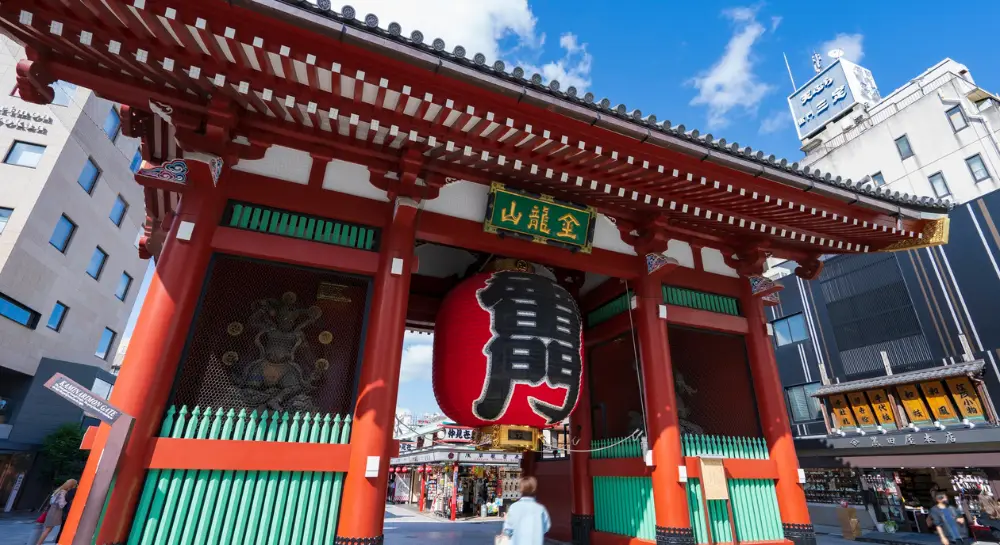
Choose Asakusa if you want a quieter base, traditional streets, easy access to Senso-ji, and generally better hotel value than places such as Ginza or Shibuya.
The neighborhood is busiest around Kaminarimon Gate and Nakamise-dori during the day. Walk several streets away from that main route and the atmosphere changes quickly.
This is one reason I like Asakusa early in the morning.
Around 7:00 or 8:00 a.m., you can walk through Kaminarimon and reach Senso-ji before Nakamise fills with visitors. The shops are not all open yet, but you get space to look around instead of moving with the crowd.
Later, you can return through the shopping street when the area is fully awake.
Asakusa also connects well with Ueno, Ginza, and Shibuya on the Tokyo Metro Ginza Line. Tokyo Skytree sits across the Sumida River and can be reached on foot or by a short train ride.
The main compromise is nightlife. There are plenty of restaurants and izakaya, but if you want your hotel surrounded by late-night bars, clubs, and shopping, Shibuya or Shinjuku will suit you better.
If Asakusa is part of your itinerary, our Senso-ji Temple guide covers visiting hours, what to see, access, and the best times to arrive.
Shibuya
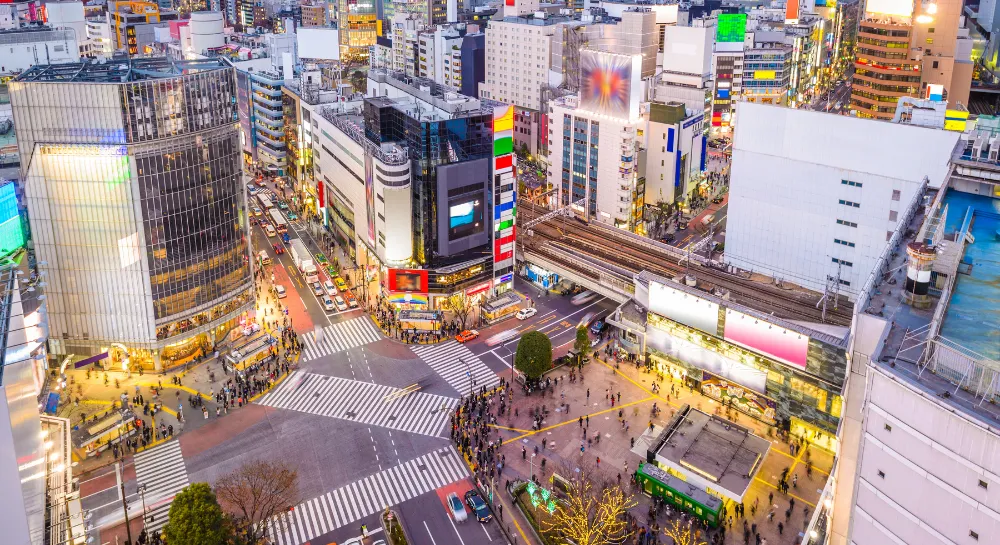
Shibuya works well if you want modern Tokyo right outside your hotel.
The crossing, Shibuya Sky, department stores, restaurants, bars, fashion, music venues, and shopping complexes are all concentrated around the station.
Harajuku and Omotesando are also close enough to combine with Shibuya without turning the day into a transport exercise.
The trade-off is obvious once you arrive: Shibuya is busy.
If your hotel is right around the station, expect crowds outside and plenty of activity well into the evening. Some travelers love that. Others realize after two nights that they would rather return somewhere quieter.
Shibuya makes particular sense for couples, younger travelers, nightlife-focused visitors, and anyone who wants restaurants and shops within walking distance after sightseeing.
Do not limit the area to the scramble crossing either. Dogenzaka, Miyashita Park, Shibuya Stream, Cat Street, and Oku-Shibuya all feel different from the streets directly around Hachiko.
Our guide to Shibuya things to do goes farther into those areas.
Shinjuku
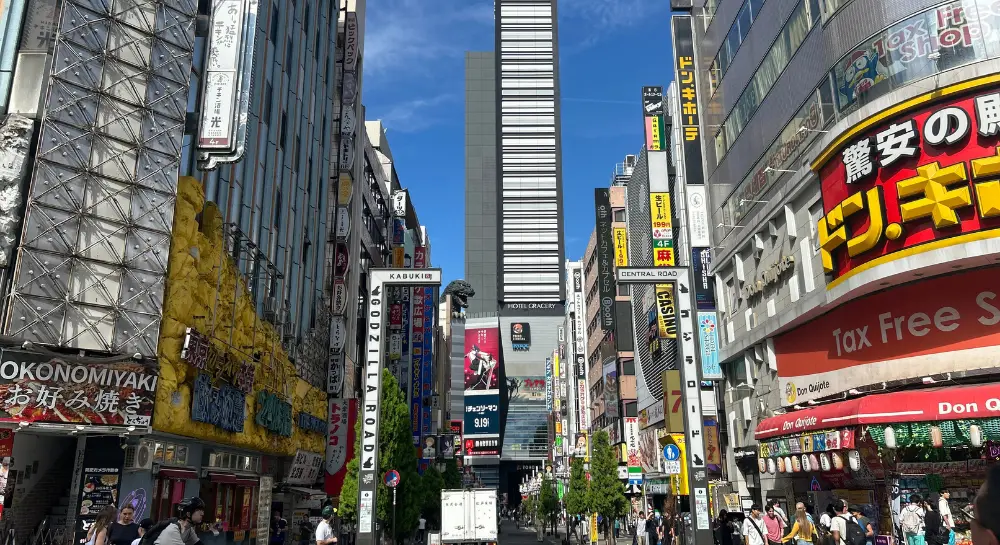
Shinjuku is the practical choice.
It has one of the widest selections of hotels in Tokyo, one of the city’s largest transport hubs, restaurants at almost every price level, and direct or convenient connections toward many places visitors commonly add to their trip.
That includes western Tokyo as well as routes toward Hakone and parts of the Mt. Fuji area.
The area changes depending on which side of the station you use.
West Shinjuku has offices, towers, large hotels, and the Tokyo Metropolitan Government Building. East Shinjuku becomes much busier around Kabukicho, Golden Gai, and the surrounding entertainment streets.
One thing first-time visitors underestimate is the size of Shinjuku Station.
A hotel that looks “next to Shinjuku Station” on a booking site may still involve quite a bit of walking, especially if you enter from the wrong side. Check the nearest station exit before booking rather than judging distance from the station name alone.
For travelers using Tokyo as a base for several different outings, Shinjuku is hard to beat.
Ginza
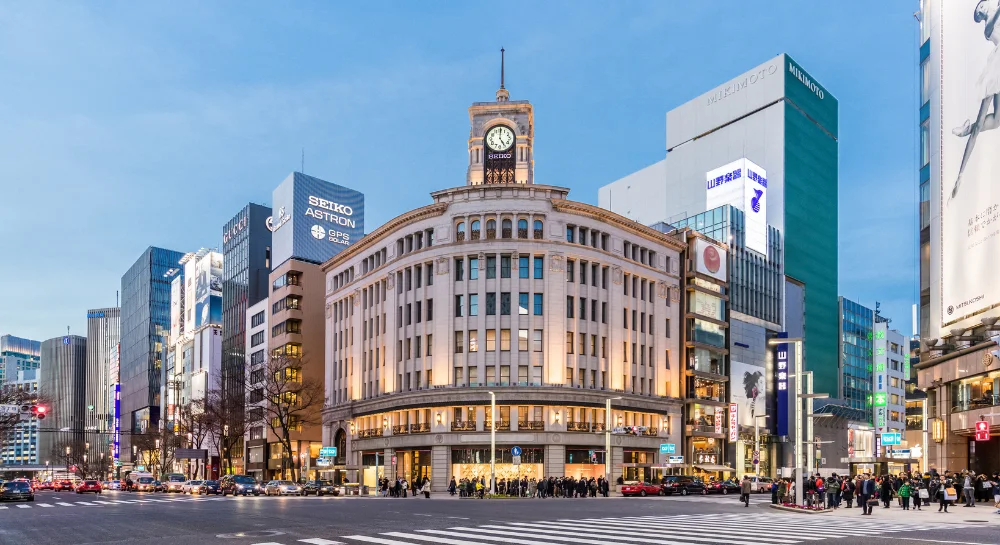
Ginza suits travelers who care about good hotels, shopping, restaurants, department stores, and a more polished evening atmosphere.
It is easy to walk, easy to understand, and well connected to central Tokyo.
Tsukiji Outer Market is nearby, Tokyo Station is not far away, and several subway lines make it simple to reach other parts of the city.
Hotel prices are usually the main downside.
If you are trying to keep accommodation costs low, there are better areas. If hotel quality, dining, and convenience matter more than budget, Ginza can make a very comfortable base.
It also works particularly well for couples who prefer quieter evenings to the louder nightlife around Shibuya or Shinjuku. Travelers planning a more flexible day together can also see our Tokyo tours for couples.
Harajuku & Omotesando
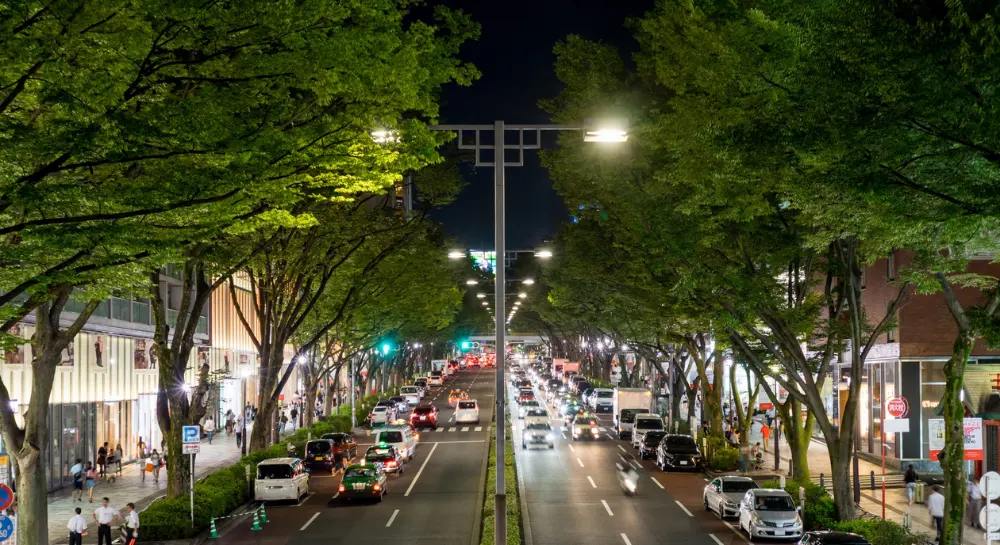
Harajuku and Omotesando are better places to visit than places to stay for most travelers.
That is not because the area is bad. It is because hotel choice is more limited compared with Shibuya, Shinjuku, Ueno, or Asakusa.
For sightseeing, though, the area is one of Tokyo’s easiest half-day combinations.
Meiji Jingu sits beside Harajuku. Takeshita Street gives you the louder side of youth fashion and character culture, while Omotesando moves toward architecture, cafés, international brands, and higher-end shopping.
The smaller streets between the main roads are often more interesting than rushing straight from Takeshita Street to Omotesando.
If fashion, street culture, shopping, and Meiji Jingu are high on your list, spend several hours here. I just would not choose a hotel here solely because you plan to visit Harajuku once.
Ueno
Ueno is one of the more useful bases for families and travelers who want reasonable hotel prices without moving too far from central Tokyo.
Ueno Park contains museums, the zoo, open space, and Shinobazu Pond. Ameyoko adds shops, food stalls, casual restaurants, and a much busier street atmosphere directly beside the station.
It is also convenient if you use Narita Airport because the Keisei Skyliner serves the Ueno area.
That can make Ueno especially practical for your first or last night in Tokyo.
Families often like the area because the day can be adjusted easily. A museum can replace an outdoor activity when it rains, Ueno Park gives children room to move around, and Asakusa is nearby.
If you are planning Tokyo around children rather than forcing children into an adult sightseeing schedule, our Tokyo family private tours page gives examples of how we pace those days.
Roppongi
Roppongi makes sense if art, nightlife, international dining, modern architecture, and central Tokyo matter more than traditional atmosphere.
Roppongi Hills, Mori Art Museum, Tokyo Midtown, and nearby Azabudai Hills give this part of Tokyo one of its strongest clusters of contemporary art and architecture.
teamLab Borderless is also at Azabudai Hills, making it easy to combine digital art with Roppongi or Tokyo Tower.
There are plenty of restaurants and bars used to international guests, which can make the area comfortable for first-time travelers.
What you will not get here is the older neighborhood feel you find in Asakusa or parts of Ueno.
That is not a problem if that is not what you came for.
What Are the Best Things to Do in Tokyo?
For a first trip, I would prioritize Senso-ji and Asakusa, Meiji Jingu and Harajuku, Shibuya, and one good city view.
After those, add places based on your interests instead of assuming every famous attraction belongs in your itinerary.
teamLab, Tsukiji, Toyosu, the Imperial Palace, Akihabara, museums, gardens, and shopping districts can all be worth your time. They are not equally useful for every traveler.
If you want a broader list after covering the main sights below, see our full guide to Tokyo things to do.
Senso-ji Temple
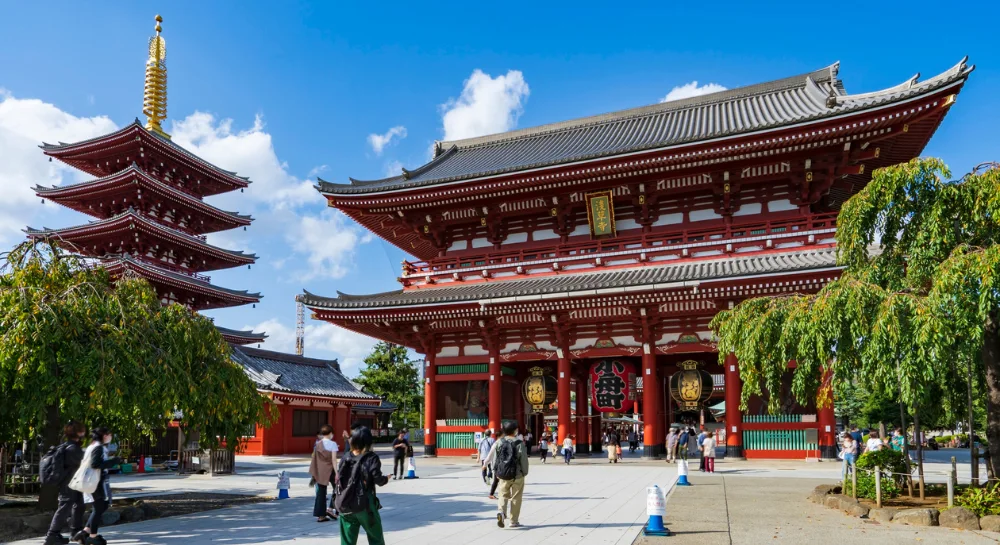
Senso-ji is Tokyo’s oldest Buddhist temple and one of the easiest places to understand why timing matters in this city.
Arrive around midday and Nakamise-dori can be shoulder-to-shoulder.
Arrive early in the morning and the same approach feels completely different.
I prefer seeing the temple first, before the shops become the main distraction. Walk through Kaminarimon, continue along Nakamise, pass Hozomon, and give yourself time around the main hall and five-story pagoda.
Then walk beyond the obvious route.
The smaller streets around Asakusa, Sumida River, and nearby neighborhoods add more to the visit than spending an extra hour moving between souvenir shops.
You can also pair Asakusa with Tokyo Skytree without crossing the city.
Meiji Jingu and Harajuku
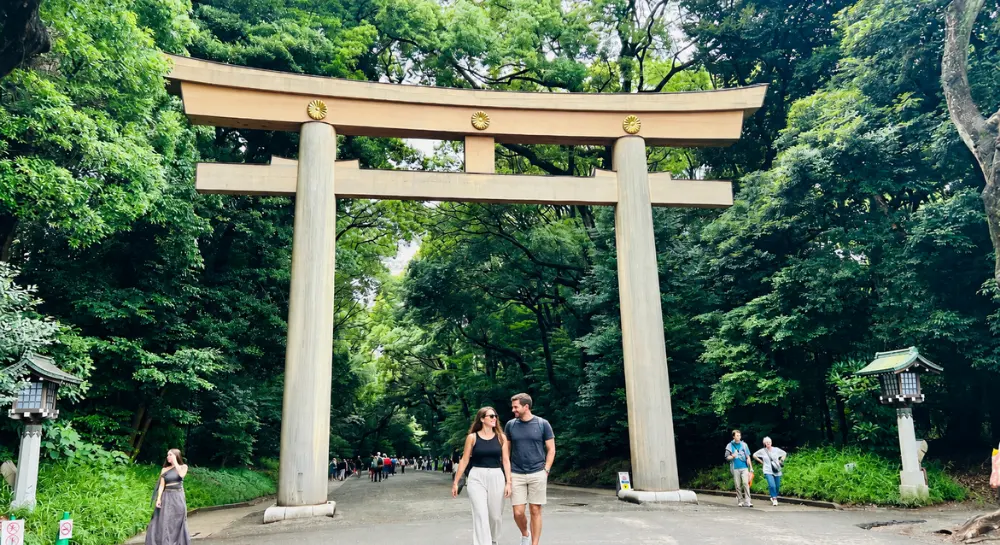
Meiji Jingu and Harajuku belong in the same outing.
That is partly because they are physically close and partly because seeing them together tells you more about Tokyo than visiting either place alone.
Enter the forest around Meiji Jingu and city noise drops away surprisingly fast. After the shrine, walk back toward Harajuku and the atmosphere flips.
Takeshita Street is crowded, commercial, youthful, and loud. Omotesando is wider, calmer, and more design-focused.
You do not need to describe Tokyo as a city of contrasts when this route already shows it.
Give the area half a day if you enjoy shopping or wandering. If you only want Meiji Jingu and a quick look at Harajuku, a couple of hours can be enough.
Shibuya Crossing and Shibuya Sky
Shibuya Crossing is worth seeing, but the crossing itself does not need a large block of your day.
Walk across it once. See it from another angle. Then keep going.
Shibuya Sky is a different decision because you are paying for a full city view, not simply a better photograph of the crossing.
On a clear day, the rooftop gives you one of Tokyo’s widest open-air views. Sunset is the most popular time, which also makes it one of the hardest ticket slots to get.
If you care about the skyline more than sunset, daytime can actually be easier. Clear mornings also give you a better chance of seeing Mt. Fuji in the distance.
If you mainly want an elevated photograph of Shibuya Crossing, there are cheaper and free viewpoints around the area.
Pay for Shibuya Sky because you want Shibuya Sky, not because you think it is the only way to see the crossing.
Tokyo Skytree vs. Tokyo Tower
Tokyo Skytree and Tokyo Tower are both observation towers, but they do not give you the same experience.
Tokyo Skytree is the choice if height is the priority. Tokyo Tower feels closer to the city around it and carries more of the retro Tokyo image many visitors already recognize.
| Feature | Tokyo Skytree | Tokyo Tower |
|---|---|---|
| Total height | 634 m | 333 m |
| Main deck | 350 m | 150 m |
| Higher deck | 450 m | 250 m |
| Better fit | Huge views, eastern Tokyo | Classic skyline, central Tokyo |
| Easy pairing | Asakusa | Roppongi, Zojo-ji, Azabudai |
If you are already spending the morning in Asakusa, Skytree is the easier addition.
If your day includes Roppongi, Azabudai Hills, or Zojo-ji, Tokyo Tower fits much better.
There is also no rule saying you need to pay for an observation deck.
The Tokyo Metropolitan Government Building in Shinjuku has a free observation floor. On a clear day, it can be more than enough for someone who simply wants to see how far Tokyo stretches.
teamLab
Tokyo has two major teamLab experiences that travelers regularly mix up.
teamLab Planets is in Toyosu.
teamLab Borderless is at Azabudai Hills.
Planets is more physical. You remove your shoes and move through spaces involving water, mirrors, light, and large-scale installations.
Borderless has no simple fixed route. You move between rooms while artworks appear, disappear, and connect across different spaces.
Which one should you choose?
For families, Planets can be very engaging because there is a clear physical progression through the experience, although parents should be comfortable with the water sections.
Borderless works very well for couples, older children, photographers, and anyone who enjoys wandering without knowing exactly what room comes next.
Both can sell out.
This is one of those Tokyo activities I would book before filling the rest of the day around it.
Tsukiji Outer Market and Toyosu Market
If you mainly want to eat, go to Tsukiji.
If you want to see how Tokyo’s wholesale seafood market works, Toyosu is the more relevant stop.
That distinction matters because the old Tsukiji wholesale market moved to Toyosu in 2018. Tsukiji Outer Market stayed where it was.
Today, Tsukiji is still packed with sushi, seafood, tamagoyaki, dried goods, kitchen knives, tea, snacks, and small food businesses.
Morning is the time to go.
By lunchtime, the narrow lanes become much harder to move through and some businesses are already thinking about closing rather than serving another wave of visitors.
Toyosu feels different.
It is cleaner, larger, and much more obviously built around the functioning wholesale market. The tuna auction is the big draw for visitors willing to arrive very early.
If this is your first trip and you only have time for one, I would usually send you to Tsukiji.
Imperial Palace and Gardens
The Imperial Palace is important historically, but it is also one of the Tokyo attractions most likely to disappoint visitors who arrive with the wrong expectation.
You cannot simply wander through the Emperor’s residence.
Most travelers see the palace from the outer grounds, Nijubashi area, and the Imperial Palace East Gardens.
If Edo history, castle remains, gardens, or Japanese political history interest you, the area is worth the time.
If you are choosing between the palace grounds and another attraction only because you think the Imperial Palace is an automatic Tokyo must-see, you can skip it without feeling that you missed the city.
Akihabara
Akihabara is a great stop for anime, manga, gaming, electronics, trading cards, figures, arcades, and Japanese pop culture.
For someone with no interest in any of that, it can be very easy to cut.
That is not a criticism of Akihabara. It is exactly why it works so well for the people who love it.
A serious collector can spend half a day moving through multi-floor shops. Someone who has never watched anime and does not care about gaming may walk the main street for 30 minutes and wonder what they are supposed to be looking at.
Choose it because it fits you, not because it appears on every Tokyo checklist.
What Should You Eat in Tokyo?
Tokyo can be extremely cheap or extremely expensive to eat in.
That range is part of the fun.
You can start the day with a ¥500 convenience-store breakfast, eat a good bowl of ramen for around ¥1,000, then spend considerably more on sushi or a special dinner that evening.
I would not build a Tokyo trip around only expensive reservations.
Some of the most useful food experiences are ordinary ones: a neighborhood ramen shop, a department-store basement, an izakaya after work hours, or an onigiri grabbed before an early train.
Sushi
You do not need an expensive omakase reservation to eat good sushi in Tokyo.
Casual conveyor-belt restaurants can be excellent for a first experience, especially if you want to try several types of fish without committing to a long formal meal.
Expect roughly:
- ¥1,500 to ¥3,000 for casual or conveyor-belt sushi
- ¥3,000 to ¥8,000 for many mid-range sushi restaurants
- ¥15,000 to ¥30,000 or more for high-end omakase
Those ranges overlap, of course. Tokyo has too many sushi restaurants for price alone to tell you how good the meal will be.
The better question is what kind of experience you want.
If you want variety and a relaxed lunch, casual sushi works.
If the chef interaction, sourcing, preparation, and pacing are part of why you are going, then omakase makes more sense.
Toyosu is another option for sushi in the morning, but restaurants near the market are not automatically cheap.
Ramen
Ramen is one of the easiest meals in Tokyo once you know how the shop works.
Many restaurants have a ticket machine at the entrance.
Choose your ramen and any toppings, pay, take the ticket, then hand it to the staff when you sit down.
Counter seating is normal. Eating alone is normal. You generally do not need to sit there long after finishing.
A bowl often falls around ¥900 to ¥1,500, although premium toppings and specialty shops can push the price higher.
Tokyo is also useful if you want to compare different regional styles because you can find shops specializing in everything from Hakata-style tonkotsu to Sapporo miso and Tokyo shoyu ramen.
Izakaya Dining
An izakaya is somewhere between a casual restaurant and a Japanese pub.
People order drinks and several smaller dishes rather than one large main course.
Menus vary, but common dishes include yakitori, sashimi, fried food, grilled fish, tofu, vegetables, noodles, and seasonal items.
You may also receive a small appetizer called otoshi and see a small charge added to the bill. That is normal in many izakaya.
Shinjuku, Shimbashi, Yurakucho, Ebisu, and Ueno all have plenty of options.
Omoide Yokocho in Shinjuku is famous and very photogenic, but do not assume that famous alley automatically equals the best izakaya meal.
Sometimes the restaurant a few streets away with no queue is the better evening.
Convenience Store Food and Depachika
Convenience-store food is genuinely part of everyday food life in Tokyo.
It does not need to be treated as the meal you buy because everything else went wrong.
7-Eleven, Lawson, and FamilyMart sell onigiri, sandwiches, salads, noodles, bento, fried chicken, desserts, coffee, and seasonal products at prices that make them useful throughout a trip.
They are especially handy for:
- early mornings
- late arrivals
- train days
- quick hotel breakfasts
- snacks before long sightseeing blocks
Department-store basements, known as depachika, take grab-and-go food in a completely different direction.
Walk through the basement of Isetan, Mitsukoshi, Takashimaya, or another major department store and you will find sushi, bento, grilled food, salads, wagashi, cakes, fruit, meat, and regional specialties.
After a long walking day, buying dinner downstairs and taking it back to the hotel can be much more enjoyable than forcing another restaurant reservation into the itinerary.
How Many Days Do You Need in Tokyo?
Three to five full days is a good range for a first Tokyo trip.
Two days can work, but you will need to accept that you are seeing the main outline of the city rather than getting very far beneath it.
With two days, I would focus on:
- Asakusa and Senso-ji
- Meiji Jingu and Harajuku
- Shibuya
- Shinjuku or one observation deck
Our 2-day Tokyo itinerary shows how to arrange that without wasting half the trip going back and forth across the city.
With three days, you can slow the pace slightly and add areas such as Ginza, Tsukiji, Ueno, Akihabara, or Roppongi.
The 3-day Tokyo itinerary is a better fit for first-time visitors who want the main districts without compressing everything into two long days.
With four to five days, Tokyo becomes much more forgiving.
You have time for teamLab, gardens, museums, less famous neighborhoods, shopping, and meals that are not squeezed between two reservations.
Our 5-day Tokyo itinerary works well if you want a little more breathing room.
Stay for a full week and you can begin adding slower neighborhoods and one or two day trips without sacrificing the main Tokyo days. The 7-day Tokyo itinerary is built around that kind of pacing.
Mt. Fuji, Kamakura, and Nikko should generally be treated as additional days.
Do not say you have “five days in Tokyo” if two of those days are actually going to Fuji and Nikko. In practice, you have three Tokyo days.
When Is the Best Time to Visit Tokyo?
Spring and autumn have the easiest combination of weather and sightseeing conditions, which is why they are so popular.
That does not mean you should automatically avoid the rest of the year.
Tokyo changes quite a bit by season, and each period has its own trade-offs.
Spring: Cherry Blossom Season
Cherry blossoms usually become the main reason people want Tokyo in late March and early April.
The exact timing moves every year, sometimes enough to matter if your whole trip is planned around peak bloom.
Places such as Chidorigafuchi, Ueno Park, Meguro River, Shinjuku Gyoen, and Sumida Park become extremely busy when the flowers are at their best.
Hotels also become harder to book at reasonable prices.
If sakura is the main goal, keep watching the seasonal forecast instead of relying on the dates from a previous year.
Also remember that late April moves toward Golden Week, one of Japan’s busiest domestic travel periods.
Spring can be beautiful, but it is not the quiet version of Tokyo.
Summer
Tokyo summer is hot and humid enough to affect the way I would plan your day.
July and August are not the time to build an itinerary with outdoor stops from 9:00 a.m. until 5:00 p.m. and assume everyone will still be cheerful at dinner.
Use mornings for walking.
Move shopping, museums, cafés, teamLab, department stores, and other indoor activities into the hottest part of the afternoon.
Then go outside again later.
Summer does have an advantage: festivals, fireworks, and evening events bring out a side of Tokyo that you will not see in November.
If you want matsuri and fireworks, the heat may be worth it.
If your ideal trip is walking 20,000 steps every day in comfortable weather, choose another season.
Autumn
November is one of my favorite times to recommend Tokyo.
The temperature is usually much easier for long days outside, humidity has dropped, and autumn color begins appearing across gardens and parks.
Tokyo’s foliage peaks later than many travelers expect.
You are more likely to see strong autumn colors from mid-November into early December than at the beginning of October.
Shinjuku Gyoen, Rikugien, Koishikawa Korakuen, and Meiji Jingu Gaien are popular places to see it.
Autumn still gets busy, but it normally feels less concentrated around one short event than cherry blossom season.
Winter
Winter is underrated.
Tokyo is cold, but central Tokyo does not usually spend the season buried in snow.
What you get instead is clearer air, lower humidity, winter illuminations, fewer tourists at some attractions, and much better odds of seeing Mt. Fuji.
December through February is often the strongest period for Fuji visibility.
If seeing the mountain matters a lot to you, that can be more useful than coming during a warmer but hazier season.
New Year is the main period to plan carefully because some museums, restaurants, attractions, and smaller businesses close or change their hours.
How Do You Get Around Tokyo?
Use trains and subways for most trips.
Tokyo’s railway map looks terrifying when you first see it, but visitors do not need to understand the whole network.
You mainly need an IC card, Google Maps or another good navigation app, and enough awareness to know whether you are using JR, Tokyo Metro, Toei, or another railway.
After a day or two, most visitors stop thinking about it.
JR Yamanote Line and Tokyo Metro
The Yamanote Line is useful as a rough mental map of central Tokyo.
It connects major areas including Shinjuku, Shibuya, Ueno, Tokyo Station, Akihabara, Ikebukuro, and Shinagawa.
But do not force every journey onto the Yamanote Line.
Tokyo Metro and Toei Subway often provide much more direct routes.
For example, the Ginza Line links Asakusa, Ueno, Ginza, Omotesando, and Shibuya.
That can be much easier than going out of your way to find JR simply because JR is the operator you recognize.
Use whichever route gets you where you need to go with the least friction.
IC Cards: Suica and Pasmo
Get an IC card early.
Suica and Pasmo let you tap through station gates instead of calculating individual fares every time you ride.
They can also be used in convenience stores, vending machines, and many shops.
For travelers using a compatible iPhone, adding a digital transit card can be particularly convenient.
Physical visitor cards are another option if you prefer a normal card or cannot use the mobile version.
The exact availability of physical visitor cards and mobile services has changed several times in recent years, so check the current setup shortly before your trip rather than relying on an old travel video.
Taxis and Private Transport
Tokyo trains are excellent, but they are not automatically the best answer for every group.
A taxi starts making sense when you have:
- several large suitcases
- small children
- older family members
- mobility concerns
- heavy rain
- a late-night journey
- several people splitting the cost
Private transport becomes more useful when those issues affect an entire sightseeing day rather than one ride.
There is a big difference between paying for a taxi from Asakusa to Shibuya and having a private vehicle available while moving between several places with children, grandparents, luggage, or summer heat.
Most couples and solo travelers should use trains.
A family of five may reach a different conclusion.
If you want a private guide while still using Tokyo’s trains, or want the option of adding a vehicle, our Tokyo private tour explains the different formats.
Airport Transfers
Haneda is much closer to central Tokyo than Narita.
From Haneda, Keikyu trains and the Tokyo Monorail can get you into central Tokyo quickly.
Which one makes sense depends on where your hotel is.
Keikyu is useful for areas connected through Shinagawa and the Asakusa Line. The monorail is convenient for Hamamatsucho and onward JR connections.
From Narita, the Keisei Skyliner works particularly well for Nippori and Ueno.
The Narita Express is convenient for places such as Tokyo Station, Shinagawa, Shibuya, and Shinjuku.
Do not choose an airport train because one blog called it “the best.”
Choose it based on your hotel.
A slightly slower direct ride is often easier than saving ten minutes and carrying suitcases through another transfer.
How Expensive Is Tokyo?
Tokyo is not as expensive as many first-time visitors expect when it comes to food and local transportation.
Hotels are where the budget can change quickly.
Season, room size, neighborhood, and how early you book matter more than any single citywide average.
Accommodation Costs
Use these only as rough planning ranges:
| Hotel level | Approximate nightly cost |
|---|---|
| Budget | ¥8,000–¥15,000 |
| Mid-range | ¥15,000–¥35,000 |
| Upper mid-range | ¥30,000–¥50,000+ |
| Luxury | ¥50,000+ |
Asakusa and Ueno often give you more options at the lower and middle end.
Ginza generally moves higher.
Shinjuku covers almost every price level because the hotel supply is so large.
Shibuya can become expensive because many travelers want to stay close to the station and central inventory is more limited.
Cherry blossom season, Golden Week, long weekends, and major events can move all of these numbers.
Book based on the actual dates of your trip, not the average price you saw in an article six months earlier.
Food Costs
Tokyo is unusually good at letting travelers control food spending without eating badly.
A normal range might look like this:
| Meal | Approximate cost |
|---|---|
| Convenience-store breakfast | ¥400–¥800 |
| Ramen | ¥900–¥1,500 |
| Casual set lunch | ¥1,000–¥2,000 |
| Conveyor-belt sushi | ¥1,500–¥3,000 |
| Izakaya dinner | ¥3,000–¥6,000 |
| Mid-range specialty meal | ¥5,000–¥10,000 |
| High-end omakase | ¥15,000–¥30,000+ |
You can easily mix those levels during the same trip.
One expensive dinner does not mean every lunch needs to become another reservation.
Private Tour and Guided Experience Costs
Private guiding is one of the travel costs generic Tokyo guides often leave out.
Japan Wanderlust currently prices Tokyo tours per group rather than per person.
The current options include:
- $450 per group for a 4-hour Tokyo highlights tour
- $750 per group for a 7–8 hour custom Tokyo tour
- $950 per group for an 8–9 hour Tokyo tour with private vehicle
For a group of five, a $750 private day works out to $150 per person before currency conversion.
For one traveler, the calculation looks very different.
That is why comparing private and group tours only by the headline price can be misleading.
A private tour also includes itinerary planning, route decisions, navigation, and the ability to change the day around your group.
If you are comparing options, our guide to Tokyo tour guide costs breaks down private guides, group tours, and other guide types in more detail.
What Are the Best Day Trips and Extensions From Tokyo?
Mt. Fuji, Kamakura, Nikko, and Yokohama are the main places I would consider if you want to leave Tokyo for a day.
They are not interchangeable.
Mt. Fuji is about scenery and weather.
Kamakura gives you temples, shrines, and the coast with relatively little travel.
Nikko takes longer but gives you a much larger shrine and mountain experience.
Yokohama is close enough that it does not need to consume an entire day.
Kyoto and Osaka belong in another category altogether. They are better treated as the next part of your Japan trip rather than Tokyo day trips.
Mt. Fuji and Hakone
A Mt. Fuji day trip is enough if you mainly want scenic viewpoints around the Fuji Five Lakes area and plan to return to Tokyo in the evening.
An overnight stay gives you more time, a slower pace, and one major advantage that is easy to overlook: a second chance at seeing the mountain.
Fuji visibility is weather-dependent.
A beautifully planned itinerary cannot fix a mountain hidden behind clouds.
This is one reason winter can be a good season for Fuji. The air is often clearer and visibility tends to improve.
Around Lake Kawaguchiko, possible stops include Oishi Park, Kitaguchi Hongu Fuji Sengen Shrine, Chureito Pagoda, Oshino Hakkai, and smaller viewpoints depending on weather and traffic.
Japan Wanderlust’s Mt. Fuji private tour is currently from $950 USD per group for up to five guests and is built around a private vehicle from Tokyo.
An overnight trip is worth considering if Fuji is one of the main reasons you are coming to Japan rather than simply an optional extra.
Kamakura
Kamakura is probably the easiest historical day trip from Tokyo.
You can reach it in roughly an hour from several central Tokyo stations, which leaves enough time to see temples and shrines without turning the entire day into transport.
The Great Buddha at Kotoku-in and Hase-dera fit naturally together.
Tsurugaoka Hachimangu and Komachi-dori are closer to central Kamakura.
If you start early, Enoshima or the coast can also be added.
Kamakura suits travelers who want a break from central Tokyo but do not want the longer journey required for Nikko.
Nikko
Nikko takes more effort than Kamakura.
The main reward is Toshogu Shrine and the larger mountain setting around it.
If you only visit the central shrine area, Nikko can still be done as a long day trip.
Once you start adding Lake Chuzenji, Kegon Falls, hiking, or more of the national park, an overnight stay becomes much more appealing.
So the choice between Kamakura and Nikko is not simply which one is “better.”
Choose Kamakura for easier access, a coastal atmosphere, and a more relaxed day.
Choose Nikko if the shrine complex and mountain scenery justify the longer travel time for you.
Yokohama
Yokohama is the easiest option when you have half a day rather than a full day.
Minato Mirai, Chinatown, the waterfront, museums, shopping, and evening skyline views can comfortably fill an afternoon.
You do not need to treat Yokohama like a major excursion.
That flexibility is exactly what makes it useful late in a Tokyo trip, especially when nobody feels like starting another 12-hour sightseeing day.
Extending to Kyoto and Osaka
Kyoto is only a little over two hours from Tokyo by the fastest Shinkansen services.
That makes a Tokyo-Kyoto itinerary easy.
It does not make Kyoto a sensible Tokyo day trip.
Kyoto’s attractions are spread across the city, and local transport takes time once you arrive. Spending more than four hours on a round-trip train just to rush through a few temples rarely makes sense.
Give Kyoto at least two nights if possible.
Osaka can then be added from Kyoto or used as a separate base.
The nationwide JR Pass also needs to be calculated rather than bought automatically. The large price increase changed the value equation for many normal tourist itineraries.
A Tokyo-Kyoto return journey alone generally does not justify the pass.
Add up the journeys you will actually make first.
If Tokyo is only one part of a longer trip and you want help arranging several destinations together, the Japan private tours hub covers the wider trips we plan beyond Tokyo.
What Should You Know Before Visiting Tokyo?
The practical side of Tokyo is fairly easy once you have the basics sorted.
Check your visa requirements, arrange mobile data, have access to both cash and cards, and learn a few everyday etiquette rules.
You do not need to study Japan for three months before getting on the plane.
Visa and Entry Requirements
Japan has visa-exemption agreements with many countries and regions for short tourism stays.
The exact rules depend on your nationality, passport, and intended length of stay.
Because visa rules can change, check the Japanese Ministry of Foreign Affairs or the Japanese embassy or consulate responsible for your country before traveling.
Do not rely on an old blog post for something that determines whether you can enter the country.
Money and Payment
Tokyo accepts cards far more widely than it used to.
You should still carry cash.
Hotels, department stores, convenience stores, large restaurants, and major attractions generally accept cards.
Small restaurants, temple areas, market stalls, older businesses, and some ticket machines may still be cash-only.
Keeping around ¥5,000 to ¥10,000 in cash is enough for most normal situations without carrying a large amount.
7-Eleven ATMs are widely used by international visitors for withdrawing yen.
Your Suica or Pasmo also works for many small purchases, which means you may use an IC card almost as often for food and vending machines as you do for trains.
Connectivity
For one or two travelers, an eSIM is usually the simplest choice if your phone supports it.
You can install it before flying and have data ready when you arrive.
Pocket Wi-Fi still makes sense for some families, groups sharing several devices, or travelers whose phones cannot use eSIM.
The main drawback is that everyone becomes dependent on whoever is carrying the device.
Tokyo is much easier to navigate when each adult has their own data connection, especially if you split up for shopping or return to the hotel separately.
Safety
Tokyo is generally a very safe city for visitors.
That does not mean you should switch off normal common sense.
Keep track of your belongings, be careful around nightlife areas, and avoid following aggressive touts into bars or clubs you did not choose yourself.
For many travelers, natural disasters are more unfamiliar than street crime.
Earthquakes happen in Japan. Typhoons and heavy rain can also affect transportation.
If an earthquake happens while you are indoors, follow staff instructions instead of immediately running outside.
Save your hotel’s address on your phone, keep your passport information accessible, and pay attention to official transport and weather updates when conditions change.
Etiquette Basics
You do not need to memorize a huge list of Japanese rules.
Most everyday etiquette comes down to paying attention to the people around you.
For a short Tokyo visit, remember these:
- Keep your voice down on trains. Normal conversation is fine, but loud phone calls are generally avoided.
- Do not tip routinely. Restaurants and taxis do not expect the same tipping culture found in countries such as the United States.
- Remove your shoes when required. Ryokan, tatami rooms, some restaurants, and traditional spaces will normally make this clear.
- Carry small rubbish with you. Public bins are less common than many visitors expect.
- Stand aside before checking your phone. This matters more than people realize around busy stations and narrow streets.
Nobody expects a visitor to understand every custom immediately.
Pay attention, copy what people around you are doing when you are unsure, and ask when needed.
The same approach works for Tokyo as a whole.
Do not try to conquer the city.
Pick a few areas each day, leave room between stops, and let yourself stay longer when somewhere turns out to be more interesting than expected.
Tokyo is much better when every hour is not already spoken for.
