
This itinerary covers two full days in Tokyo, built around geographic logic and energy pacing so you see the city’s range without racing through it.
Day 1 moves from Asakusa and Senso-ji Temple in the morning through Ueno or Akihabara at midday, then into Shibuya Crossing, Meiji Jingu, and Shinjuku at night. Day 2 opens with TeamLab Planets or Shinjuku Gyoen, then pivots into Odaiba, Tokyo Tower, or Ginza in the afternoon before a local dinner to close. Tokyo’s train network connects all of these districts quickly, and this plan is built around that most transfers take under 30 minutes.
This itinerary assumes you arrive in Tokyo the night before Day 1 and base yourself in a central neighborhood: Shinjuku, Shibuya, or Asakusa all work well. The pace is comfortable, with one or two train rides per half-day and plenty of walking time built in. It is designed for first-time visitors with two full days to spend, not for day-trippers, and not for returning travelers looking to go beyond the well-known neighborhoods.
Day 1 – Old Tokyo and Modern Energy: Asakusa to Shinjuku
What to Book Before This Day
Shibuya Sky tickets sell out fast, especially for golden hour slots. Book those before you leave home. Everything else on Day 1 is walk-in.
Morning – Asakusa and Senso-ji Temple
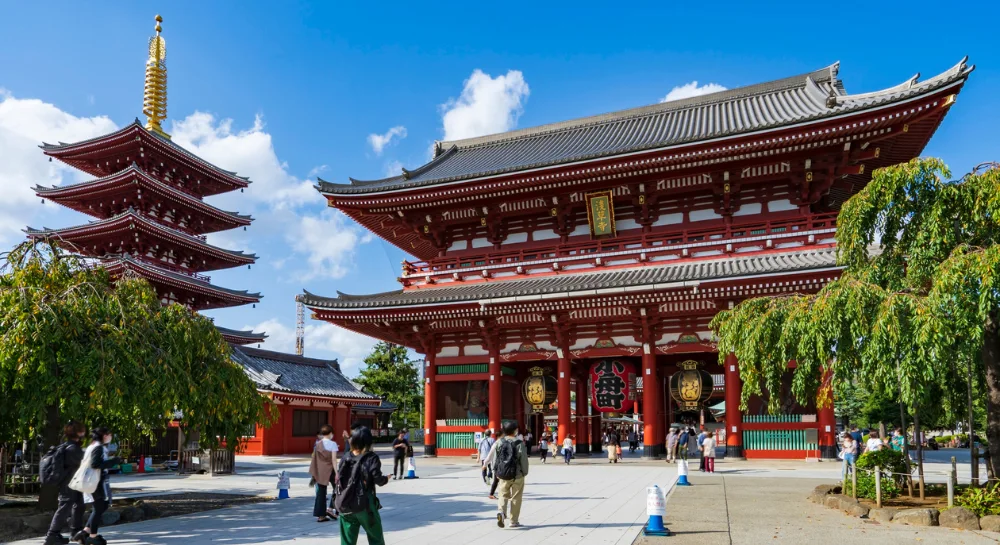
Asakusa is the best place to start your two days in Tokyo, and the time you arrive makes all the difference.
Aim to reach Kaminarimon Gate between 7:30 and 8:00 a.m. At that hour, the stone lantern is still catching the early light and the street ahead is quiet. Walk through the gate and head up Nakamise-dori, the covered shopping lane that leads directly to the temple. The stalls are still shuttered at this hour, which works in your favor: you see the architecture clearly, and you reach the main hall of Senso-ji Temple without weaving through crowds. Pause at the incense burner in front of the hall, watch the smoke drift, and take your time.
Plan 60 to 90 minutes for the full temple area. After the main hall, turn away from Nakamise-dori and explore the backstreets to the east and north of the complex. This is where Asakusa shows a quieter face: small craft shops, old sweet sellers, and lanes that most visitors never find because they double back the way they came.
A few things worth knowing for this morning block:
- Ningyo-yaki (small sponge cakes shaped like temple symbols) are sold near the main hall and make an excellent first breakfast in Tokyo
- Taiyaki (fish-shaped cakes filled with sweet red bean paste) are available from street stalls nearby
- If you are staying near Asakusa or have extra time, Tsukiji Outer Market is a 20-minute train ride away and opens early; it works as a pre-temple detour for serious food travelers
If you want someone to show you which lanes to turn down and which shops have been here for generations, consider joining a Tokyo private tour with a local guide. A knowledgeable guide transforms a good Asakusa morning into an exceptional one.
Midday – Ueno or Akihabara
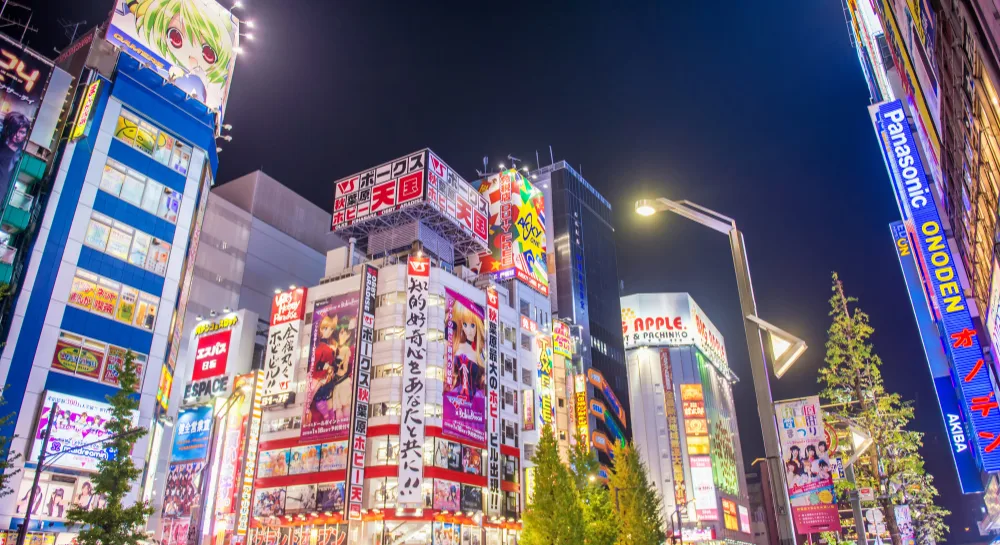
From Asakusa, you have two genuinely different options for the middle part of Day 1. Choose based on what kind of traveler you are, not what every itinerary tells you to do.
Option 1: Ueno Park and the Tokyo National Museum
Ueno is a 30-minute walk from Senso-ji, or a single train stop. The Tokyo National Museum holds the largest collection of Japanese art and antiquities in the world, and it rewards at least 90 minutes of your time. Do not rush through it. On your way out, walk through Ameyoko Market, a covered street market running along the elevated train tracks, and pick up lunch from one of the food stalls there. It is lively, affordable, and a strong contrast to the temple quiet of the morning.
Option 2: Akihabara Electronics District
Akihabara is 10 minutes by train from Asakusa and delivers one of the most distinctive sensory shifts in Tokyo. The multi-floor electronics stores, anime merchandise shops, and arcade game centres represent a completely different city from the one you woke up in. A konbini lunch fits perfectly here: grab something from a 7-Eleven or FamilyMart, eat on the go, and explore the floors of any large electronics building at your own pace. Budget 90 minutes to two hours.
Both options reconnect easily with the afternoon route at Shibuya, so the choice does not affect your schedule.
Afternoon – Shibuya Crossing and Harajuku
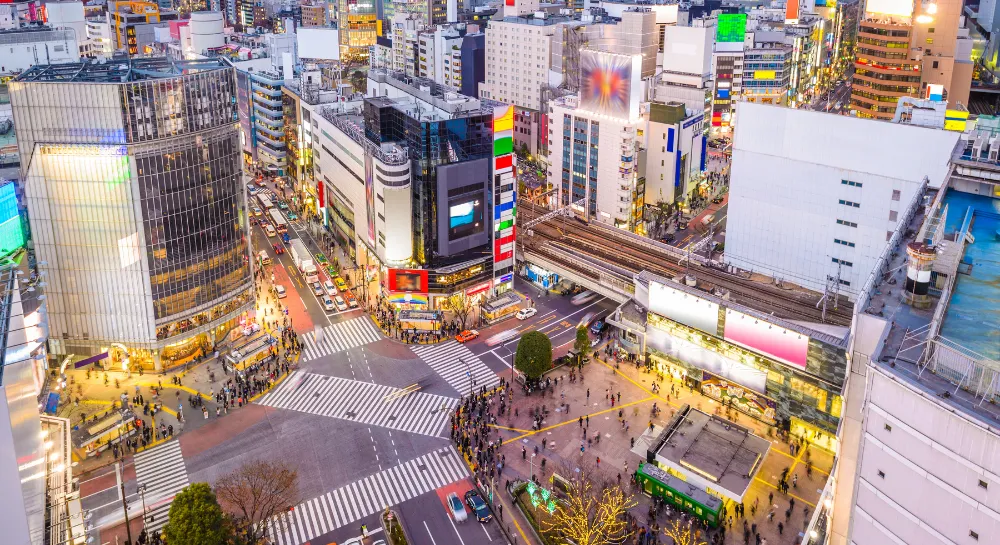
Leave your midday stop by 3:00 p.m. to reach Shibuya with enough afternoon light remaining.
Shibuya Crossing is the first anchor of your afternoon. Exit Shibuya Station at the Hachiko exit and you will walk straight into it. Cross at least once: stand in the middle of the intersection when the lights change and watch the crowd part around you from every direction. Then step back. Find a window seat in one of the coffee shops above street level on the surrounding blocks and watch the crossing from above. The two perspectives together give you the full picture of why this place became iconic.
From Shibuya Crossing, walk north toward Harajuku. The route along Omotesando takes about 15 minutes on foot and passes some of the most architecturally interesting buildings in the city. This walk is worth doing slowly.
Meiji Jingu is the second anchor of the afternoon. Enter through the massive torii gate and follow the gravel forest path to the inner shrine. Twenty to thirty minutes inside is enough. The forest around the shrine sits in the middle of one of the world’s busiest cities, and that contrast is the point. It functions as a natural decompression moment between the energy of Shibuya and the colour of Harajuku.
After Meiji Jingu, walk five minutes to Takeshita Street in Harajuku. The street is narrow, loud, and packed with fashion that exists nowhere else. You do not need long here: 20 to 30 minutes covers the full length twice.
If you have extra time: The Omotesando Hills shopping complex on the boulevard of the same name is worth a slow walk through for its architecture alone.
End state: From Harajuku, take the Yamanote Line two stops north to Shinjuku. The journey takes under 10 minutes and drops you directly into the evening.
Failure-proofing: If Shibuya Crossing is too overwhelming at street level during peak hour, the Mag’s Park observation point offers a free elevated view of the crossing from the Shibuya Hikarie building nearby.
Evening – Shinjuku at Night
Shinjuku rewards a specific sequence, and following it makes the evening feel complete rather than scattered.
Start at Omoide Yokocho, a narrow alley just west of Shinjuku Station packed with tiny yakitori stalls. Arrive by 6:30 p.m. to secure a seat before the post-work crowd fills every stool. The stalls seat eight to ten people at most, smoke hangs in the air from the charcoal grills, and the menus are short. Budget around 2,000 to 3,000 yen per person for dinner here. Point at what looks good on the grill if the menu is Japanese only: the staff are used to it.
After dinner, walk five minutes east to Golden Gai: a block of over 200 tiny bars, each one a different personality and each seating fewer than ten people. For a first visit, look for bars with an English menu displayed in the window or on the door. Cover charges are standard, usually between 500 and 1,000 yen, and that is normal. Stay for one or two drinks and absorb the atmosphere.
Close the evening at the Tokyo Metropolitan Government Building observation deck, a five-minute walk from Golden Gai. Entry is free, it stays open until 10:30 p.m. on most nights, and the panoramic view of the city at night is as good as any paid observation deck in Tokyo. It is one of the best free things you can do in the city, and most itineraries leave it out entirely.
Sleep in Shinjuku if possible. The base makes Day 2 logistics straightforward from the first train.
Failure-proofing: If Omoide Yokocho is full when you arrive, the covered market streets of Kabukicho just east of the station have plenty of standing ramen and izakaya options that seat walk-ins easily.
Day 2 – Modern Tokyo and City Views: Odaiba to Tokyo Tower
What to Book Before This Day
TeamLab Planets tickets must be booked online before you travel. They sell out days or weeks in advance. If your travel dates are within the next two weeks and tickets are unavailable, default to the Shinjuku Gyoen morning described below.
Morning – TeamLab Planets or Shinjuku Gyoen
Your Day 2 morning depends on one thing: whether you have TeamLab Planets tickets.
TeamLab Planets is an immersive digital art installation in Toyosu, 25 to 30 minutes from central Tokyo by train. Book tickets online before you travel: walk-up entry is not available and the attraction sells out regularly. Doors open at 9:00 a.m., and arriving early keeps you ahead of the afternoon crowds. The experience runs 60 to 90 minutes and combines large-scale digital projections with reflective water rooms and sensory garden spaces. It is genuinely unlike anything most visitors have seen before, and it works well for all ages.
Shinjuku Gyoen is the right alternative if TeamLab tickets are sold out for your dates. The garden sits 15 minutes from Shinjuku Station, entry costs 500 yen, and its 144 acres combine Japanese, French formal, and English landscape styles across a single continuous space. Take a slow walk, find a bench, and eat a convenience store breakfast on the grounds. This is a better morning than rushing toward a sold-out attraction.
The decision rule is simple: if tickets are available, start at TeamLab Planets. If not, Shinjuku Gyoen plus a relaxed breakfast is the stronger choice.
Afternoon – Odaiba, Tokyo Tower, or Ginza
Pick one anchor for your afternoon. Odaiba, Tokyo Tower, and Ginza sit in different parts of the city and each requires its own transit approach. Trying to combine all three leaves you on trains for most of the afternoon.
Odaiba suits travelers who want something unexpected and visually striking. Reach it via the Yurikamome driverless train line from Shimbashi Station: the elevated ride over Tokyo Bay is worth the journey on its own. At Odaiba, walk the waterfront, look back at the city skyline from Odaiba Beach, and find the life-size Statue of Liberty replica on the shoreline, a genuine surprise for first-timers. The futuristic architecture of the buildings around DiverCity is photogenic and unlike anywhere else in the city. Plan two to three hours.
Tokyo Tower suits travelers who want a classic Tokyo landmark with more context than a standard observation deck visit provides. The tower is 15 minutes by train from Shinjuku. Buy a ticket for the Main Deck at 150 metres: it gives you the best balance of price and view. Before or after going up, walk through the grounds of Zojo-ji Temple, which sits directly beside the tower. The combination of a centuries-old temple in the shadow of a mid-century steel tower is one of the most striking contrasts in Tokyo, and almost no itinerary currently points readers toward it.
Ginza suits travelers who want to understand a different register of Tokyo: upscale, architectural, and calm compared to Shibuya or Shinjuku. Skip the luxury boutiques unless that is your interest, and go instead to Itoya on Chuo-dori, a ten-floor stationery and design store that is worth an hour of anyone’s time. The surrounding blocks offer excellent people-watching and some of the city’s best coffee shops.
If you have extra time: The teamLab path pairs naturally with a walk around Toyosu Market if you finish early.
End state: Return to your central base from whichever afternoon stop you chose. You have one evening left in Tokyo, and it is worth spending it well.
Failure-proofing: If the Yurikamome line to Odaiba has delays or disruptions, Odaiba is also reachable via the Rinkai Line from Osaki Station, adding only a few minutes to the journey.
Evening – Sunset View and Local Dinner
Use the last evening in Tokyo to go up high and eat well.
Shibuya Sky is the rooftop observation deck on top of Shibuya Scramble Square. It has an outdoor viewing area that puts you above most of the surrounding buildings, and the golden hour view across the city is exceptional.
Tickets cost around 2,000 yen and must be booked in advance: the sunset time slots sell out the fastest. If tickets are unavailable, the free observation area at the Tokyo Metropolitan Government Building in Shinjuku delivers a comparable night view at no cost. The Caretta Shiodome sky garden near Shiodome Station is a lesser-known free alternative that works well if you end the afternoon near Ginza.
For dinner, let your afternoon location guide the choice. If you finish near Shibuya, walk ten minutes south to Ebisu: the side streets around Ebisu Station are full of small izakaya where the menu is seasonal, the prices are honest, and the atmosphere belongs to the neighborhood rather than the tourist trail. If you finish near Shinjuku, the bars and small restaurants in Nishi-Shinjuku, the quieter west side of the station, offer the same local feel without the crowds of Omoide Yokocho.
One final note worth making: Tokyo’s convenience stores carry genuinely good food late at night. Onigiri, hot noodles, sandwiches, and packaged sushi from a FamilyMart or Lawson are a real option for a late snack, not a fallback. Do not hesitate to use them.
Failure-proofing: If Shibuya Sky is sold out and you have already used the government building deck on Day 1, the observation deck at Bunkyo Civic Centre in Bunkyo ward is free, open late, and almost entirely unknown to visitors.
Where Should You Stay in Tokyo for 2 Days?
Your base neighborhood shapes how both days feel from the moment you leave your room. Choose based on what matters most to you, not the star rating of the hotel.
- Shinjuku is the strongest all-around base for this itinerary. It sits close to both Day 1 and Day 2 routes, connects to every major train line, and offers accommodation across a wide price range from budget capsule hotels to comfortable mid-range business hotels. Choose Shinjuku if convenience and transport access matter more to you than neighborhood atmosphere.
- Asakusa suits travelers who want to feel old Tokyo as soon as they step outside. Staying here means you can walk to Senso-ji before the crowds arrive, which is one of the best experiences this itinerary offers. It sits slightly further from Day 2 attractions, but the train connections are reliable, and ryokan options in this area give the trip a distinctly Japanese character from day one.
- Shibuya works best for travelers who prioritize the Day 1 afternoon route and want to be close to the nightlife at the end of the evening. It is slightly less convenient for Day 2 if you choose Odaiba or Toyosu, but the gap is small. Most Shibuya hotels put you within walking distance of the crossing and Harajuku.
Wherever you base yourself, Tokyo’s train network keeps the rest of the city within 30 to 45 minutes. No neighborhood puts you out of reach of anything in this plan. Load a Suica or Pasmo IC card on arrival and the logistics take care of themselves.
What Are the Most Practical Tips for 2 Days in Tokyo?
These tips are most useful when you know exactly where in the two days they apply.
- Get a Suica or Pasmo IC card on Day 1, before anything else. Load it at the airport or at any major station on arrival. It covers every train, bus, and subway journey in this itinerary, and you can also tap it at convenience stores to pay for food and drinks. You will not need to buy a separate ticket for anything in these two days.
- Use coin lockers if you are carrying a day bag or extra shopping. Shinjuku and Shibuya stations both have large locker banks, and most now accept IC card payment. Drop your bag before the afternoon and pick it up on the way to dinner. It makes the Harajuku walk and the Odaiba waterfront significantly more comfortable.
- Treat konbini as part of the experience, not a backup plan. 7-Eleven, FamilyMart, and Lawson all carry hot food, fresh onigiri, sandwiches, and decent coffee from early morning until late at night. A konbini breakfast before Senso-ji and a konbini snack between Shibuya and Shinjuku are genuinely good options, not compromises.
- Download the Tokyo map on Google Maps before you leave your hotel each morning. Google Maps handles Tokyo transit routing accurately in English, including platform numbers and transfer instructions. An offline map means you navigate confidently even without mobile data.
Is 2 Days in Tokyo Enough for a First Visit?
Yes, two days in Tokyo is enough to experience the city’s essential character, and this itinerary is built to make those 48 hours count.
Across the two days, you cover the historic-to-modern contrast that defines Tokyo: the temple district of Asakusa, the controlled chaos of Shibuya Crossing, the layered nightlife of Shinjuku, and at least one experience of contemporary Tokyo through TeamLab Planets or the Odaiba waterfront. You use the train network enough to feel comfortable on it. You eat from yakitori stalls, street markets, and convenience stores, which together give you a genuine sense of how the city feeds itself.
What two days does not cover is equally worth knowing. Yanaka, Tokyo’s most intact old shitamachi neighborhood, stays off the map. Hamarikyu Gardens, one of the city’s most beautiful green spaces, does not fit. A proper TeamLab deep-dive, a morning at Tsukiji, and any day trip to Nikko, Yokohama, or the Mt. Fuji area all requires more time than this plan allows.
You will leave Tokyo with real impressions and a list of reasons to return. If you want to add Yanaka and a slower pace to the mix, extend your stay with a 3-day Tokyo plan, or consider planning 4 days in Tokyo instead if you prefer not to feel rushed at any point.
Travelers who know they want to go deep into the city, covering different districts each day with time for detours and rest, should see what a full week in Tokyo looks like before finalizing their plans
