
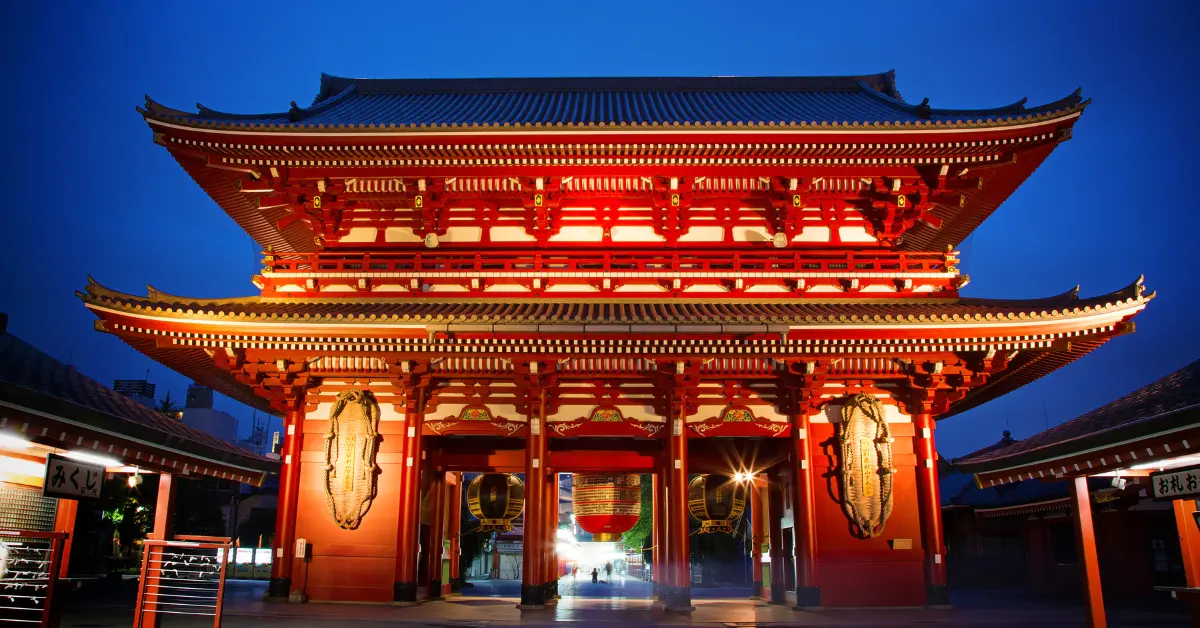
Sensoji Temple (浅草寺, Sensōji), also known as Asakusa Kannon Temple, is Tokyo’s oldest Buddhist temple, founded in 628 AD. Located in the historic Asakusa district, it attracts over 30 million visitors each year, making it Japan’s most visited spiritual site. The temple is known for its vivid red gates, long shopping street, and deep connection to Buddhist traditions.
What is the history of Sensoji Temple?
Sensoji Temple (a Buddhist temple located in Asakusa, Taito City, Tokyo) traces its origins to 628 AD when two local fishermen, Hinokuma Hamanari (檜前浜成) and Hinokuma Takenari (檜前武成) pulled a golden statue of Kannon (観音菩薩) from the Sumida River, a major waterway running through eastern Tokyo. The monk Shokai Shonin (勝海上人) enshrined the statue and formally established Sensoji Temple in 645 AD, making it the oldest temple in Tokyo and a significant site within Japanese Buddhism and Tendai-influenced worship of Kannon.
During the Heian period, the Buddhist priest Ennin (円仁) created a public-facing Kannon statue in 857 AD to allow worshippers to pray while the original sacred statue remained hidden, aligning the site with broader Buddhist practices of hidden icons (秘仏).
The Kaminarimon Gate (雷門) and Niomon Gate (仁王門) were constructed in 942 AD under the patron Taira no Kinmasa (平公雅), establishing architectural landmarks that later became symbols of Asakusa tourism and Tokyo cultural heritage.
During the Edo period, shogun Tokugawa Ieyasu designated Sensoji as a family-protected temple, integrating it into the political and religious structure of Edo (now Tokyo) and increasing its status as a pilgrimage destination and urban cultural hub.
In 1945, the temple complex was destroyed in World War II air raids. Post-war reconstruction turned Sensoji into a national symbol of peace, resilience, and urban revival. Today, sites like Nakamise Shopping Street, Hozomon Gate, and Asakusa Shrine (a Shinto shrine adjacent to the temple complex) connect Sensoji to a wider cultural ecosystem that blends religion, tourism, and Edo-period heritage.
Related article: Religion in Japan: Shinto vs Buddhism, Core Beliefs, Rituals, Impact
| Year | Event |
|---|---|
| 628 | Fishermen discover golden Kannon statue in the Sumida River |
| 645 | Monk Shokai Shonin formally establishes Sensoji Temple |
| 857 | Priest Ennin carves substitute Kannon statue for public display |
| 942 | Kaminarimon and Niomon Gates constructed by Taira no Kinmasa |
| 1600s (Edo Period) | Tokugawa Ieyasu names Sensoji a family temple for protection |
| 1945 | Destroyed during WWII air raids and later rebuilt as symbol of peace |
What are the highlights and attractions of Sensoji Temple?
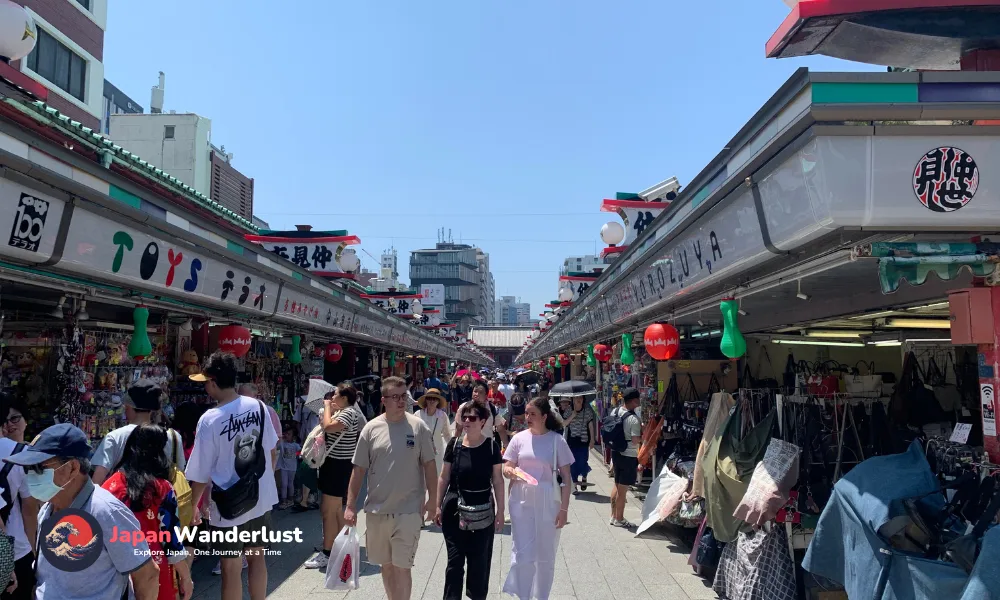
Sensoji Temple features iconic landmarks that blend faith, architecture, and local culture. From the giant red lantern at Kaminarimon Gate to the peaceful Main Hall, each area offers insight into Japan’s spiritual and artistic traditions. It’s a must-visit for first-time travelers and cultural enthusiasts alike.
Key highlights include:
- Kaminarimon (Thunder Gate): The grand entrance with guardian gods Fujin and Raijin and a 700kg lantern.
- Nakamise Shopping Street: A 250-meter walkway with about 90 shops selling traditional crafts and sweets.
- Main Hall (Hondo): Houses the hidden golden Kannon statue and postwar fireproof structure.
- Five-Story Pagoda: 53.3-meter pagoda containing Buddha relics gifted by Sri Lanka.
- Hozomon Gate: Inner gate with large straw sandals believed to repel evil spirits.
- Incense Burner: Visitors fan its smoke for purification and healing.
How do you access Sensoji Temple?
Sensoji Temple is in Asakusa, Taito City, and is easily reached by several train lines. The closest station is Asakusa Station, with the Kaminarimon Gate just a short walk away. Access from central Tokyo is fast and convenient by subway or JR connection.
| Mode / From | Line / Exit | Time | Cost |
|---|---|---|---|
| Tokyo Metro Ginza Line (Asakusa Station) | Exit 1 | 1 min to Kaminarimon | ¥190–240 |
| Toei Asakusa Line (Asakusa Station) | Exit A4 | 3–5 min to gate | ¥190–220 |
| Tobu Skytree Line (Asakusa Station) | Main Exit | 5 min to temple | ¥170–300 |
| Tsukuba Express (Asakusa Station) | Exit A1 | 5 min to temple | Distance-based |
From Tokyo Station: take JR Yamanote Line to Kanda (2 min, ¥150), transfer to Ginza Line to Asakusa (10 min, ¥180). Total: about 20 min, ¥330. Check the Tokyo Metro official site for updated schedules.
What are the opening hours and admission fees at Sensoji Temple?
Sensoji Temple is open 24 hours, and admission is free. The Main Hall opens early each morning, and the grounds remain accessible at all times. Nakamise Street operates during daytime hours, and evening illumination adds a different charm after sunset.
| Area | Hours | Fees / Notes |
|---|---|---|
| Temple Grounds | 24 hours | Always open |
| Main Hall (Apr–Sep) | 6:00 AM – 5:00 PM | Free |
| Main Hall (Oct–Mar) | 6:30 AM – 5:00 PM | Free |
| Nakamise Street | 9:00 AM – 7:00 PM | Varies by shop |
| Evening Illumination | Sunset – 11:00 PM | Free |
| Pagoda Interior | Restricted access | Ceremonial use only |
| Incense Offerings | — | Donation (¥100–300) |
When is the best time to visit Sensoji Temple?
The best times to visit Sensoji are early morning (6:00–8:00 AM) and evening (after 6:00 PM). These hours offer peaceful surroundings and beautiful lighting for photos. Midday visits can be crowded, especially on weekends.
Seasonal Highlights
- Spring (Mar–May): Cherry blossoms in Sumida Park and Sanja Matsuri festival in May.
- Summer (Jun–Aug): Vibrant but hot; visit early morning or late evening.
- Autumn (Sep–Nov): Comfortable temperatures and colorful foliage.
- Winter (Dec–Feb): Quiet, crisp air and clear views.
Times to Avoid
- New Year (late Dec–early Jan): Overcrowded with visitors for hatsumode.
- Golden Week (early May): Domestic travel peak.
- Weekends 11 AM–3 PM: Heaviest visitor traffic.
What etiquette or tips should you know at Sensoji Temple?
Sensoji Temple follows basic Buddhist manners and everyday Japanese customs such as Japanese bowing, which show respect for the space and the people around you. You do not need to overthink it. A few simple gestures are enough.
Etiquette and Tips
- Bow once before entering through Kaminarimon Gate. Avoid the center path reserved for deities.
- Purify hands and mouth at the temizuya (fountain) before entering.
- Remove hats and shoes in temple buildings.
- Offer coins gently (5 yen is lucky), bow, and pray silently.
- Extinguish incense by waving your hand, not blowing.
- Avoid loud voices, eating in sacred areas, and photographing people without permission.
What are nearby spots to visit after Sensoji Temple?
Asakusa offers many attractions within a short walk of Sensoji. From ancient shrines to modern landmarks, the area is ideal for a half-day itinerary.
- Tokyo Skytree – 20-minute walk or 3-minute train; tallest tower in Japan with panoramic decks.
- Sumida Park – 5-minute walk; famous for cherry blossoms and fireworks.
- Asakusa Hanayashiki – 3-minute walk; Japan’s oldest amusement park.
- Asakusa Shrine – Next to Sensoji; hosts the Sanja Matsuri festival.
- Sumida River Walk – 3-minute walk; illuminated bridge to Tokyo Skytree.
- Tokyo Mizumachi – 5-minute walk; modern riverside complex for dining and shopping.
For more nearby experiences, check the Tokyo Things to Do guide, and don’t miss the Tokyo Attractions page for Tokyo’s top temples, gardens, and modern icons.
Plan Your Visit
Sensoji Temple combines ancient heritage with modern Tokyo’s energy. For a deeper experience, explore Tokyo Private Tours, fully private, bilingual-guided journeys that include Asakusa and nearby cultural highlights.
Sensoji Temple (Asakusa Kannon Temple)
Address: 2-3-1 Asakusa, Taito-ku, Tokyo 111-0032, Japan (Direction)
Phone: 03-3842-0181
Languages: Japanese (primary), English signage available
Website: official Sensoji Temple website
Frequently Asked Questions about Sensoji Temple
Is admission free?
Yes. Entry to the grounds and Main Hall is free. Donations are optional.
What are the opening hours?
The grounds are open 24/7. The Main Hall opens at 6:00 AM (6:30 AM in winter) and closes at 5:00 PM.
Can visitors see the original Kannon statue?
No. The original statue has been hidden since 645 AD. A replica appears only on December 13 each year.
How do I get there from Tokyo Station?
Take JR Yamanote Line to Kanda Station (2 min), transfer to Ginza Line for Asakusa (10 min). Total: 20 min, ¥330.
What are good souvenirs from Nakamise Street?
Popular items include ningyo-yaki cakes, maneki-neko figurines, fans, and omamori charms.
When is it least crowded?
Weekday mornings and evenings are calm. Avoid weekends and holidays.
Are English-speaking guides available?
Yes. The Asakusa Culture Tourist Information Center provides free English walking tours on weekends.
Address: 2-3-1 Asakusa, Taito City, Tokyo 111-0032
Phone: 03-3842-0181
Languages: Japanese (primary), English signage available
